Crown Fell Out? Here's Exactly What to Do Now

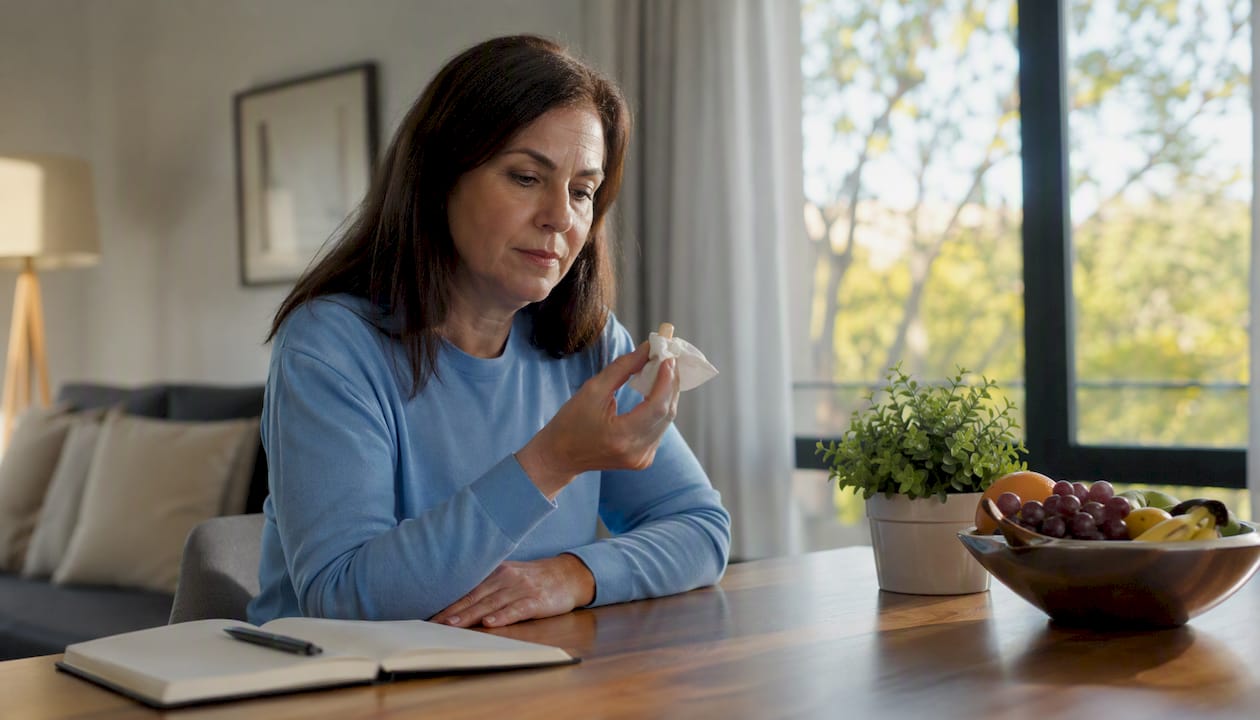
If your crown fell out, retrieve it, rinse it gently with water, store it in a small hard container, and call your dentist today. That’s the short version. The longer version matters because the exposed tooth underneath is vulnerable to decay, fracture, and sensitivity even when you feel no pain at all. Acting within 24 hours gives you the best chance of a simple re-cement rather than a more involved repair.
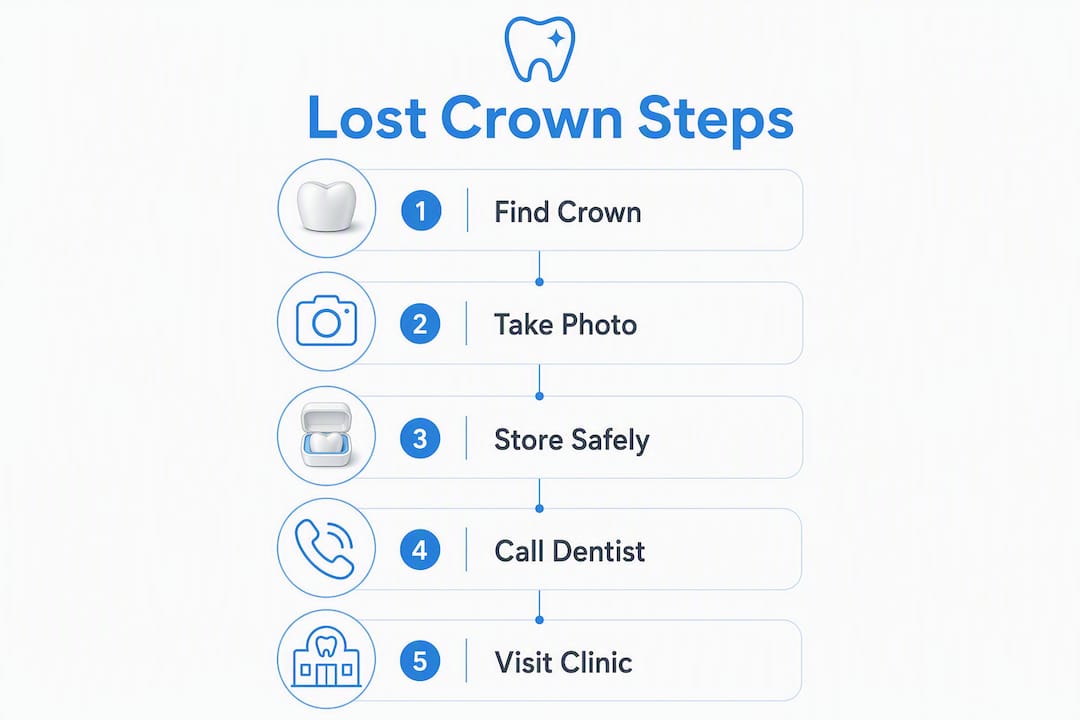
Here’s what to do right now:
Retrieve the crown carefully. If you swallowed it, don’t panic, but do call your dentist.
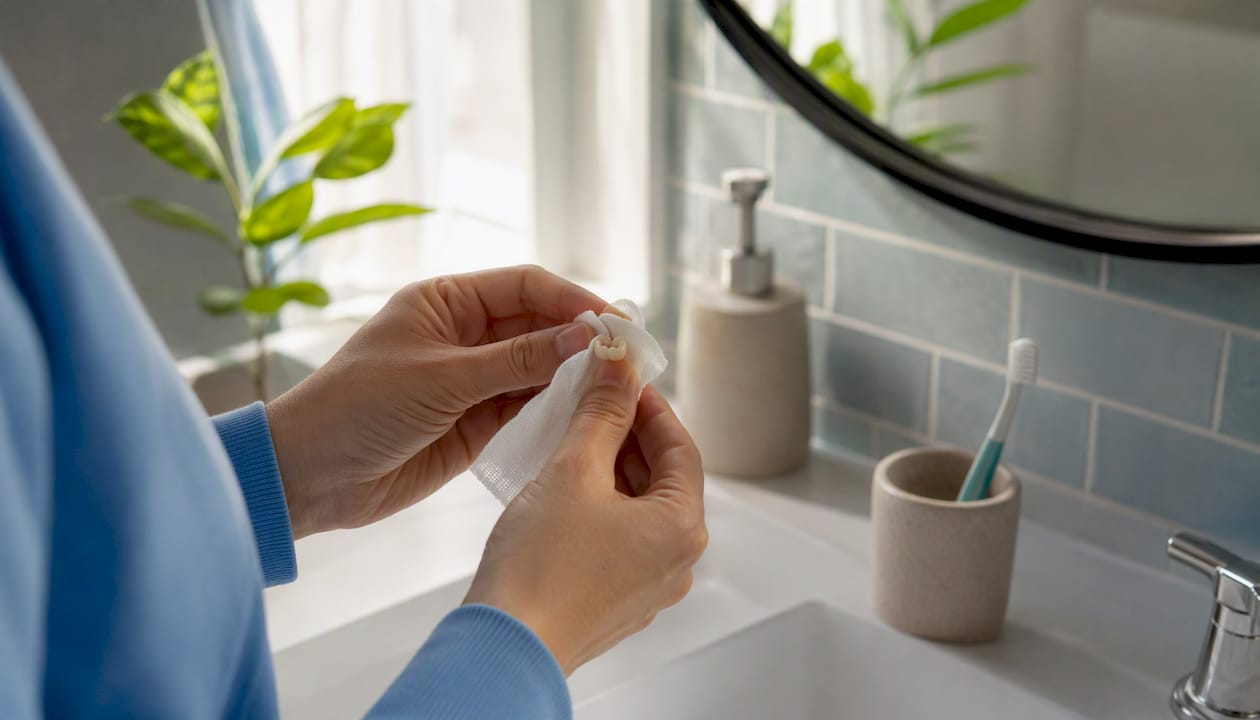
Rinse it gently under cool water. No scrubbing.
Inspect it briefly for cracks or broken pieces.
Store it in a pill bottle or small plastic container, not tissue paper, which is easily thrown away by mistake.
Protect the exposed tooth with pharmacy temporary dental cement (such as Dentemp) if you have it.
Call your dentist the same day. Mersaldental offers same-day emergency care and can advise you on next steps right away.
Table of Contents
What to do the moment your crown falls out
Stay calm. A lost crown is urgent, but it’s manageable. Work through these steps in order.
Locate the crown. Check your mouth, napkin, or plate. If it came off while eating, it may be in your food.
Rinse it under cool water. Use gentle water pressure only. Avoid soap, toothpaste, or any cleaning agent.
Inspect the crown and the tooth. Look for visible cracks in the crown and check whether any tooth structure broke away with it. If you see a sharp fragment still in your mouth, don’t try to remove it yourself.
Store the crown safely. A clean, hard container like a pill bottle protects it from damage and prevents accidental disposal. Avoid wrapping it in tissue.
Protect the exposed tooth. Apply a small amount of pharmacy temporary cement following the package directions. This reduces sensitivity and keeps debris out.
Avoid chewing on that side. Stick to soft foods like yogurt, scrambled eggs, or soup until you’re seen.
Rinse gently with warm saltwater. Mix about half a teaspoon of salt in a glass of warm water and swish carefully. This keeps the area clean without irritating the exposed tooth.
Call your dentist. Describe when it happened, whether you have pain or swelling, and whether the crown appears intact. Ask for a same-day or next-day appointment.
What to avoid:
Do not force the crown back onto the tooth without cleaning and drying both surfaces first.
Do not use household glue, super glue, or nail adhesive. These are toxic to oral tissue and can permanently damage the crown’s interior.
Do not ignore it because it doesn’t hurt. Many crowned teeth have reduced nerve sensation, especially after root canal treatment.
Pro Tip: Take a quick photo of the crown and the exposed tooth before you store the crown. This gives your dentist useful visual information before the appointment and creates a record if the crown is damaged.
Safe short-term fixes you can use until you see the dentist
Pharmacy temporary dental cement is your best short-term option. Products like Dentemp or similar over-the-counter kits are available at most drugstores and are specifically designed for this situation. They are safe, gentle on oral tissue, and easy to apply at home.
Acceptable temporary options:
Pharmacy temporary cement (e.g., Dentemp): Follow the package directions carefully. Clean and dry both the inside of the crown and the prepared tooth before applying. Any residual saliva or debris will prevent the cement from adhering properly.
Dental wax: Useful for covering a sharp edge if the crown cannot be reseated, but it won’t hold the crown in place.
A small dab of toothpaste: Only as a last resort when no other option is available. It provides minimal protection and will not last long.
What not to use:
Super glue, Gorilla Glue, nail glue, or any household adhesive. These are toxic to oral tissues and can bond so firmly to the crown’s interior that professional re-cementation becomes difficult or impossible.
Chewing gum as a sealant. It introduces bacteria and sugar directly to the exposed tooth.
Temporary cement buys you time, not a solution. Pharmacy dental cement is designed to last days, not weeks. It can loosen with eating and drinking, and it does not address any underlying decay or damage. Use it to protect the tooth while you arrange professional care, not as a substitute for it.
The technique matters. Dry the inside of the crown thoroughly with a clean cloth or gauze. Dry the tooth the same way. Apply the cement to the inside of the crown, seat it gently, and bite down lightly to position it. Wipe away any excess. Avoid eating for at least 30 minutes after application.
Is a lost crown a dental emergency?
A fallen crown is urgent but not a hospital emergency in most cases. The right level of urgency depends on your symptoms.
Red flags that mean same-day care:
Severe or worsening pain
Swelling in the gum, jaw, or face
Fever or feeling generally unwell
Active bleeding that won’t stop
A broken tooth fragment remaining in the socket
Pus, a bad taste, or a foul smell from the area (signs of infection)
Any of these signals means you should call a dental office immediately and describe your symptoms. If you cannot reach a dentist and have swelling spreading to your jaw or throat, go to an emergency room.
Triage guide:
Situation | Urgency | Where to go |
Severe pain, swelling, fever, or infection signs | Same day | Emergency dental clinic or ER if no dentist available |
Crown off, no pain, no swelling | Within 24–48 hours | Your regular dentist or same-day dental office |
Temporary cement in place, no symptoms | Within 2–3 days | Schedule with your dentist as soon as possible |
Crown off, mild sensitivity only | Within 48 hours | Dental office appointment |

When you call, say this: “My crown came off. I have [pain/no pain]. There is [swelling/no swelling]. The crown appears [intact/cracked]. I’d like to be seen today if possible.”
Mersaldental accepts same-day appointments for dental emergencies. You can reach the team directly to describe your situation and get guidance on how quickly you need to come in.
Why do crowns come loose or fall out?
Understanding the cause helps your dentist choose the right fix and helps you prevent a repeat. Bruxism, decay, and cement failure are the three most common contributors.
Main causes:
Cement breakdown: Dental cement weakens over time, especially in crowns that have been in place for many years. This is the most straightforward cause and often means the original crown can simply be re-cemented.
Decay under the crown margin: Bacteria can work their way under the edge of a crown and cause decay in the tooth structure beneath. When this happens, the crown loses its foundation and loosens. This usually requires more than re-cementing.
Bruxism (teeth grinding): Grinding places repeated lateral force on crowns, wearing down the cement seal and sometimes cracking the crown itself. If grinding is the cause, a night guard is part of the solution.
Poor fit or crown age: A crown that was never perfectly fitted, or one that has worn down over 10–15 years, may no longer seat securely.
Trauma or hard foods: Biting into ice, hard candy, or a popcorn kernel can dislodge a crown suddenly.
Think of a crown as a cap sitting over a prepared tooth. The margin, the thin edge where the crown meets the gum line, is where decay most often begins. Once bacteria breach that margin, they work downward into the tooth structure beneath the crown. By the time the crown loosens, the decay may already be significant.
What the cause implies for treatment: cement failure usually means re-cement; decay or fracture usually means a new crown; grinding means a new crown plus a night guard discussion.
What to expect at your dental appointment
Most crown appointments follow a clear sequence. Knowing what’s coming makes the visit less stressful.
Visual inspection: Your dentist examines the exposed tooth and the crown for cracks, decay at the margin, and signs of infection.
X-ray: A quick X-ray checks for hidden decay, root problems, or bone changes that aren’t visible to the eye.
Crown evaluation: The dentist checks whether the crown is structurally intact and whether it still fits the tooth correctly.
Treatment decision: Based on the findings, your dentist will recommend one of the following:
Possible outcomes:
Re-cementation: If the crown is intact and the tooth is healthy, the dentist cleans both surfaces and re-cements the crown. This typically takes 30–45 minutes.
New crown: If the crown is cracked, the tooth has decayed, or the fit is poor, a new crown is needed. A digital scan or impression is taken. Same-day digital crowns are possible at some offices; lab-made crowns typically take 1–2 weeks, with a temporary crown placed in the meantime.
Decay treatment first: If decay is present, it must be removed before any crown work. Depending on depth, this may mean a filling or a root canal.
Extraction: In rare cases where the tooth is unsalvageable, extraction is discussed alongside replacement options such as implants or bridges.
For U.S. cost context, re-cementing an existing crown typically runs less than a new crown. A new dental crown in the U.S. generally ranges from $1,000 to $1,700 or more depending on material and location, though insurance often covers a portion. Re-cementing is significantly less expensive.
Questions worth asking at the appointment:
What caused the crown to come off?
Is the original crown reusable, or do I need a new one?
Do I have decay under the margin?
Should I be evaluated for bruxism?
Does my crown carry any warranty?
How long can you safely go without a crown?
The short answer: aim to be seen within 24–48 hours. The exposed tooth is a prepared tooth, meaning it has been shaped and reduced to accommodate the crown. That surface is thinner and more vulnerable than a natural tooth.
What happens over time:
Within hours: Sensitivity to temperature and air is common. Food debris can pack into the exposed area.
Within days: The risk of decay increases. The tooth may shift slightly, affecting how the crown fits when you return.
Within weeks: Bacterial invasion and structural fracture become real risks. What started as a simple re-cement can become a root canal or, in the worst case, an extraction.
Temporary cement, saltwater rinses, and avoiding hard or sticky foods on that side all reduce risk while you wait. But they don’t stop the clock entirely. The longer the tooth is exposed, the more likely a straightforward fix becomes a complex one.
How to reduce the chance a crown will fall out again
Prevention is mostly about consistent habits and honest conversations with your dentist.
Daily maintenance:
Brush gently along the crown margin twice daily. The gum line around a crown is where plaque accumulates and decay starts.
Floss carefully around the crown. Use a gentle C-shape motion rather than snapping the floss down, which can loosen the cement over time.
Avoid using your teeth as tools. Opening packages, cracking nuts, or biting fingernails all place stress on crowns.
Limit hard and sticky foods: ice, hard candy, caramel, and chewy bread are the most common culprits.
Addressing root causes:
If grinding was identified as a factor, ask about a night guard. Wearing one consistently reduces the lateral forces that wear down cement.
Attend regular hygiene appointments so your dentist can check the crown margin for early signs of decay or loosening before a problem develops.
Ask your dentist how old your crowns are. Most crowns last 10–15 years with good care. Crowns that have been in place for many years deserve closer monitoring.
At your next checkup, ask:
Are the margins on my other crowns still intact?
Is there any early decay forming under any crown?
Are there signs that I’m grinding at night?
Why “no pain” doesn’t mean “no problem”
This is one of the most common misunderstandings we see. Patients assume that because the exposed tooth doesn’t hurt, there’s no rush. The opposite is often true.
Many crowned teeth have had root canal treatment, which means the nerve has been removed. There is nothing left to signal pain even when the tooth is actively decaying or fracturing. Other crowned teeth simply have reduced sensitivity because the crown itself insulates the nerve from temperature and pressure. Lack of pain does not equal safety. The tooth is still vulnerable, and the damage can progress silently.
Mersaldental offers same-day emergency appointments for exactly this reason. Getting the tooth assessed quickly, even when it feels fine, is the safest and most cost-effective path. Early action almost always means a simpler, less expensive fix.
Key Takeaways
When a crown falls out, acting within 24 hours gives you the best chance of a simple re-cement rather than a root canal, a new crown, or an extraction.
Point | Details |
Retrieve and store safely | Keep the crown in a hard container like a pill bottle, not tissue paper. |
Use temporary cement carefully | Pharmacy products like Dentemp are safe short-term only; never use household glue. |
Know the red flags | Swelling, fever, pus, or severe pain means same-day dental care, not a wait-and-see approach. |
No pain is not reassurance | Many crowned teeth have no nerve, so painless does not mean safe; get seen within 24–48 hours. |
Mersaldental for same-day care | Mersaldental accepts emergency appointments and can assess, re-cement, or replace your crown promptly. |
What your dentist actually wants you to know
The single biggest mistake patients make after a crown comes off is waiting too long because they feel fine. From a clinical standpoint, the prepared tooth underneath a crown is one of the most vulnerable surfaces in your mouth. It was shaped specifically to hold the crown, which means it has less natural enamel protecting it than an untouched tooth. Every hour it sits exposed, it’s accumulating bacteria, absorbing temperature changes, and bearing bite forces it wasn’t designed to handle alone.
When we see a patient quickly after a crown comes off, the outcome is almost always better. Re-cementing takes less than an hour. Treating the decay that developed because someone waited three weeks takes significantly longer and costs more. The crown that could have been saved may now need to be remade. And in some cases, the tooth itself is compromised.
Bring the crown with you. Even if it looks cracked or damaged, your dentist needs to see it. Don’t try to force it back on at home without cleaning both surfaces first, and never use anything stronger than pharmacy temporary cement. If you grind your teeth, say so. If you’ve had this crown for over a decade, say that too. These details change the treatment plan.
The goal is always to protect your tooth structure, prevent infection, and keep the fix as simple as possible. Calling promptly is the single most effective thing you can do toward all three of those goals.
Mersaldental is here when your crown comes off
When a crown comes off, you need care that’s fast, gentle, and covered by your insurance if possible. Mersaldental, located in downtown Ottawa, offers same-day emergency dental appointments for exactly this situation. We accept direct insurance billing, including CDCP and IFHP, so you’re not navigating paperwork on top of a dental problem.

Our team will assess the exposed tooth, evaluate whether your crown can be re-cemented or needs to be remade, and check for any underlying decay or structural issues that need attention. We see new patients and we speak multiple languages, so you can describe your symptoms clearly and get the right care without delay.
If your crown came off today, book your appointment online or call us directly. Same-day care is available, and the sooner we see you, the more options we have to keep your treatment simple.
Sources and where to learn more
The following sources informed the clinical guidance in this article. Each covers a specific aspect of crown emergencies and patient care.
What to Do When a Dental Crown Falls Out — covers urgency, the risk of painless exposure, and why delay increases treatment complexity.
Can You Fix a Crown That Fell Out? — explains why household adhesives are dangerous and how temporary pharmacy cement should be used.
Permanent Crown Fell Out: Exact Steps to Take Right Now — practical outcome guidance on re-cement vs. remake and what to expect at the appointment.
Crown fell out: what to do — Healthline’s patient-facing guide covering storage, temporary cement technique, and when to seek care.
What to Do If Your Crown Falls Off — details on the most common causes including bruxism, decay, and cement failure.
A Dental Crown Fell Out? Here’s What to Do — triage guidance and same-day scheduling rationale.
Lost Crown Emergency Dental Care — interim care steps including saltwater rinses and soft-food guidance.
Dental Crowns Overview — Cleveland Clinic’s clinical overview of crown types, indications, and lifespan.
What is an Implant Crown? Your Complete Guide — explains implant crown options for cases where a tooth cannot be saved and a conventional crown is no longer viable.
Mersaldental Emergency Dental Care — same-day emergency appointments, direct insurance billing, and CDCP/IFHP acceptance in downtown Ottawa.
Mersaldental Crowns & Bridges — crown materials, restorative options, and how Mersaldental handles crown repair and replacement.
This article provides general dental health information and is not a substitute for professional advice. Please consult a licensed dentist to assess your specific situation and confirm the most appropriate course of treatment.
Recommended
Comments