Crown vs Filling: Which Is Right for Your Tooth?

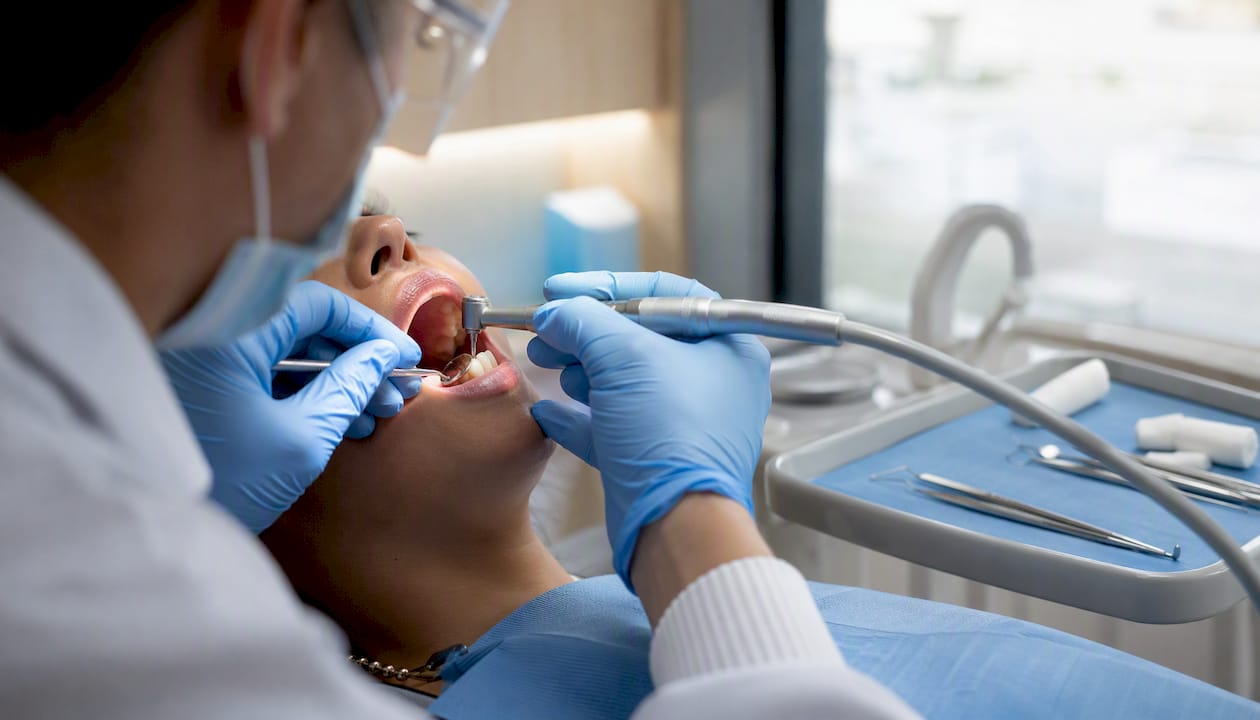
Choose a filling for small cavities with plenty of healthy tooth remaining. Choose a crown when a tooth is heavily damaged, cracked, or has just had a root canal. The single most important factor is how much natural tooth structure is still intact. Cavities are one of the most common oral health conditions in the U.S., so understanding this decision is genuinely useful for most adults.
Here are the most common scenarios at a glance:
Small cavity, tooth mostly intact: a filling is the standard choice
Decay covering more than half the tooth, or a cusp is broken: a crown is usually necessary
Damage in the 50–75% remaining structure range: an onlay (partial crown) is often the ideal middle ground
After a root canal on a molar: a crown is almost always required to prevent fracture
Cracked tooth with pain on biting: a crown is typically needed to stabilize the crack and relieve symptoms
Large old filling that keeps breaking: replacing it with a crown often makes more sense long-term
Key Takeaways
A dental crown is the right choice when less than 50% of the original tooth remains, a crack is present, or a root canal has been completed on a molar.
Point | Details |
The 50% rule | Less than 50% remaining tooth structure almost always requires a crown; above 75% usually supports a filling. |
Onlay as middle ground | When 50–75% of the tooth is intact, an onlay preserves more structure than a crown while offering more protection than a filling. |
Cracked tooth needs coverage | Full cuspal coverage stabilizes cracks and renders most cracked teeth asymptomatic, per clinical review evidence. |
Cost-per-year math matters | A crown costs more upfront but typically lasts two to three times longer than a large filling on a damaged tooth. |
Mersaldental offers both options | Mersaldental provides fillings, onlays, same-day crowns, and direct insurance billing in Ottawa for patients ready to book. |
Table of Contents
How do crowns and fillings compare side by side?
The table below covers the dimensions that matter most when weighing dental crowns vs fillings.
Dimension | Dental Filling | Dental Crown |
Typical use | Small to moderate decay; intact cusps | Heavy decay, cracked tooth, post-root canal, broken cusp |
Materials | Composite resin, amalgam, glass ionomer | Porcelain-fused-to-metal, all-ceramic, zirconia, gold |
Procedure & timeline | Single appointment, moderate duration | 2 visits over 2–3 weeks (lab crown) or 1 visit (CAD/CAM) |
Invasiveness | Minimal tooth removal; preserves structure | Significant enamel reduction on all sides |
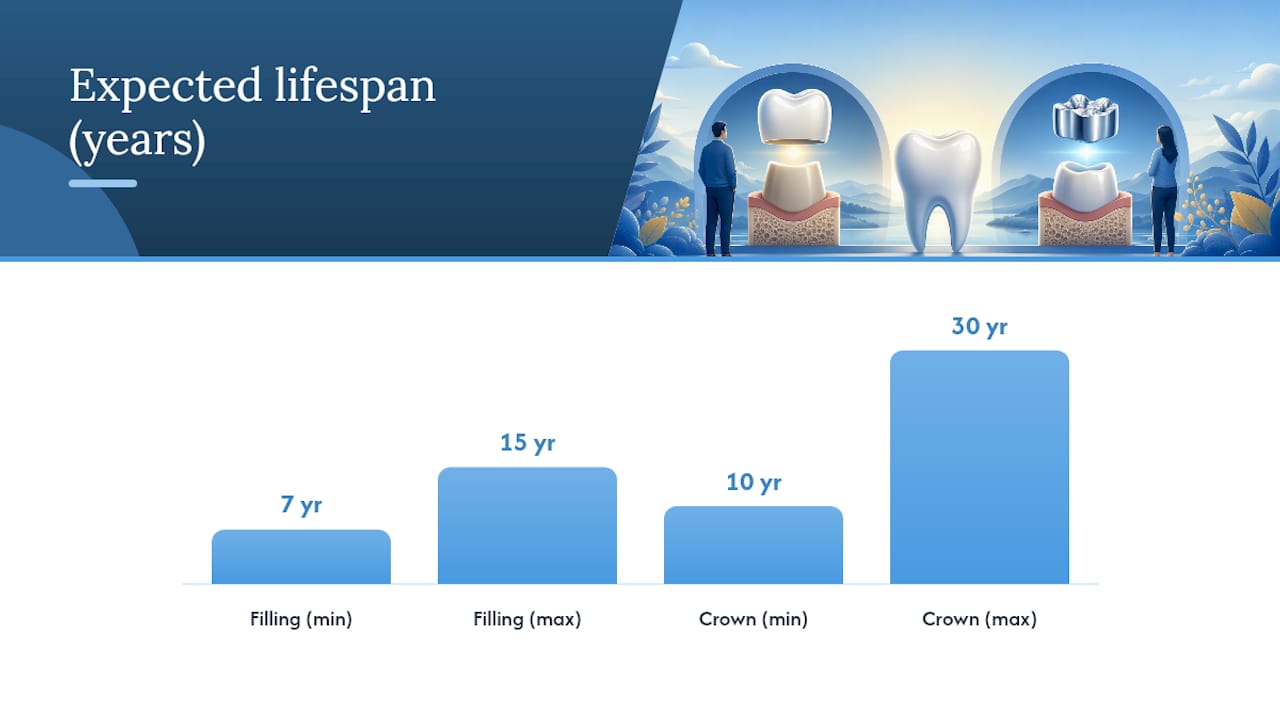
Expected lifespan | 7–15 years depending on size and material | 10–30 years with proper care |
Esthetics | Composite matches tooth color; amalgam is silver | All-ceramic and zirconia are highly natural-looking |
Recovery/aftercare | Mild sensitivity for a few days | Sensitivity with temporary; full comfort after final placement |
Insurance coverage | Usually covered as a basic service (70–80%) | Often covered as a major service (50%), waiting periods may apply |
The core tradeoff is straightforward: a filling costs less today, but a large filling on a heavily damaged tooth carries a real risk of fracture or failure within a few years. A crown costs more upfront and removes more tooth structure, yet it typically lasts significantly longer and protects the tooth from splitting.
What is a dental filling?
A dental filling is a direct restoration, meaning your dentist places it in a single appointment without sending anything to a lab. The decayed or damaged portion of the tooth is removed, and the filling material is bonded or packed directly into the prepared cavity.
The NIDCR describes several common filling materials, each with distinct advantages:
Composite resin: tooth-colored, bonds directly to enamel, ideal for visible teeth. Typically lasts 7–10 years; can stain over time with coffee or wine.
Amalgam (silver): extremely durable and cost-effective, best for back molars under heavy bite pressure. Lasts 10–15 years but is silver-colored and contains mercury in a stable alloy form.
Glass ionomer: releases fluoride, often used near the gumline or in children’s teeth. Less durable than composite; usually replaced within 5 years.
What happens in the chair:
Your dentist numbs the area with a local anesthetic.
Decay is removed using a drill or laser, and the cavity is cleaned.
The filling material is placed in layers (composite) or packed in (amalgam).
Composite is hardened with a curing light; amalgam sets on its own.
Your dentist checks your bite and polishes the surface.
Fillings work well when the cavity is small to moderate and the remaining tooth walls are strong enough to support the restoration. Large multi-surface fillings covering three or more surfaces (MOD fillings) carry a higher long-term fracture risk, and repeated replacement of a failing filling is often the clearest sign that a crown should have been placed earlier.
What is a dental crown, and when do you need one?
A dental crown is a full-coverage indirect restoration that fits over the entire visible portion of a tooth like a cap. Unlike a filling, it requires your dentist to reshape the tooth on all sides, take an impression or digital scan, and fabricate the crown either in a lab or using an in-office CAD/CAM milling machine. The added bulk and full coverage are what give a crown its strength.
Crown materials and their tradeoffs:
Porcelain-fused-to-metal (PFM) crowns have a metal core for strength with a porcelain outer layer for appearance. They are durable and widely covered by insurance, though the metal margin can show as a dark line at the gumline over time.
All-ceramic crowns (including lithium disilicate, marketed as e.max) offer the most natural appearance and are a strong choice for front teeth. They are slightly less fracture-resistant than zirconia under heavy bite forces.
Zirconia crowns are the current standard for back teeth. They combine excellent strength with good esthetics and are now the most commonly placed crown type in the U.S.
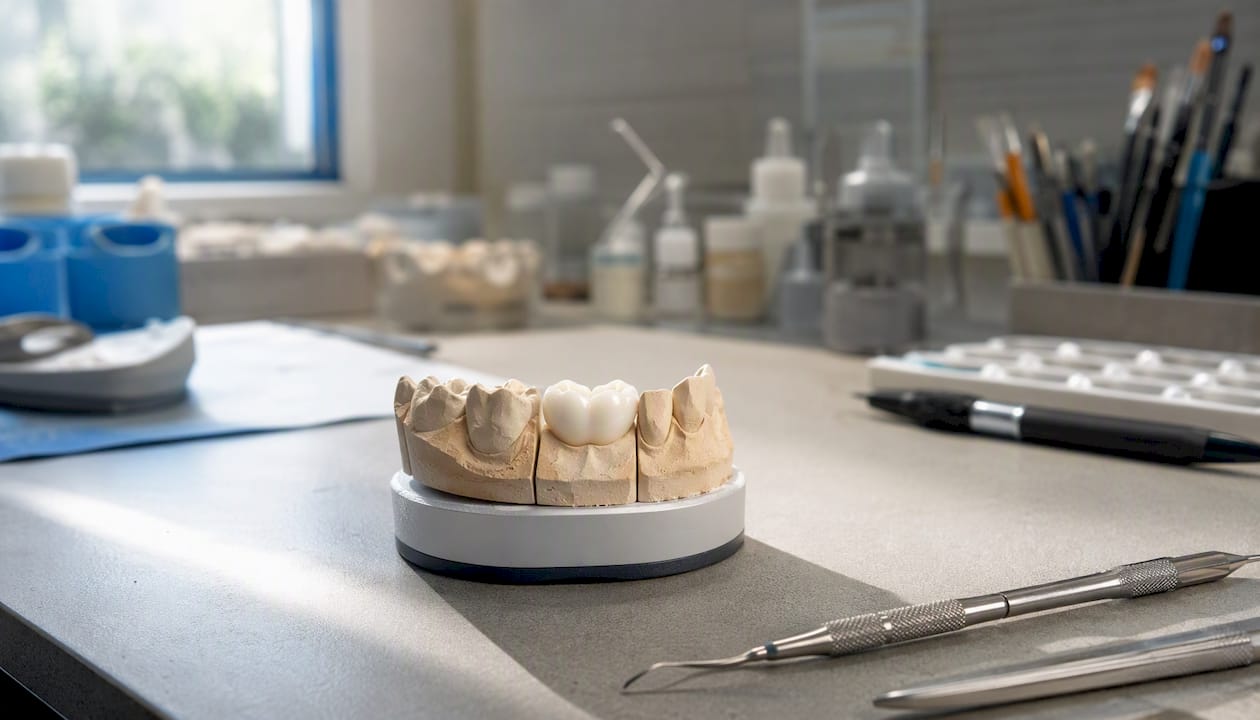
Gold crowns remain the most durable option available, with a lifespan that can exceed 30 years. They require the least tooth removal of any crown material, though most patients prefer tooth-colored alternatives.
The typical crown workflow:
Cleveland Clinic outlines the standard two-visit process: your dentist prepares the tooth, takes an impression or digital scan, places a temporary crown, and sends the case to a lab. The permanent crown is cemented at a second appointment two to three weeks later. Same-day crowns, milled using CAD/CAM technology, skip the temporary and the second visit entirely. Not every office has this equipment, so it is worth asking.
When the damage falls in the moderate range, a dental onlay is worth discussing. An onlay covers one or more cusps but not the entire tooth, preserving more healthy enamel than a full crown while offering more protection than a filling.
What clinical signs tell a dentist to choose a crown over a filling?
Dentists weigh several objective factors when deciding between a filling, an onlay, and a crown. Understanding these criteria helps you evaluate any recommendation you receive.
Dentists confirm these factors using bitewing and periapical X-rays to assess decay depth and bone levels. Transillumination (shining a light through the tooth) and bite tests help locate cracks that X-rays can miss. Fractured teeth that reach dentin or threaten the pulp commonly require both endodontic and restorative care, which means you may need a root canal before the crown is placed.
Pro Tip: Ask your dentist to show you the X-ray and point to exactly where the decay or crack ends. Seeing it yourself makes the recommendation much easier to evaluate.
What does the research say about crowns for cracked teeth?
The evidence for crowns on cracked and heavily restored teeth is consistent. A clinical review on cracked tooth management (NCBI Bookshelf) found that full-coverage crowns stabilize cracked teeth and render most of them asymptomatic. The review also discusses pulp survival and failure statistics, noting that prognosis depends heavily on how early the crack is treated and whether the pulp is still vital at the time of crown placement.
The practical takeaway from this body of research:
A crown placed before a crack reaches the pulp preserves the tooth and avoids a root canal.
Once a crack extends into the pulp, the tooth needs both root canal therapy and a crown. Survival rates drop, but the tooth can often still be saved.
Leaving a symptomatic cracked tooth without cuspal coverage accelerates crack propagation and raises the risk of an unsalvageable vertical root fracture.
Systematic reviews consistently show higher long-term survival for cracked teeth treated with full cuspal coverage compared to those left with fillings or no coverage. Treatment-plan variation among dentists is real, which is why asking specific diagnostic questions matters.
What should you expect during a filling or crown appointment?
Filling appointment (typically single visit, moderate duration):
Local anesthetic is administered; you wait a few minutes for it to take effect.
The dentist removes decay and shapes the cavity.
The filling material is placed, shaped, and hardened (composite) or packed (amalgam).
Bite is checked and adjusted; the tooth is polished.
Lab-made crown (typically two visits over a few weeks):
Visit 1: Anesthetic, tooth preparation (reshaping all sides), digital scan or impression, temporary crown placed.
Lab phase: Crown is fabricated over 1–3 weeks.
Visit 2: Temporary removed, permanent crown tried in, adjusted, and cemented.
Same-day CAD/CAM crown (usually single visit, lasts a couple of hours):
Tooth is prepared and a digital scan is taken.
The crown is milled in-office from a ceramic block.
The crown is tried in, glazed, and cemented the same day.
Aftercare to expect:
Mild sensitivity to hot and cold is normal for a few days after a filling.
Avoid chewing hard foods on a temporary crown; it is not as strong as the final restoration.
Some sensitivity after a permanent crown is placed is normal for one to two weeks.
Call your dentist if pain is sharp, worsening, or accompanied by swelling. That can signal pulp involvement and may mean you need root canal treatment before the crown is finalized.
If you have signs of a cracked tooth, your dentist may refer you to an endodontist first. Knowing when to see an endodontist can save a tooth that might otherwise be lost.
How much do fillings and crowns cost, and what does insurance cover?
Restoration type | Typical U.S. cost range | Expected lifespan |
Composite filling (1 surface) | moderate cost range | lasts several years |
Composite filling (2–3 surfaces) | moderate cost range | lasts several years |
Amalgam filling | moderate cost range | lasts many years |
Onlay (porcelain or zirconia) | moderate cost range | lasts many years |
PFM crown | moderate cost range | lasts many years |
All-ceramic / zirconia crown | higher cost range | lasts many years |
Gold crown | higher cost range | lasts many years |
For a detailed breakdown of what patients actually pay for crowns, factors like geographic location, dentist experience, and lab fees all shift the final number.
A simple cost-per-year comparison: A composite filling at moderate cost lasting several years costs less per year. A zirconia crown at higher cost lasting many years costs more per year, but offers durability advantages. On a heavily damaged tooth where the filling is likely to fail sooner, the crown often becomes the more economical choice over a decade.
Insurance tips:
Fillings are typically covered as a basic service at 70–80% after deductible.
Crowns are usually classified as a major service, covered at 50%, and many plans impose a 12-month waiting period.
Request a predetermination before treatment: your dentist submits the proposed plan to your insurer, who responds with an estimate of what they will cover. This is not a guarantee, but it prevents billing surprises.
Ask whether your plan has an annual maximum and how close you are to it. Timing a crown near the start of a benefit year can save you hundreds of dollars.
How do you decide, and what should you ask your dentist?
Work through this checklist before or during your appointment:
Assess remaining tooth structure. Ask your dentist what percentage of the original tooth is intact. Below 50% almost always means a crown; above 75% usually supports a filling.
Check for a crack. Ask whether a crack is visible on X-ray or under transillumination, and how far it extends.
Consider bite forces. If you grind your teeth or the damaged tooth is a molar, factor in the higher load when evaluating a filling’s long-term durability.
Review restoration history. Count how many times this tooth has been filled. Repeated failure is a strong signal to move to a crown.
Weigh cost vs. longevity. Run the cost-per-year math from the table above for your specific situation.
Questions to ask your dentist:
“What percentage of my tooth structure is still healthy?”
“Is there any evidence of a crack, and how deep does it go?”
“Could an onlay work here instead of a full crown?”
“If we place a filling now and it fails, what happens next, and what will that cost?”
“Do I need a root canal before the crown, and should I see an endodontist first?”
“What material do you recommend for this tooth, and why?”
Pro Tip: If your dentist recommends a crown and you are uncertain, ask for a copy of your X-rays and intraoral photos. A second opinion from another general dentist or a prosthodontist is always reasonable, and a confident dentist will support that request. Wide variation in crown recommendations exists across dental practices, so specific diagnostic evidence should back every recommendation.
What we think about the crown vs filling decision
Most patients come in asking whether they need a crown, and the honest answer is that the question itself is often framed too narrowly. The real decision is a three-way choice: filling, onlay, or crown. Onlays are underused in many practices, partly because they take more time to plan and place, and partly because patients have not heard of them. When a tooth sits in that 50–75% remaining structure range, an onlay is frequently the most conservative and cost-effective path. We think every patient in that range deserves to hear that option explained clearly before a full crown is recommended.
We also believe that showing patients their own X-rays and walking through the clinical reasoning is not optional. It is how trust is built. When you understand why a crown is necessary, you are far more likely to follow through with treatment before a cracked tooth becomes an extraction.
We use diagnostic imaging and transillumination at every restorative assessment.
We discuss budget, insurance coverage, and urgency before finalizing any treatment plan.
When a case is complex, we refer to an endodontist or prosthodontist and coordinate care directly.
Helpful resources for further reading
Additional authoritative sources:
This article provides general dental health information and is not a substitute for professional advice. Please consult a licensed dentist to confirm the right treatment for your specific situation.
Mersaldental: same-day restorations in Ottawa, with direct insurance billing
Choosing between a filling and a crown is easier when you have a dentist who shows you the evidence and explains every option, including onlays, before picking up a drill.

Mersaldental is a full-service family dental office in lower-town Ottawa accepting new patients right now. We offer composite fillings, onlays, and same-day and lab-made crowns under one roof, with direct insurance billing so you know your out-of-pocket cost before treatment begins. We also accept the Canadian Dental Care Plan (CDCP) and IFHP, making care accessible for patients who might otherwise delay treatment. Our multilingual team is here to make the process comfortable and clear, from your first X-ray to your final crown appointment. Book your restorative consultation and let us walk you through exactly what your tooth needs and why.
Recommended
Comments