3–12 Months: Dental Implant Timeline and Clinic Visits in Canada

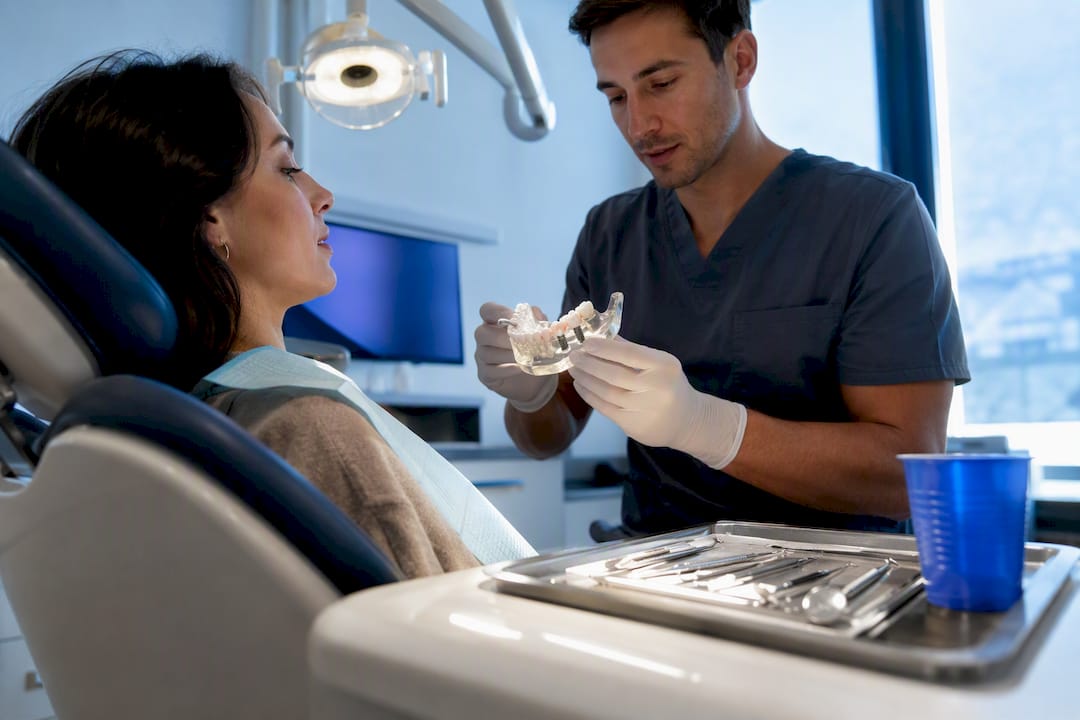
Most single-tooth implants run 3 to 6 months from consultation to final crown, while cases needing extraction or bone grafting stretch to 6 to 12 months or more. The gap between those numbers comes down to one thing: how long your jawbone needs to fuse to the implant, a process called osseointegration. Same-day, immediate-load options exist, but they only fit patients with strong bone and stable implant placement from the start.
TL;DR:
Bone grafting procedures, such as ridge augmentation and sinus lifts, can extend the treatment timeline by four to six months before implant placement.
The osseointegration process typically lasts three to six months, with denser lower jawbone healing faster than the upper jaw.
Immediate-load implants with a temporary crown are only suitable for patients with strong initial stability and good bone support.
Extra time is required for healing if your health conditions, such as smoking or diabetes, slow bone regeneration.
The total duration for a straightforward single-tooth implant is usually three to six months, while cases involving extraction and grafting can take up to twelve months.
Table of Contents
Dental Implant Timeline at a Glance
Here’s how the stages break down, from first exam to finished tooth:
Consultation and planning: 1 to 4 weeks
Preparatory procedures (extraction, grafting, sinus lift, if needed): 0 to 6 months
Implant placement surgery: one appointment, about 1 to 2 hours
Osseointegration (healing): 3 to 6 months, sometimes longer
Abutment and final crown: 3 to 5 weeks
Nearly all of that calendar time is your body healing, not chair time. In-office visits usually add up to a handful of short appointments. Immediate-load cases skip some of this by placing a temporary crown the same day as surgery, but that’s the exception, not the rule.
What Happens During Consultation and Treatment Planning?
Your first visit covers a full exam, a review of your medical history, intraoral photos, and digital X-rays. Many patients also need a CBCT scan, a 3D image that shows bone volume and helps the dentist map exactly where an implant can go. 3D imaging is standard for modern implant planning because it reveals details flat X-rays miss, like nerve position and sinus proximity.
This visit also sets the direction for everything after it:
Single tooth versus multiple implants versus full-arch changes the whole plan
Bone grafting needs get flagged here, before surgery is scheduled
Immediate versus delayed placement gets decided based on bone and infection status
Insurance pre-authorization can add 1 to 4 weeks before treatment starts
Patients generally need a few planning visits before moving forward.
How Do Extractions and Bone Grafting Add Time?
Not every case needs this stage, but many do, and its usually where timelines diverge the most.
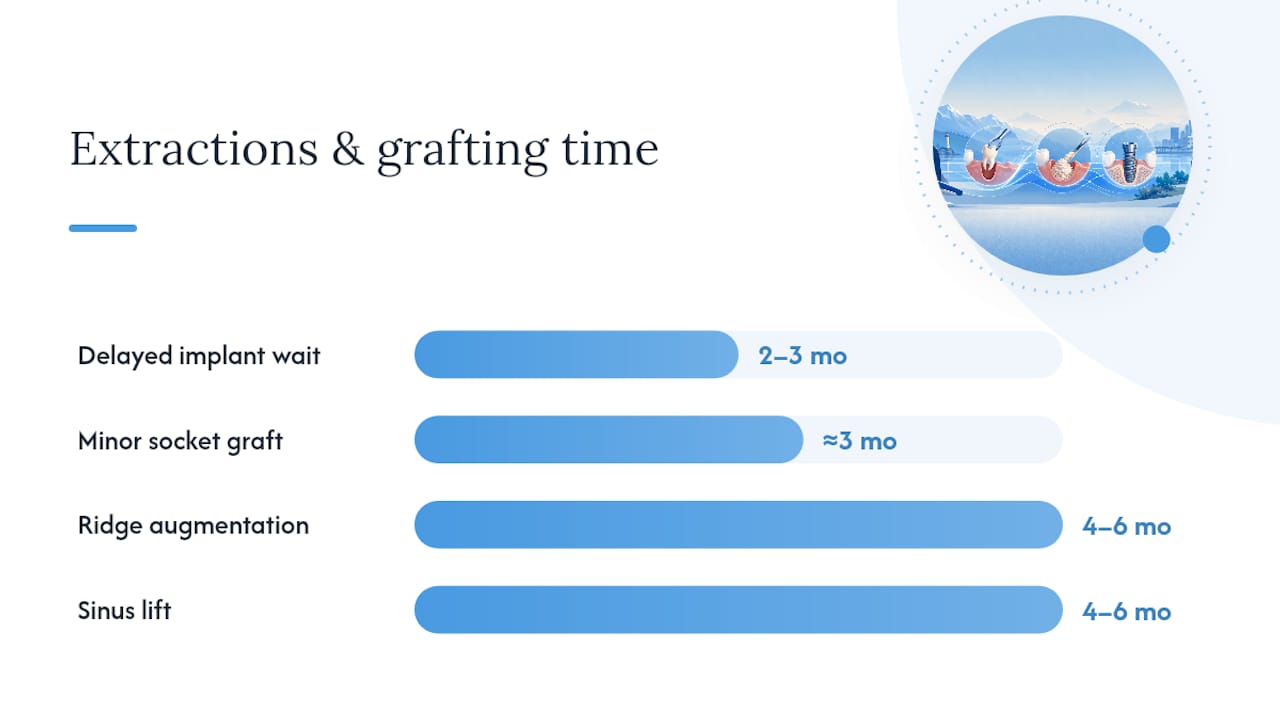
If a tooth needs to come out first, your dentist decides between immediate implant placement or a delayed approach that waits 2 to 3 months for the socket to heal, depending on infection risk and how much bone remains. Grafting timelines vary by scope. Small socket grafts often heal in about 3 months, while larger ridge augmentation or a sinus lift commonly adds 4 to 6 months before an implant can be placed safely. Readers dealing with existing bone loss can find more detail in our guide on dental implants with bone loss.
Minor socket graft: roughly 3 months to heal
Ridge augmentation: 4 to 6 months
Sinus lift: 4 to 6 months
Sometimes grafting and implant placement happen in the same visit, when there’s enough existing bone to support the implant while it heals alongside the graft. When bone is too thin or soft, staging the procedures separately gives better long-term stability.
Pro Tip: Ask directly whether your case allows combined grafting and placement. It can shave months off your total timeline, but only your dentist can confirm your bone qualifies.
What Happens on Implant Surgery Day?
Surgery day itself is short. A single implant typically takes about 1 to 2 hours in the chair, usually under local anesthesia, though sedation is available for anxious patients or more complex cases.
Days 1 to 7 after surgery: expect swelling and mild to moderate soreness, manageable with over-the-counter pain relief and a soft-food diet.
1 to 2 weeks post-op: a follow-up visit checks healing and removes stitches if they were placed.
Same day, in select cases: a temporary crown goes on immediately, but only when the implant shows strong initial stability and the bone quality supports it.
Patients recovering from an extraction beforehand may find our extraction post-op guide useful for what to expect in that first week.
How Long Does Osseointegration Actually Take?
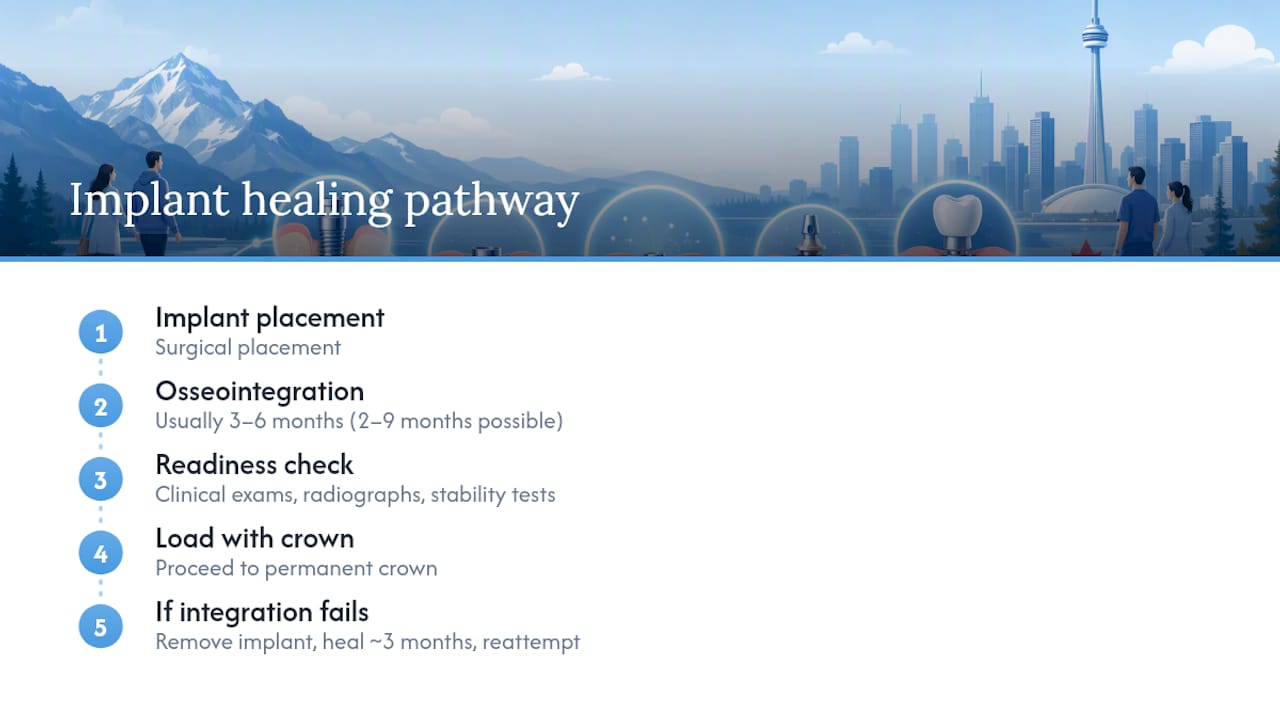
Osseointegration is the biological process where your jawbone fuses directly to the titanium implant surface, and it’s the single biggest factor behind how long dental implant treatment takes.
Osseointegration usually takes three to six months, though some cases run longer depending on bone quality, implant location, and whether grafting was involved. The lower jaw tends to integrate faster than the upper jaw because its bone is typically denser.
Some patients fall outside that range entirely, with healing stretching from 2 to 9 months depending on individual biology, according to Cleveland Clinic. Your dentist checks progress through clinical exams, follow-up radiographs, and sometimes stability testing before clearing the implant for its permanent crown.
If integration doesn’t take, the implant can be removed, the site allowed to heal, and placement attempted again after roughly three months. That’s rare, but it’s why clinicians resist rushing this phase. Research on implant stability consistently shows that pushing a case to loading before the bone is ready raises failure risk considerably. Biology sets the pace here, not the dentist’s schedule.
What Happens at the Abutment and Final Crown Stage?
Once your implant has integrated, the abutment, a small connector piece that links the implant to your crown, gets placed. Sometimes this happens during the original surgery; other times it’s a brief second procedure once healing is confirmed.
Gum tissue needs about 2 weeks to heal around the abutment before impressions or digital scans are taken
Your final crown or bridge typically takes 1 to 3 weeks to fabricate in a dental lab
A final appointment checks fit, bite alignment, and comfort before you leave with your finished tooth
From abutment placement to final delivery, plan on roughly 3 to 5 weeks total. Patients restoring multiple teeth may also want to review options on our crowns and bridges page.
What Are Your Options for Teeth While You Heal?
You won’t go without teeth during integration. Options include bonded temporary crowns, removable flipper partials, temporary dentures, or temporary bridges, depending on where the implant sits and how much chewing force the area handles.
Front teeth often get a fixed temporary for appearance
Back teeth healing under load usually get a removable option instead
Diet stays soft near the implant site while temporaries are in place
Cleaning around temporaries takes a gentler touch than your natural bite
Temporary teeth are standard practice during healing, so comfort and appearance rarely suffer while you wait.
What Factors Change Your Personal Timeline?
Every timeline above assumes average healing. Real timelines shift based on a handful of predictable factors.
Smoking and diabetes slow bone healing and can extend osseointegration significantly
Immunosuppressive medications may require closer monitoring and longer healing windows
Upper jaw versus lower jaw location changes bone density and integration speed
Existing infection or gum disease may need to clear before any implant work begins, which our guide on implants with gum disease covers in more depth
Scope of treatment (one tooth versus a full arch) multiplies both surgical and lab scheduling time
Insurance pre-authorization can quietly add weeks before treatment even starts
Pro Tip: If you smoke, ask your dentist how much extra healing time to budget. Some clinicians recommend quitting weeks before surgery specifically to protect osseointegration success.
What Do Real Implant Timelines Look Like?
Numbers are easier to plan around when you see them mapped to an actual schedule.
Straightforward single implant: Consultation, surgery about 2 to 4 weeks later, 3 to 4 months of integration, then abutment and crown. Total: roughly 3 to 6 months, consistent with typical single-tooth timelines. Our single tooth implant timeline guide walks through this exact path in more detail.
Extraction plus graft plus implant: Extraction, 3 to 4 months of graft healing, implant placement, 3 to 6 months of integration, then abutment and crown. Total: roughly 7 to 12 months.
Full-arch cases: Immediate-load protocols place a full temporary bridge the same day as surgery for qualifying patients, while staged approaches wait out full integration before any fixed bridge goes on. Appointment counts run higher here, often five or more visits across planning, surgery, and restoration.
How Mersal Dental Plans Your Implant Timeline
A personalized timeline is mapped out at your consultation to clarify which stages apply to your case before any procedure begins. Direct insurance billing, CDCP acceptance, and same-day treatment when clinically appropriate are offered. Bring your medical history and insurance details to your first visit so we can plan accurately from day one.
Why Patience With Healing Pays Off Long Term
Following the biological timeline instead of rushing it consistently produces better long-term implant outcomes. Temporary teeth exist precisely so you don’t have to trade a healthy result for a faster one. If anything feels off during healing, swelling that worsens, unusual pain, contact your clinic right away.
Ready to Map Your Own Implant Timeline?
Every timeline above is a general guide. Yours depends on your bone, your health history, and your specific case, which is exactly what a consultation is for. Mersaldental offers direct insurance billing and CDCP acceptance, so the financial side of planning doesn’t have to slow down the clinical side.

Before your visit, gather a list of current medications, any recent dental X-rays you have, and your insurance card. If you’re missing teeth now and want to know what your path looks like, visit our dental implants page to see how the process works, or browse our full services if you’re not yet sure implants are the right fit. Book a consultation with Mersaldental today and leave with a real timeline instead of a guess.
This article is general information, not a substitute for advice from a qualified doctor. Consult a qualified healthcare professional about your own circumstances before acting on anything here.
Sources
Recommended
Comments