Dental Implant Pain: Peaks 48–72 Hours, Opioid Sparing Relief


Most people feel mild to moderate discomfort that peaks around 48 to 72 hours after implant placement, then improves day by day. NSAIDs and acetaminophen control nearly all of it; opioids are rarely necessary. If pain worsens instead of easing after that first peak, or you develop fever, drainage, or a loose-feeling implant, that’s your signal to call your dentist.
TL;DR:
Pain typically peaks between days two and three after implant surgery and gradually improves over the following week unless additional procedures like grafting extend recovery.
Effective pain management involves combining NSAIDs and acetaminophen on a scheduled basis, with opioids rarely needed except for complex cases involving extensive tissue trauma.
Nonpharmacologic measures such as cold packs, soft foods, and wound care significantly reduce discomfort and speed healing during the first few days.
Worsening pain after the initial peak, increasing swelling, fever, or loose implants indicate potential complications requiring immediate professional evaluation.
Routine maintenance and good oral hygiene are key to preventing long-term issues like peri-implantitis, which can cause late-stage discomfort with little warning.
Table of Contents
Is Dental Implant Pain Normal? What to Expect Right After Surgery
Local anesthesia means you won’t feel pain during the actual placement. What you notice instead is pressure, sometimes a vibrating sensation from the drill, and the strange awareness that someone is working in your mouth without it hurting. That’s normal, and it’s usually the most intense sensory experience of the whole process.
The real discomfort shows up once the anesthetic wears off, typically within a few hours. At that point, expect some combination of:
Mild bleeding or oozing at the gum line
A dull, throbbing ache rather than sharp pain
Swelling in the cheek or jaw
Jaw stiffness that makes opening wide uncomfortable
Here’s the part most people aren’t warned about: pain after dental implants normally peaks a couple days after surgery, as the inflammatory response builds. Knowing that in advance keeps day two from feeling like a setback when it’s actually right on schedule.
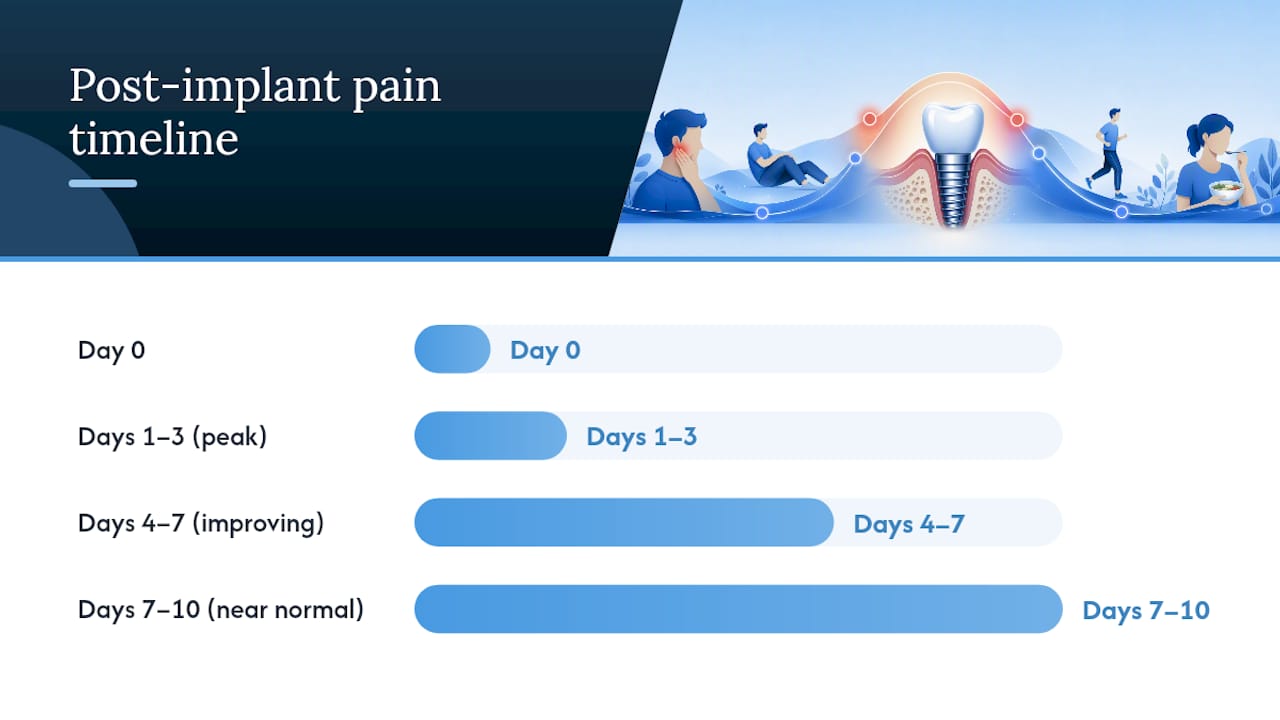
The Dental Implant Recovery Pain Timeline, Day by Day
Recovery follows a fairly predictable arc, though the exact pace depends on what was done and how your body responds.
Day 0: Anesthetic is still active or just wearing off. Minimal pain, some numbness.
Days 1 to 3: This is the peak. Swelling, aching, and stiffness are at their worst, then begin to ease.
Days 4 to 7: Steady improvement. Swelling drops, pain becomes intermittent rather than constant.
Days 7 to 10: Most patients feel substantially back to normal, with only minor tenderness at the site.
That said, this timeline stretches out considerably when the procedure involves more than a single implant. A bone graft, a sinus lift, an extraction done at the same visit, or a full-arch case all add tissue trauma, which means more inflammation and a longer road to feeling normal. If you’re having any of those done alongside your implant, plan for a week or two of noticeably slower improvement, not just a rough couple of days.
Pro Tip: Keep a one-line daily log: pain level (1 to 10), swelling, and any new symptoms. If your dentist needs to assess whether you’re on track, a quick timeline is far more useful than “it still hurts.”
What Actually Causes the Pain After a Dental Implant
Early pain after dental implants is almost entirely biological, not a sign anything went wrong. Placing an implant means cutting through gum tissue and preparing bone, and your body responds with inflammation. That process is uncomfortable by design. It’s not a complication.
Two variables drive how much you’ll feel:
Surgical complexity: One implant in healthy bone hurts less than three implants with grafting done in the same visit.
Individual healing response: Smoking, uncontrolled diabetes, and certain medications all slow tissue recovery and can prolong soreness.
Interestingly, implant placement is often reported as less painful than a tooth extraction, since implant surgery is more controlled and localized than pulling a tooth. Pain that shows up weeks or months later is a different story. That’s usually mechanical (a loose abutment screw, a cracked crown) or biological in a different way (peri-implantitis, an infection around the implant, or pressure from a nearby sinus).
Managing Dental Implant Pain: What Actually Works
Effective pain relief for dental implants doesn’t require heavy medication. The current standard is a multimodal, opioid-sparing approach, meaning you combine two over-the-counter drugs that work through different pathways instead of reaching straight for something stronger.
Ibuprofen (an NSAID): Targets inflammation directly, which is the actual source of most implant pain.
Acetaminophen: Works differently in the body and pairs well with an NSAID for combined relief.
Alternating or combining both, on a schedule rather than waiting until pain spikes, tends to keep discomfort flatter throughout the day.
This combination is now considered first-line therapy for implant pain, and it’s effective enough that opioids are typically reserved for more complex cases involving extensive grafting or difficult surgical access. Clinicians favor this approach because opioids carry dependency risk without adding meaningful pain control over NSAID and acetaminophen combinations for most implant patients.
Beyond medication, a few nonpharmacologic steps make a real difference:
Cold packs on the cheek for the first 24 to 48 hours to limit swelling
A soft diet that avoids chewing near the surgical site
Resting with your head slightly elevated for the first couple of nights
One detail worth knowing: many clinicians place a long-acting local anesthetic, such as bupivacaine, at the end of the procedure. It blunts the earliest hours of postoperative pain before it even starts, which is part of why some patients feel surprisingly comfortable that first evening.
Recovery Tips That Speed Healing and Cut Discomfort
Small daily choices matter more than most patients expect during the first week.
Diet: Stick to soft foods (yogurt, mashed potatoes, scrambled eggs, smoothies) for the first few days. Skip anything crunchy, spicy, or served hot enough to irritate the site.
Activity: Avoid strenuous exercise for 48 to 72 hours since raised blood pressure can worsen swelling and bleeding. Sleep with your head propped up to reduce overnight puffiness.
Oral care: Rinse gently with warm salt water starting the day after surgery. Brush normally everywhere except directly over the implant site until your dentist clears you.
Lifestyle: Skip alcohol and, if possible, pause smoking entirely. Both interfere with bone healing and measurably raise the risk of complications.
When Dental Implant Pain Means Something’s Wrong
Direction matters more than intensity. Pain that’s improving, even slowly, is a good sign. Pain that gets worse after day three or four, or that fades and then comes roaring back, is not.
Watch for these implant failure signs:
Fever or chills
Swelling that spreads rather than shrinks
Pus or foul-tasting drainage from the site
Pain that intensifies instead of easing after the 48 to 72 hour peak
Any sense that the implant itself feels loose or mobile
If you notice any of these, clinical guidance is clear that it needs a professional look, not a wait-and-see approach. Your dentist will check the implant for mobility, gently probe the surrounding gum, and often take an X-ray to rule out infection or bone loss. A quick phone call is reasonable for mild questions, but spreading swelling or fever warrants an in-office visit the same day.
Long-Term Dental Implant Pain: Causes and Prevention
Pain that shows up months or years after placement usually isn’t the same problem as early postoperative soreness. The most common late cause is peri-implantitis, an infection and inflammation around the implant that behaves a lot like gum disease around a natural tooth.
Here’s the uncomfortable part: peri-implantitis can progress with very little pain in its earlier stages, so the absence of discomfort doesn’t mean the absence of disease. That’s exactly why routine checkups matter even when everything feels fine.
Daily brushing and flossing around the implant, plus professional maintenance visits, catch problems before they cause pain.
A loose abutment screw or a cracked crown is a mechanical fix, often resolved in a single visit.
Persistent or worsening late pain may call for a specialist evaluation to rule out bone loss or implant failure.
Why We Tell Patients the Truth About Day Two
Most guides undersell how uncomfortable day two can feel, and that gap between expectation and reality is where a lot of unnecessary panic comes from. We’d rather tell you upfront that discomfort peaks 48 to 72 hours in, not on the operating table, so you don’t mistake normal healing for a problem.
The other thing conventional advice gets backwards is treating pain intensity as the main thing to track. It isn’t. The trajectory is what tells the real story: pain that’s easing, even slowly, is healing doing its job. Pain that’s climbing after day three deserves a call, regardless of how it compares to what your neighbor felt after their implant. We built our approach to implant placement, from anesthesia choice to the follow-up schedule outlined in our implant timeline resource, around that principle: watch the direction, not just the number.
— Mersal
Getting Implant Pain Relief and Treatment at Mersaldental
If you’re weighing whether implants are right for you, or you’re a few days into recovery and want a professional to check that everything looks on track, Same-day assessments are available in the area, with insurance billing and acceptance of public dental programs to reduce cost barriers for prompt care.
Our implant services cover everything from single-tooth placement to cases requiring bone grafting, and every treatment plan starts with imaging and a straightforward conversation about what to expect for pain and healing time in your specific case. If you’re dealing with a cracked crown, a loose abutment, or symptoms that don’t match the normal recovery pattern, our emergency care line is there for same-day attention rather than a week-long wait. Ready to move forward? Book a consultation and we’ll walk you through the plan, the timeline, and what your insurance covers before you commit to anything.
Sources
This article is general information, not a substitute for advice from a qualified doctor. Consult a qualified healthcare professional about your own circumstances before acting on anything here.
FAQ
Are Dental Implants Extremely Painful?
No. Most patients describe implant surgery pain as mild to moderate, not extreme, and many find it less painful than a tooth extraction. Local anesthesia keeps the procedure itself pain-free, and NSAIDs plus acetaminophen manage the aftermath for nearly everyone.
Can the Body Reject a Dental Implant?
The body can fail to integrate an implant with the surrounding bone, which is different from the immune-style “rejection” seen with organ transplants. Signs of this include persistent pain, mobility, or infection, and early evaluation gives the best chance of saving the implant.
Is It Normal to Still Have Pain After 10 Days of Having a Dental Implant?
Some lingering tenderness at 10 days can be normal, especially after grafting or multiple implants, but most patients feel substantially comfortable by then. Pain that’s still intense or getting worse at this point should be checked by your dentist rather than waited out.
How Can I Heal Faster After Dental Implants?
Stick to a soft diet, use cold packs during the first 48 hours, and avoid smoking and alcohol, since both slow bone healing. Gentle salt water rinses and keeping up with scheduled follow-up visits also help you catch and address minor issues before they become bigger ones.
What Does an Implant Consultation Cost at Mersaldental?
Pricing depends on your specific case, including whether grafting or multiple implants are involved, so current costs are listed on the Mersaldental implants page. The practice bills directly to insurance and accepts CDCP and IFHP, which can significantly reduce out-of-pocket cost.
Recommended
Comments