1–3 Days After Extraction: Clinician Backed Dry Socket Symptoms

If your pain started severe and is getting worse one to three days after your extraction, and you notice a missing blood clot or exposed bone where the tooth used to be, that pattern is consistent with dry socket. The most telling clue is pain that radiates to your ear, eye, temple, or neck and doesn’t respond to your usual pain medication. Call your dental clinic today. Waiting it out rarely helps. Treatment is quick once you’re in the chair.
TL;DR:
Pain that worsens one to three days after extraction and radiates to nearby areas strongly indicates dry socket, especially with an empty socket or exposed bone.
Smoking, using straws, and difficult extractions significantly increase the risk of dry socket by disrupting blood clot formation or retention.
Diagnosis relies mainly on clinical observation of an empty or exposed socket with persistent severe pain, not on imaging or lab tests.
Effective treatment involves gentle irrigation and medicated dressing, with most patients experiencing relief within a few days.
Routine follow-up includes avoiding suction, starting gentle saltwater rinses after 24 hours, and taking pain medication as directed for optimal healing.
Table of Contents
Symptoms of Dry Socket: A Clinician Checklist You Can Use at Home
Dry socket, known clinically as alveolar osteitis, has a fairly predictable fingerprint. We tell patients to watch for this specific combination rather than judging pain by intensity alone.
Timing: pain that starts or sharply worsens one to three days after extraction, rather than easing day by day
Radiating pain: discomfort that spreads to the ear, eye, temple, or neck on the same side as the extraction
Empty or exposed socket: you can see (or feel with your tongue) a hole with no clot, sometimes showing whitish bone
Bad taste or breath: a persistent foul odor or taste that doesn’t improve with rinsing
Low-grade fever: mild, not the high fever you’d expect with a serious infection
Normal healing looks different. Soreness peaks in the first 24 to 48 hours, then improves steadily. It stays manageable with over-the-counter medication and doesn’t spread to other parts of your face. Harvard Health notes that symptoms typically emerge in that one to three day window, and if nothing has developed by day five, your risk drops considerably.
How to Tell Dry Socket From Normal Healing or an Infection
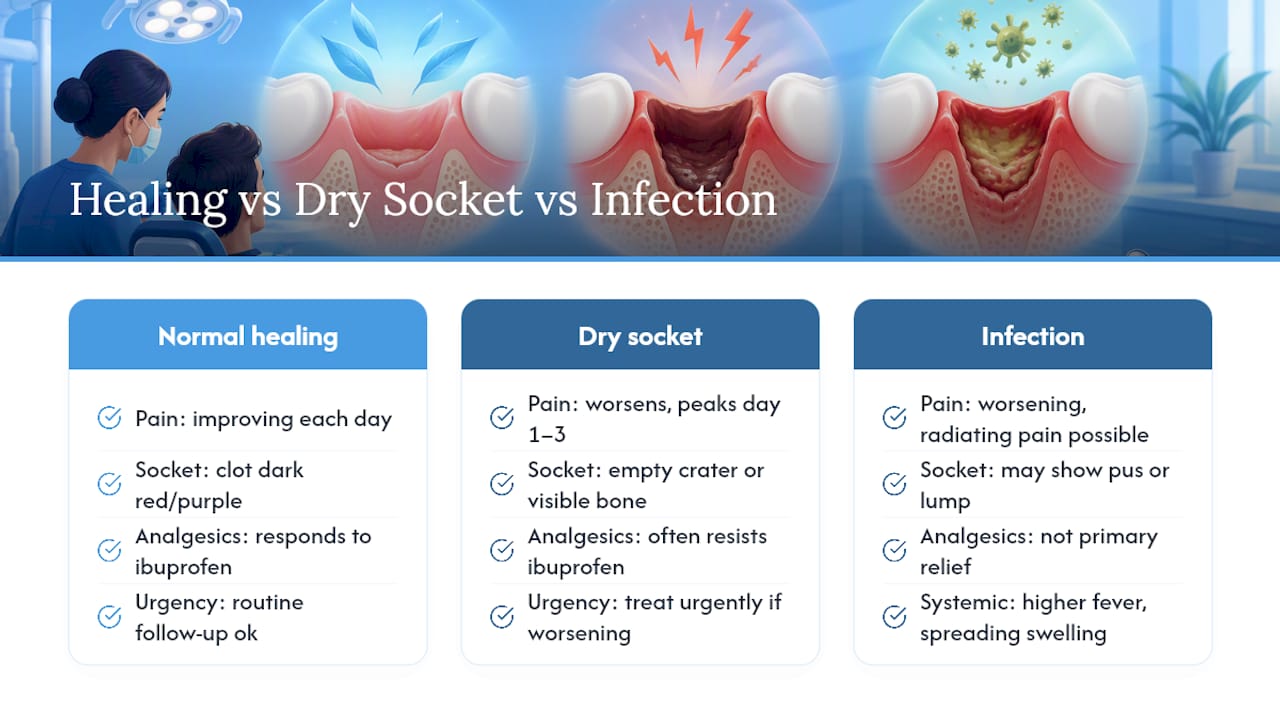
The trend matters more than the raw pain score. Normal recovery gets better each day. Dry socket gets worse, often peaking one to three days out and staying severe until treated, according to a clinical review of alveolar osteitis.
Look at the socket itself. A healing extraction site has a dark red or purple clot filling the space, sometimes topped with pale granulation tissue as it matures. Dry socket shows an empty crater or visible bone. Another tell: dry socket pain often resists standard analgesics like ibuprofen, while normal post-op soreness responds to them.
Infection tends to bring higher fever, spreading facial swelling, and sometimes pus or a fluctuant lump, which points toward a systemic problem rather than a local clot issue. If you’re dealing with worsening, radiating pain, treat it as urgent. If you have mild soreness that’s slowly improving, routine follow-up is fine.
Causes and Risk Factors That Increase the Chance of Dry Socket
Dry socket happens when the blood clot protecting the extraction site breaks down or dislodges before the socket has healed underneath. That process is called fibrinolysis, and once it starts, the exposed bone and nerve endings are left without protection.
Certain behaviors and conditions make this far more likely.
Smoking: chemicals in cigarette smoke plus the sucking motion both interfere with clot formation
Straws and suction: any sucking action can physically pull the clot loose
Forceful spitting: creates the same negative pressure as a straw
Difficult extractions: wisdom teeth and surgically complex removals carry higher risk
Poor oral hygiene: bacteria can interfere with clot stability
Estrogen-containing oral contraceptives: hormonal effects on clotting may play a role
Pro Tip: If you smoke, the days right after an extraction matter more than any other time to quit, even temporarily. Smokers are more than three times as likely to develop dry socket as nonsmokers, which makes this one behavior the single biggest lever you control. Even with perfect aftercare, a small number of cases happen anyway. That’s not a failure on your part, just biology being unpredictable.
How Dentists Diagnose and Treat Dry Socket
Diagnosis is almost entirely clinical. Your dentist will ask when the pain started, how it’s changed, and whether it radiates anywhere, then look directly at the socket. A missing clot with exposed bone, combined with pain that’s increasing rather than easing, is usually enough to confirm it without imaging or lab work, per the alveolar osteitis literature.
Treatment follows a consistent pattern:
Gentle irrigation to flush out food debris and bacteria from the socket
Medicated dressing or paste placed directly in the socket to numb the area and support healing
Local pain control, sometimes including a stronger prescription than standard over-the-counter options
Aggressive scraping of the socket is generally avoided. Clinicians favor irrigation over curettage because scraping can expose more bone and worsen the pain rather than resolve it. Antibiotics aren’t automatic. They come into play only when there are clear infection signs like spreading swelling or fever, since dry socket itself is a structural clot problem rather than a bacterial one, per Cleveland Clinic.
Most patients feel noticeably better within a few days of treatment, and the socket fully heals in about seven to ten days.
Pro Tip: When you call your dentist, mention exactly when the pain started, how severe it is on a 1 to 10 scale, and whether you have a fever. That detail helps the front desk triage you faster.
Prevention and At-Home Care After Extraction
Protecting that blood clot is the whole game for the first few days.
Skip smoking and straws entirely for at least the first few days
Drool into a tissue instead of spitting to avoid the suction that dislodges a clot
Start warm salt water rinses gently after the first 24 hours, per MedlinePlus guidance
Stick to soft foods and skip carbonated drinks until you’re further along
Take prescribed pain medication as directed rather than waiting until pain spikes
Pro Tip: Sleep with your head slightly elevated for the first couple of nights. It reduces throbbing and swelling more than most patients expect. For a full walkthrough of what to do hour by hour, our extraction post-op guide covers the details.
Recovery Timeline: What Improvement Looks Like and When the Risk Is Low
Normal healing trends downward from day one. Pain peaks briefly, then eases steadily each day. Dry socket breaks that pattern, with pain intensifying rather than fading around days one through three.
If you’ve made it several days without worsening pain, dry socket becomes unlikely. That’s a genuinely reassuring marker if you’re anxiously tracking your recovery. Once treated, most patients notice real relief within a few days, and full healing of the socket takes roughly seven to ten days, consistent with findings from Cleveland Clinic. Pain that persists or returns after initial improvement is worth a follow-up call, since it can signal a second clot problem or an evolving infection.
Mersal Dental Clinical Perspective: Emergency Care and What Patients Can Expect
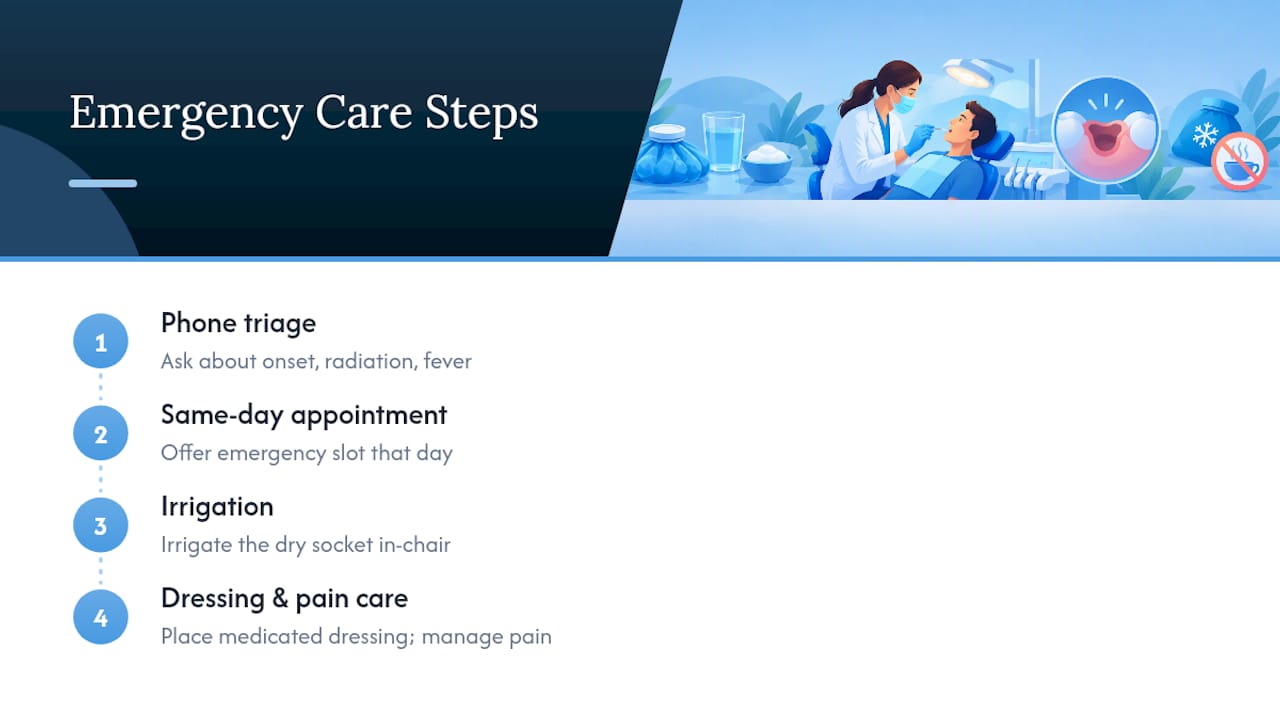
When patients call us with suspected dry socket, we ask about pain onset, radiation, and fever before you even walk in. In the chair, we typically irrigate the socket, place a medicated dressing, and manage pain right away. We offer same-day emergency appointments for exactly this reason. Nobody should sit at home in worsening pain waiting for a routine slot to open up.
Author Perspective: A Quick Word Before You Call
Dry socket is one of the more painful things you can experience after a routine procedure, but it’s also one of the easiest dental problems to fix once you’re seen. Don’t tough it out. If your pain fits this pattern, contact your dental clinic’s emergency services or your extraction provider today.
— Mersal
Sources
This article draws on guidance from Mayo Clinic, Cleveland Clinic, Harvard Health, MedlinePlus, and a peer-reviewed alveolar osteitis review on NCBI Bookshelf, linked throughout for verification.
This article is general information, not a substitute for advice from a qualified doctor. Consult a qualified healthcare professional about your own circumstances before acting on anything here.
FAQ
How Can You Tell If You Have a Dry Socket?
The clearest signs are severe pain that worsens rather than improves one to three days after extraction, plus a visibly empty socket or exposed bone. Radiating pain toward your ear or temple, along with a bad taste or odor, strengthens the case for dry socket.
Will a Dry Socket Heal on Its Own?
Dry socket can eventually heal without treatment, but the pain usually persists far longer and more intensely than necessary. With professional treatment involving irrigation and a medicated dressing, most cases improve within days and fully heal in about seven to ten days.
What Are the Riskiest Days for Dry Socket?
The highest risk window falls in the first one to three days after extraction, when the protective blood clot is still fragile. If nothing has developed by day five, your odds of developing dry socket drop significantly.
How Do Dentists Fix a Dry Socket?
Dentists gently irrigate the socket to clear out debris, then pack it with a medicated dressing that eases pain and supports healing. Antibiotics are added only if there are signs of actual infection, since dry socket itself is a clot problem rather than a bacterial one.
Recommended
Comments