What to Do When a Filling Fell Out: Quick Steps

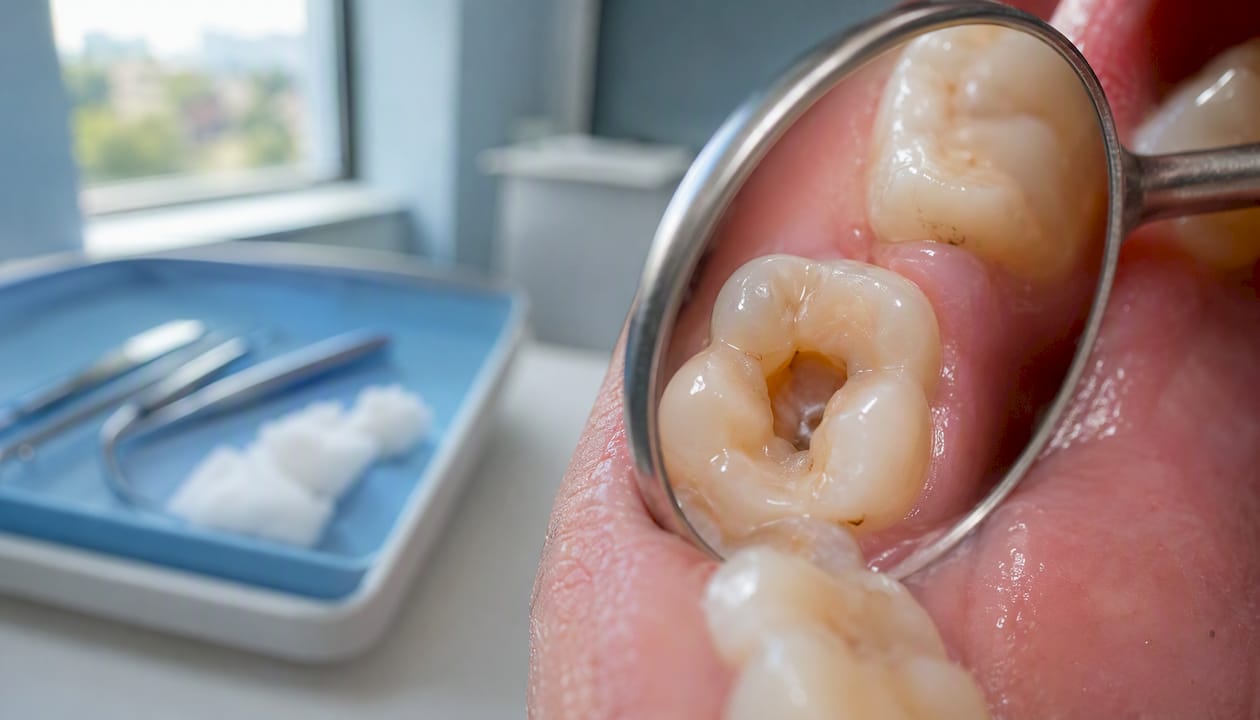
If a dental filling fell out, call your dentist right away and protect the exposed tooth until your appointment. Most lost fillings are not true emergencies, but the ADA’s MouthHealthy resource and Aspen Dental both confirm that exposed dentin needs prompt evaluation, typically within a few days.
Here is what to do right now:
Rinse with warm salt water (about 1/2 teaspoon of salt dissolved in 8 ounces of water) to clear debris and reduce bacteria.
Save the filling if you can find it and bring it to your appointment.
Avoid chewing on that side until the tooth is repaired.
Urgency rule: If you have swelling, fever, or pain you cannot control with over-the-counter medication, treat this as a same-day dental emergency. Otherwise, book an evaluation promptly, ideally within a few days.
Key Takeaways
When a filling falls out, the most important action is to protect the exposed tooth and contact a dentist within 24–72 hours, or immediately if emergency signs are present.
Point | Details |
Call your dentist promptly | Most lost fillings should be evaluated within 24–72 hours; same-day care is needed for swelling, fever, or severe pain. |
Rinse and protect right away | Use warm salt water (1/2 tsp in 8 oz water) and apply an OTC cement like Dentafix or Dentemp to cover the cavity. |
OTC materials are temporary | Temporary filling kits typically last 1–2 weeks; they reduce risk but do not replace professional repair. |
Know the emergency signs | Swelling, fever, or uncontrollable pain means seek same-day dental care, not a 72-hour wait. |
Mersaldental offers same-day care | Mersaldental accepts new patients and provides same-day emergency dental services, including direct insurance billing and CDCP. |
Table of Contents
Why a lost filling sometimes doesn’t hurt — and why that’s still a problem
A tooth filling came out and you feel nothing? That is actually common, and it can give you a false sense of security. There are two main clinical reasons for this.
First, if the tooth previously had a root canal, the nerve was removed during that procedure. No nerve means no pain signal, even when the inner tooth structure is fully exposed. Second, even in a tooth with an intact nerve, the dentin layer may still be thick enough to buffer temperature and pressure, at least initially. That buffer erodes quickly once bacteria get to work.
Exposed dentin is more vulnerable to bacteria and can accelerate decay and sensitivity. Decay progresses silently in the early stages. By the time you feel it, the damage is often deeper than a simple filling can address. Lack of pain is not a green light to wait.
What can happen if you leave a lost filling untreated
Leaving a lost dental filling unaddressed for days or weeks sets off a predictable chain of events. The exposed dentin absorbs bacteria from food and saliva, and new decay can begin within days. That decay can deepen into the pulp chamber, turning a straightforward filling replacement into a root canal.
Structurally, a tooth without its filling is weaker. The walls of the cavity can crack under normal chewing pressure, and a fractured tooth may require a crown or, in severe cases, an extraction. If infection develops, you may experience an abscess, which carries its own risks including swelling, fever, and spread of infection beyond the tooth.
The 24–72 hour evaluation window exists for a reason. The longer the tooth sits unprotected, the more treatment it is likely to need.
What to do right now: step-by-step home care
Follow these steps from the moment you realize your filling is gone through the next day or two while you arrange professional care.
Rinse gently. Use warm salt water (1/2 teaspoon salt in 8 ounces of water) to flush the cavity and reduce bacterial load. Do this after meals as well.
Blot the area dry with a clean piece of gauze or tissue before applying any temporary material.
Save the filling if you found it. Place it in a small zip-lock bag and bring it to your appointment. The dentist may be able to use it for reference.
Avoid probing the cavity with your tongue, a toothpick, or any instrument. You can introduce bacteria or dislodge fragile tooth structure.
Manage pain with ibuprofen or acetaminophen at the dose on the package label. A topical numbing gel (such as Orajel) applied carefully around the area can also reduce sensitivity between doses.
Adjust your diet. Stick to soft foods, avoid anything very hot, very cold, or sticky, and chew on the opposite side entirely.
Call your dental office. Many offices hold emergency slots each day. When you call, mention that a filling fell out and describe any pain level so reception can triage you correctly.
What not to do: Never use superglue or household adhesives near a tooth. Do not try to press the old filling back in on your own. Both approaches can trap bacteria, damage the cavity walls, and complicate the repair.
Pro Tip: When you call the dental office, say specifically “a filling fell out” rather than “I have a dental issue.” That phrasing helps reception flag you for a restorative slot or emergency opening faster.
Safe short-term options until you see a dentist
Over-the-counter temporary filling materials and dental wax are not permanent repairs. They are protective covers that reduce sensitivity, keep food out of the cavity, and lower the risk of fracture while you wait for your appointment.
Dentafix Temporary Dental Cement is one of the most widely available options. It is marketed as a temporary emergency cement for up to 4 weeks, and its label advises consulting a dentist within 24 hours of application. That 24-hour guidance is not a formality. It reflects the fact that the product seals the surface without addressing any underlying decay or structural damage.
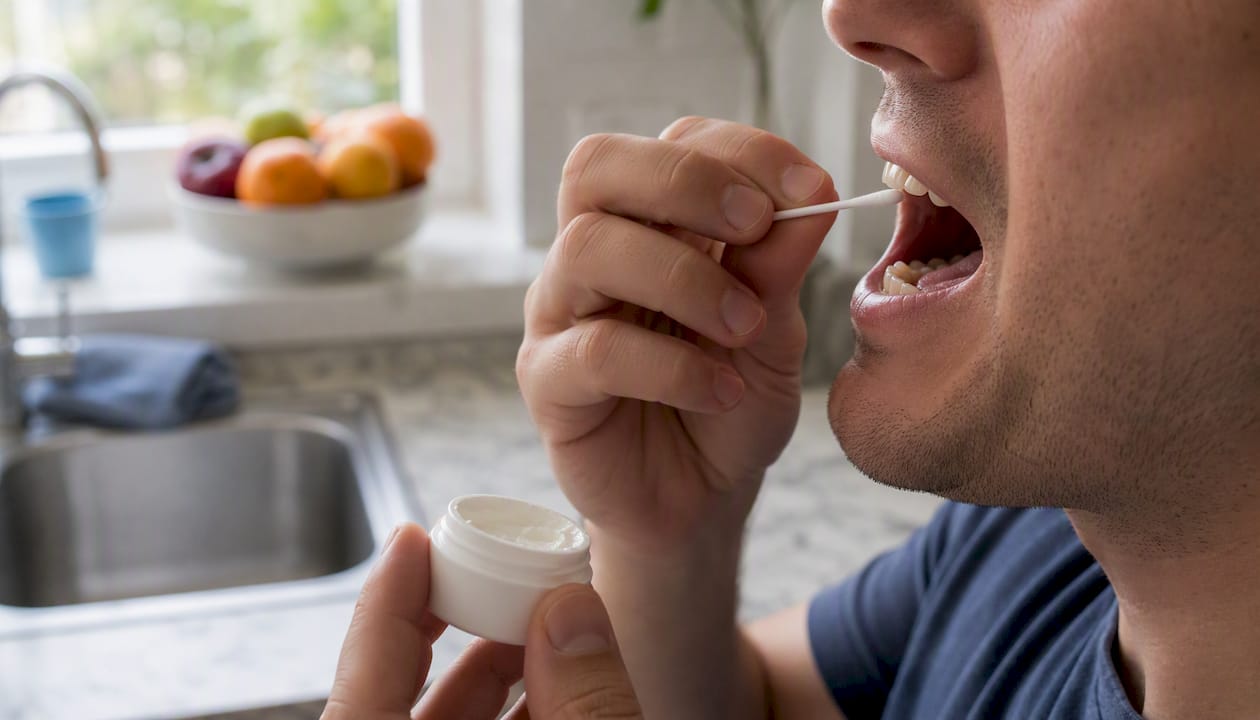
Dentemp is another common choice. Product instructions call for leaving the cavity moist after rinsing, pressing the material firmly into the opening, biting down several times to seat it properly, removing any excess, and waiting at least two hours before eating. Getting the bite right matters. An uneven surface can cause sensitivity or cause the material to dislodge sooner.
Dental wax (the soft wax sold for orthodontic use) can cover a sharp edge or rough surface in a pinch, though it does not fill a cavity the way cement does.
Key points to keep in mind:
OTC temporary fillings typically last 1–2 weeks in everyday use; clinician-placed temporary restorations often last 4–6 weeks, but both require professional follow-up.
Apply the material to a clean, rinsed tooth for the best adhesion.
Avoid eating on that side for at least two hours after application.
These products are a bridge to your appointment, not a substitute for it.
Pro Tip: Keep a small OTC temporary filling kit in your medicine cabinet. Dental emergencies rarely happen at convenient times, and having Dentafix or Dentemp on hand means you can protect the tooth within minutes.
How urgent is it, and what will the dentist do?
Most lost fillings fall into the “urgent but not emergency” category. Many offices can offer same-day emergency slots, and the standard recommendation is to be evaluated within 24–72 hours.
Seek same-day emergency care if you experience any of the following:
Swelling in the jaw, cheek, or gum
Fever
Severe, persistent pain that OTC medication does not control
A visible crack in the tooth or a tooth that feels loose
At your appointment, the dentist will examine the tooth and take an X-ray to assess how much structure remains and whether decay has reached the pulp. From there, the treatment path depends on what they find.
Situation | Likely Treatment | Typical Timeline |
Small cavity, healthy structure | Replace the filling | Same visit or next available |
Large cavity, weakened walls | Crown placement | 1–2 visits |
Decay reaching the pulp | Root canal, then crown | 2–3 visits |
Severe fracture or infection | Extraction | Same day or urgent referral |
Emergency signs (swelling, fever) | Same-day emergency care | Immediately |
Colgate’s patient guidance recommends calling your dental office first so reception can advise on urgency and prepare the right appointment type. When you arrive, bring the old filling if you saved it, and be ready to describe when the filling came out, any pain level, and whether you applied a temporary material.
Regarding cost: dental insurance typically covers filling replacements under basic restorative benefits, often at 70–80% after your deductible. Crowns and root canals fall under major restorative coverage, usually at 50%. If you are uninsured, ask the office about payment plans or whether they accept programs like CDCP.
How to reduce the chances of losing another filling
A filling that fell out once is a signal worth paying attention to. Several factors contribute to filling failure, and most of them are manageable.
Brush twice daily with a fluoride toothpaste and floss once a day. Decay around the edges of a filling (called recurrent decay) is one of the most common reasons fillings loosen and fail.
Avoid chewing ice, hard candies, or non-food objects. These habits generate forces that fillings are not designed to withstand repeatedly.
Address bruxism (teeth grinding). If you grind at night, a custom night guard protects both your natural teeth and your restorations. Ask your dentist about one at your next visit.
Keep your regular checkup schedule. A dentist can spot a filling that is cracking, worn, or lifting at the margins long before it falls out, and replacing it proactively is far simpler than treating the damage left behind.
Ask about durable materials. For teeth that take heavy chewing load, a crown may outlast a large filling by years. If your dentist mentions that a filling is “large” or that the remaining tooth structure is thin, that conversation about a crown is worth having.
Pro Tip: Tell your dentist if you notice any tooth that feels “high” when you bite down after a filling is placed. An uneven bite puts extra stress on the restoration and shortens its life. A quick adjustment at the same visit prevents premature failure.
What most lost-filling advice gets wrong
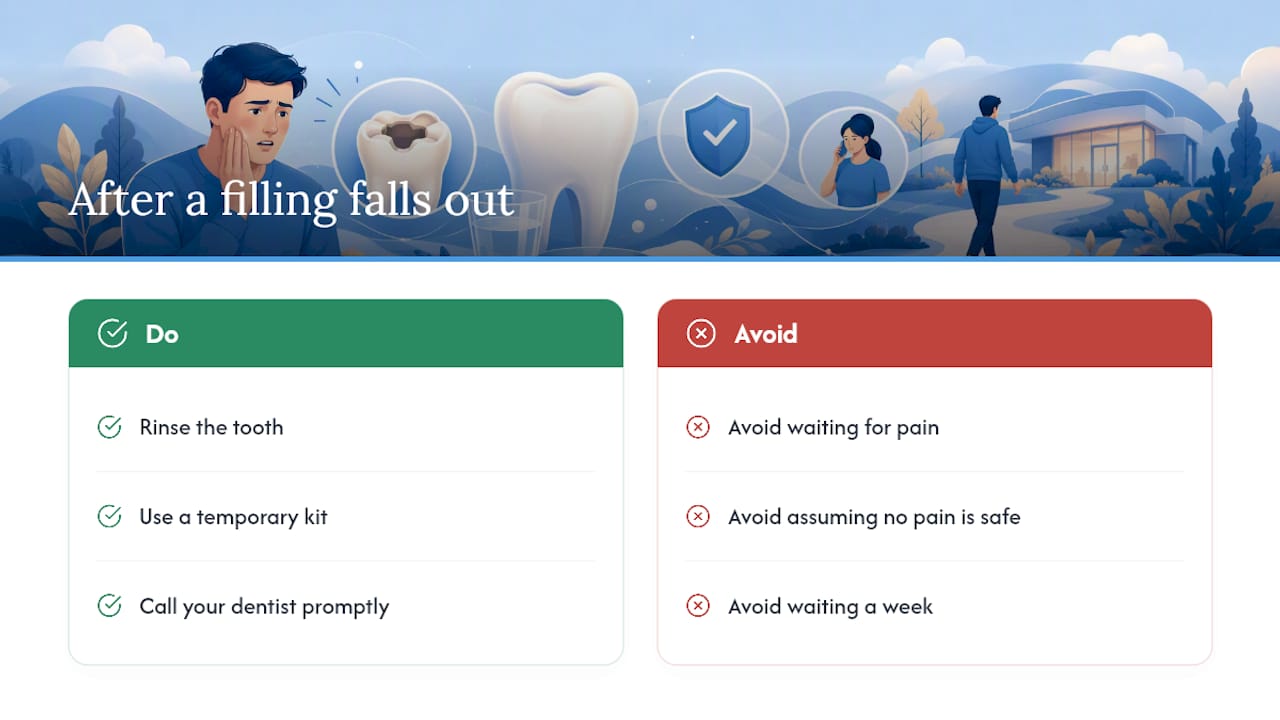
The standard advice you find online covers the basics well enough: rinse, use a temporary kit, call your dentist. What it consistently underplays is the silence problem.
A tooth that does not hurt after losing a filling is not a tooth that can wait. Pain is a lagging indicator in dentistry. By the time a cavity reaches the nerve and triggers that sharp, unmistakable ache, the decay has already traveled through millimeters of dentin. The absence of pain in the first 24–48 hours after a filling falls out tells you almost nothing about the state of the tooth underneath.
The second thing most guides underplay is the structural risk. People focus on infection because it is dramatic and visible. But a tooth wall that fractures under chewing pressure, because the filling that was bracing it is gone, can turn a simple repair into a crown or an extraction with no warning at all. That is the scenario worth acting fast to prevent.
The practical upshot: use a temporary kit, yes, but do not let it make you comfortable waiting a week. The kit buys you time to get to the dentist, not time to see if the tooth heals on its own.
Mersaldental is ready when you need same-day care
A lost filling is exactly the kind of situation where having a dental office you can call the same day makes a real difference. Mersaldental, located in lower town Ottawa, accepts new patients and offers same-day emergency dental services for situations like a tooth filling that came out unexpectedly.

We provide direct insurance billing and accept the Canadian Dental Care Plan (CDCP) and IFHP, so cost uncertainty does not have to delay your care. Our team handles everything from simple filling replacements to crowns and bridges when more extensive restoration is needed. If you are dealing with a lost filling right now, contact Mersaldental to book your appointment or ask about same-day availability.
Sources
The guidance in this article draws on the following authoritative references. Each is worth bookmarking if you want to verify instructions or purchase recommended OTC materials.
Recommended
Comments