In-Office Teeth Whitening: Fast Results, What to Expect

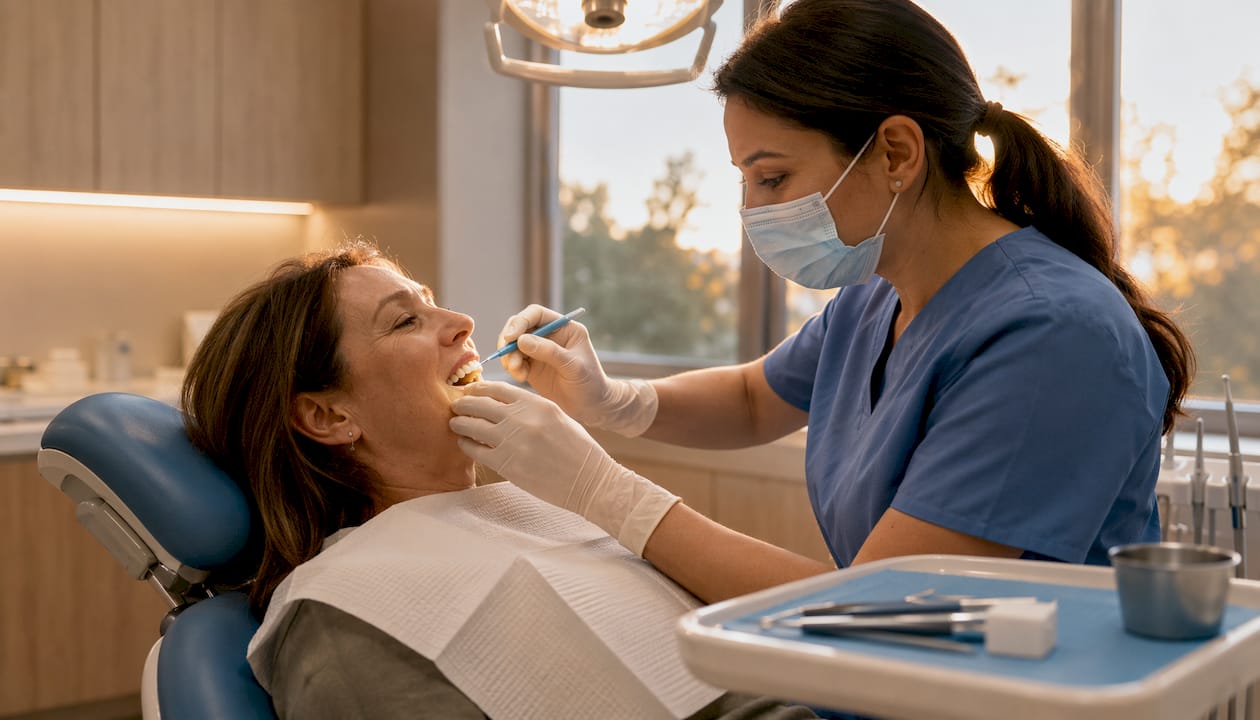
In-office teeth whitening is a dentist-performed procedure that uses professional-strength peroxide gel under clinical supervision to deliver dramatic shade changes in a single 60–90 minute visit. If you want noticeably whiter teeth before a wedding, a job interview, or any event where your smile matters, this is the fastest path to get there. U.S. costs typically run a few hundred to around one thousand dollars per session, depending on the clinic and the system used. One thing to know upfront: results are not permanent, and any crowns, veneers, or fillings you already have will not change color.
Table of Contents
How does in-office teeth whitening compare to your other options?
What actually happens during an in-office whitening appointment?
Zoom, Opalescence Boost, and BriteSmile: what’s the difference?
What are the risks and side effects, and how do dentists manage them?
Which stains respond to whitening, and when should you consider alternatives?
What dentists say about safety, concentrations, and restorations
A dentist’s perspective on when in-office whitening is actually worth it
Ready to see what professional whitening can do for your smile?
How does in-office teeth whitening compare to your other options?
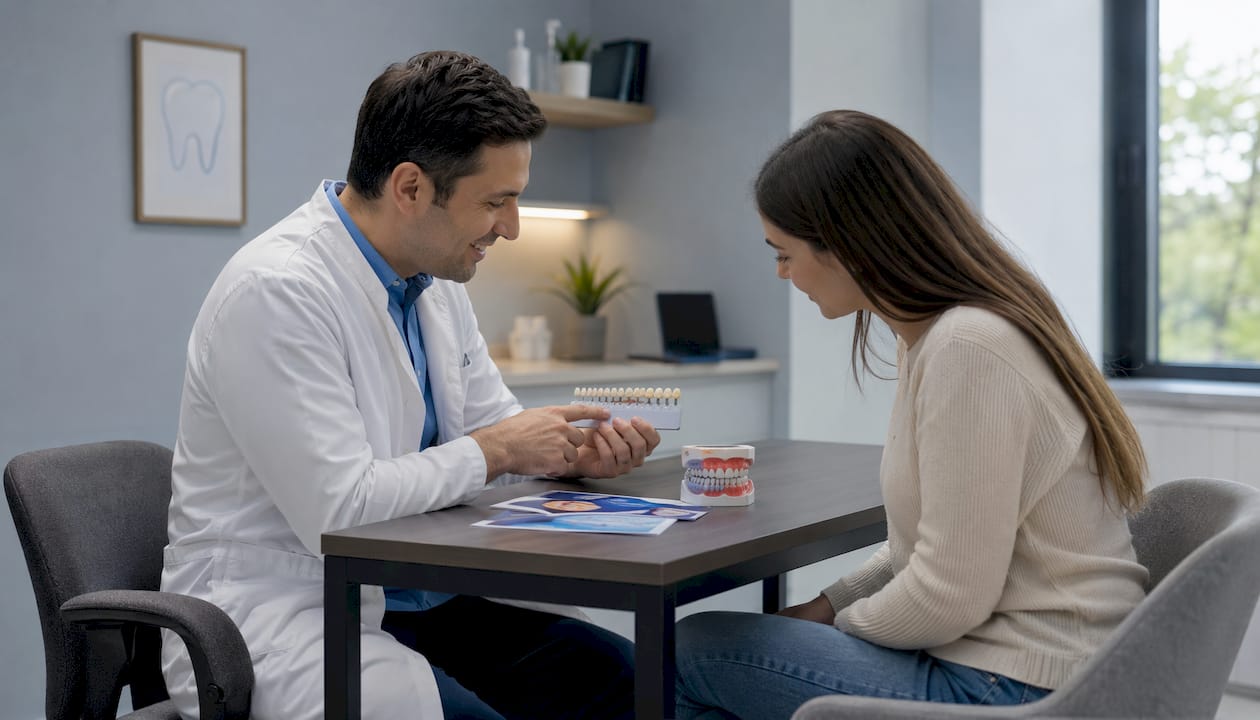
Before committing to a chair appointment, it helps to see how professional whitening stacks up against dentist take-home trays and over-the-counter strips. The differences in speed, strength, and cost are significant.
Factor | In-Office Whitening | Dentist Take-Home Trays | OTC Products |
Typical U.S. cost | several hundred to about one thousand dollars per session | $250–$500 | $20 |
Time to visible results | 60–90 minutes | 1–2 weeks | Several weeks |
Peroxide concentration | 25%–40% hydrogen peroxide | 10% carbamide peroxide | 3%–10% hydrogen peroxide |
Typical shade change | 5–8 shades | 2–4 shades | 1–3 shades |
Sensitivity risk | Moderate, managed clinically | Moderate | Low to moderate |
Best for | Speed, deep stains, events | Maintenance, gradual improvement | Mild staining, budget |
Quick decision guide:
Getting married or have a big event soon? In-office whitening is the clear choice. One appointment, same-day results.
Maintaining results after a professional session? Dentist take-home trays are the most cost-effective long-term tool.
Mild surface staining and no rush? OTC strips can work, though they take significantly longer to reach the whitening level of a single in-office visit.
What are the real pros and cons of in-office whitening?
The speed advantage is genuine. In-office treatments show results in 60–90 minutes, while take-home trays take one to two weeks and OTC options take even longer. That alone makes professional whitening worth considering for anyone with a firm deadline.
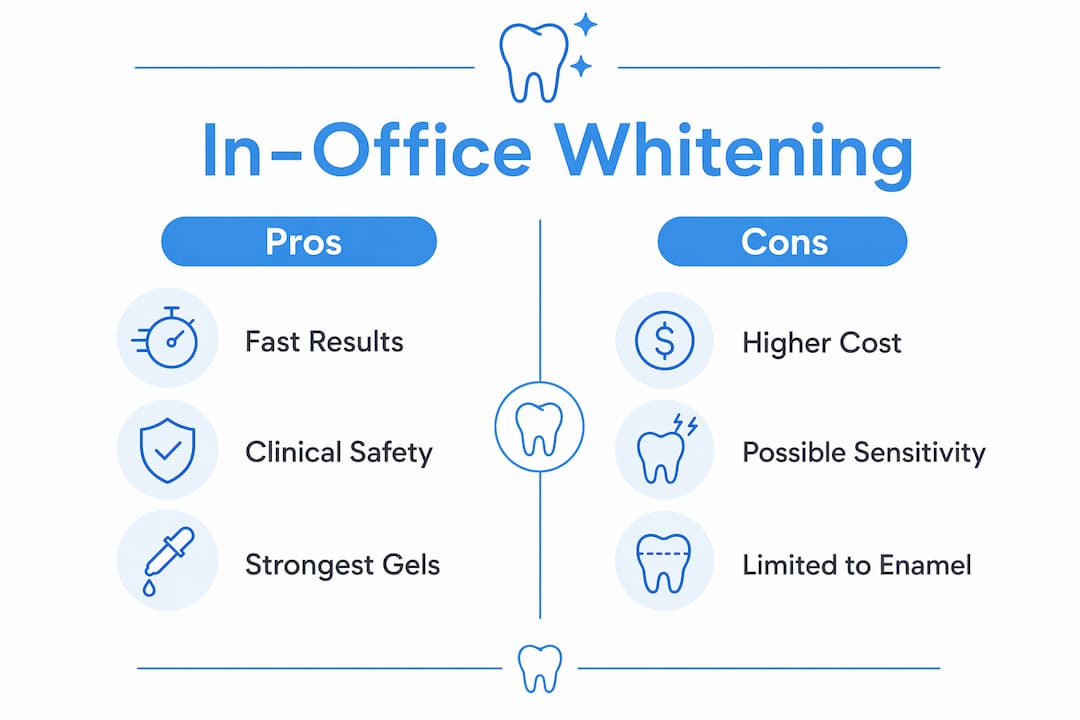
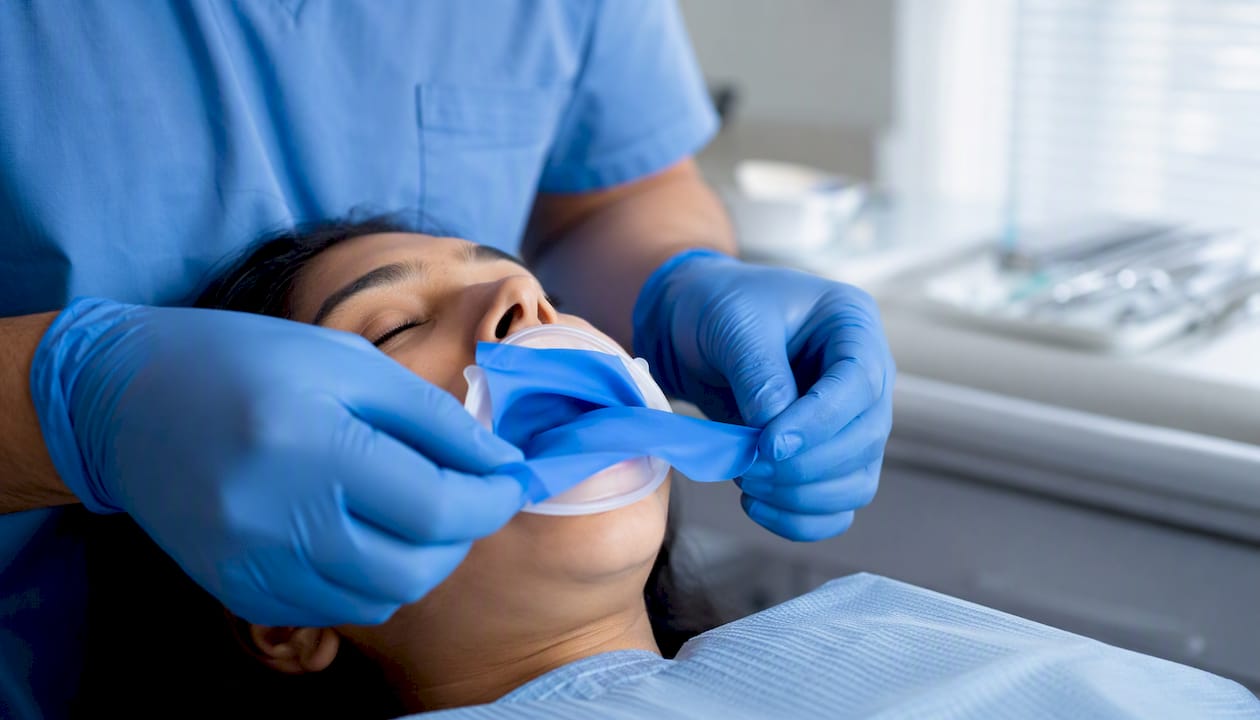
The clinical safety advantage is equally real. Dentists protect gum tissue with barriers before applying high-concentration gel, which is something no OTC product can replicate. That isolation is what allows the use of 25%–40% peroxide without causing chemical burns.
Pros | Cons |
Fastest results available (one visit) | Highest upfront cost ($400–$1,000) |
Strongest peroxide concentration | Temporary sensitivity is common |
Clinician controls exposure and safety | Restorations won’t change color |
Predictable, measurable shade change | Results fade without maintenance |
Gum and tissue protection throughout | Not suitable for all patients |
The biggest limitation most people overlook: whitening only works on natural tooth enamel. If you have crowns, bridges, or fillings in visible areas, those restorations stay the same shade after treatment. A dentist needs to factor that into your cosmetic plan before you start.
Who is a good candidate, and who should wait?
Most healthy adults with extrinsic staining are good candidates. Extrinsic stains from coffee, tea, red wine, tobacco, or simply aging enamel respond well to professional bleaching. If you want fast results for a specific date and your teeth and gums are in good health, in-office whitening is likely appropriate for you.
Good candidate checklist:
No untreated cavities or active decay
No current gum disease or significant gum recession
Enamel that is not severely worn or thinned
Staining that is primarily extrinsic (surface-level)
Not pregnant or breastfeeding (discuss with your dentist)
Realistic expectations about restorations staying their current shade
Red flags that mean whitening may not be right for you:
Active tooth decay or broken fillings
Untreated periodontal disease
Severe intrinsic staining (tetracycline, fluorosis, trauma)
Extensive visible restorations in the smile zone
Known hypersensitivity to peroxide
A dental cleaning appointment before whitening is strongly recommended. Starting with clean, plaque-free enamel improves gel contact and results.
What actually happens during an in-office whitening appointment?
The procedure is straightforward, and knowing the steps ahead of time makes the experience much more comfortable.
Step-by-step procedure:
Shade baseline — The dentist records your current tooth shade using a shade guide. This gives you a measurable before-and-after comparison.
Oral exam — Any cavities, gum issues, or restorations are noted. Whitening won’t proceed if active problems are found.
Isolation — A cheek retractor holds your lips back, and a resin barrier or rubber dam is applied along the gum line to protect soft tissue.
Gel application — High-concentration hydrogen peroxide gel (typically 25%–40%) is applied to the tooth surfaces.
Activation (optional) — Some systems use an LED or blue light to accelerate the process. Others, like Opalescence Boost, rely entirely on chemical activation.
Timed cycles — The gel sits for 15–20 minutes per application. Most protocols involve two to three cycles in one visit.
Rinse and evaluate — Gel is removed, shade is re-checked, and the process repeats if needed.
Final shade check — Results are recorded and compared to the baseline.
Total chair time is typically 60–90 minutes. Most patients leave with noticeably whiter teeth the same day.
Before your appointment:
Report any sensitivity history to your dentist
Mention recent restorations or crowns in the smile zone
Schedule the appointment at least a week before a major event to allow any sensitivity to resolve
Avoid whitening strips or abrasive toothpastes in the days leading up to treatment
After your appointment:
Avoid dark-colored foods and drinks (coffee, red wine, tomato sauce) for 24–48 hours
Use a desensitizing toothpaste if sensitivity occurs
Follow any specific aftercare instructions your dentist provides
Ask about take-home trays for maintenance
Zoom, Opalescence Boost, and BriteSmile: what’s the difference?
You’ll likely encounter a few brand names when researching professional whitening. Here’s what each one actually means in practice.
Philips Zoom! Zoom uses a blue LED light alongside a hydrogen peroxide gel to accelerate the whitening process. It’s one of the most widely recognized in-office systems in the U.S. The LED component is marketed as a key differentiator, though clinical evidence on the additional benefit of light activation is mixed. The gel concentration and protocol design drive most of the result.
Ask your dentist: what concentration of hydrogen peroxide does the Zoom gel contain, and how many cycles are included?
Ask whether a take-home touch-up kit is included in the quoted price.
Opalescence Boost Opalescence Boost uses a 40% hydrogen peroxide gel that is chemically activated, meaning no light or laser is needed. The gel contains potassium nitrate and fluoride, which help reduce sensitivity during and after treatment. Two to three 20-minute applications are typical, and teeth may continue to whiten for 24–48 hours after the appointment.
Ask your dentist: is the OpalDam gum barrier used throughout the procedure?
Ask whether the potassium nitrate and fluoride formula is appropriate for your sensitivity level.
BriteSmile BriteSmile is a chairside professional whitening system available through participating dental offices. It uses a light-activated gel protocol similar in structure to other professional systems.
Ask your dentist: which specific protocol and gel concentration does their BriteSmile setup use?
Ask for before-and-after photos from patients treated with that system.
One practical note: the brand name matters less than the dentist’s training, the peroxide concentration used, and the quality of the gum isolation. A well-executed procedure with any of these systems will outperform a poorly managed session with a premium brand.
How much does in-office whitening cost in the U.S.?
In-office whitening typically costs several hundred to about one thousand dollars per session in the United States. Dentist-dispensed take-home trays cost a few hundred dollars, and OTC products are available for less money.
Option | Typical U.S. Cost | What’s Usually Included |
In-office whitening | $400–$1,000 | Gel, gum protection, shade guide, 2–3 cycles |
Dentist take-home trays | $250–$500 | Custom trays, professional-strength gel |
OTC strips or gels | $20 | Product only, no supervision |
What drives the price up or down:
Geography — Clinics in major metro areas typically charge more than suburban or rural practices.
System used — Proprietary systems like Philips Zoom often carry a premium over generic professional gels.
Included extras — Some quotes include custom take-home trays, a sensitivity kit, and before/after photos. Others are gel-only.
Number of cycles — A two-cycle session costs less than a three-cycle session at the same clinic.
Clinician experience — Cosmetic-focused dentists with advanced training may charge more, and often deliver more consistent results.
Pro Tip: Ask for an itemized quote. A higher price that includes custom take-home trays and a sensitivity kit may be better value than a lower price with nothing included. The trays alone are worth $250–$500 if purchased separately.
Dental insurance rarely covers whitening because it is classified as cosmetic. Confirm your coverage before booking.
How long do results last, and how do you maintain them?
Results typically last from several months to a few years, and the range is wide because lifestyle habits matter enormously. Coffee, red wine, tea, and tobacco are the fastest routes back to a duller shade.
Factors that shorten results:
Daily coffee or tea consumption without rinsing afterward
Red wine or dark-colored beverages
Tobacco use (smoking or chewing)
Skipping regular dental cleanings
Practical maintenance schedule:
Daily: Use a whitening toothpaste and rinse with water after consuming staining beverages.
Every 6 months: Schedule a professional cleaning to remove surface buildup before it sets.
Every 6–12 months: Use dentist-dispensed take-home trays for a short touch-up cycle (3–5 nights of gel use is usually enough to refresh the shade).
Every 1–2 years: Consider an in-office revitalization session if the shade has shifted significantly.
Dentists often recommend combination therapy as the best long-term approach: an in-office opening session followed by 3–5 days of home tray use. The in-office treatment opens enamel pores, which increases gel penetration and deepens the final color. Custom take-home trays are reusable, so future touch-ups only require a gel refill.
What are the risks and side effects, and how do dentists manage them?
Sensitivity is the most common side effect, and it is almost always temporary. Dentists use potassium nitrate, fluoride, and relief gels to reduce or shorten sensitivity before and after treatment. Most patients find that any discomfort resolves within 24–48 hours.
Common side effects:
Transient tooth sensitivity (most common, typically resolves within 48 hours)
Mild gum irritation if the barrier is imperfect
Temporary white spots on enamel (usually self-resolve)
Rare but serious risks:
External cervical resorption has been reported in rare cases, particularly with very high concentrations applied without adequate isolation. This is why proper gum protection and trained clinician oversight are non-negotiable.
How clinicians manage sensitivity:
Pre-treatment desensitizing toothpaste (potassium nitrate-based) used for two weeks before the appointment
Fluoride application immediately after the procedure
Shorter exposure cycles for patients with known sensitivity
Reduced peroxide concentration when clinically appropriate
Post-treatment relief gel applied in the chair before the patient leaves
When to call your dentist promptly:
Sensitivity that lasts more than 72 hours after treatment
Visible soft tissue injury or persistent gum pain
Uneven whitening results that don’t resolve within a week
Any unusual pain in a specific tooth (may indicate an underlying issue)
Pro Tip: If you have a history of sensitive teeth, tell your dentist before the appointment. Starting a potassium nitrate toothpaste two weeks ahead can meaningfully reduce your discomfort during and after treatment. Ask about protecting your enamel throughout the process.
Which stains respond to whitening, and when should you consider alternatives?
Not all discoloration responds to bleaching, and understanding the difference saves you time and money.
Stains that respond well:
Coffee, tea, and red wine stains (extrinsic, surface-level)
Tobacco stains
Age-related yellowing from enamel thinning
Mild food-based discoloration
Stains that are resistant:
Tetracycline antibiotic staining (deep intrinsic, often gray or banded)
Fluorosis (white spots or brown mottling from excess fluoride during development)
Trauma-related discoloration inside a tooth
Staining from certain medications
Removing intrinsic stains within the dentin is considered near impossible with external whitening procedures. If your discoloration is intrinsic, bleaching will produce limited results regardless of the concentration used.
Restorations are a separate issue. Crowns, veneers, and fillings do not respond to bleaching. If you have visible restorations in your smile zone, whitening your natural teeth may create a shade mismatch. A dentist needs to plan around that before treatment begins.
Cosmetic alternatives when whitening won’t work:
Porcelain veneers — Cover the front surface of teeth; effective for tetracycline staining, chips, and shape issues.
Composite bonding — A more affordable option for isolated discoloration or minor chips.
Internal whitening — Used for a single nonvital (root-canal-treated) tooth that has darkened from the inside; bleach is placed inside the tooth rather than on the surface.
How do you choose a dentist for in-office whitening?
A good consultation should feel like a clinical exam, not a sales pitch. Here’s what to ask and what to watch for.
Questions to ask before booking:
Will you examine my teeth and gums before starting treatment?
What peroxide concentration does your system use?
How do you protect my gums during the procedure?
Is a take-home kit or sensitivity product included in the price?
Can I see before-and-after photos from patients you’ve treated?
What happens if I have restorations in my smile zone?
What aftercare support do you provide?
Red flags to watch for:
A clinic that skips the oral exam and goes straight to booking
Guarantees of a specific number of shades (results vary by individual)
No visible gum protection protocol described
Unwillingness to discuss restorations or contraindications
No follow-up care offered after the session
A trustworthy provider will check your shade baseline, discuss your restorations honestly, and give you a written estimate that itemizes what’s included. If a clinic can’t answer the questions above clearly, that’s worth noting before you commit.
What dentists say about safety, concentrations, and restorations
The clinical rationale for in-office whitening comes down to one core principle: high-concentration peroxide is safe when a trained clinician controls the exposure. In-office gels use 25%–40% hydrogen peroxide, compared to 3%–10% in OTC products. That gap exists because proper gum isolation and timed cycles are required to use higher concentrations without causing tissue damage.
Pro Tip: Dentists often tailor the protocol to the patient’s sensitivity history. If you’ve had sensitivity with whitening before, ask about reducing the cycle length or concentration rather than avoiding treatment entirely. A modified protocol can still deliver meaningful results with far less discomfort.
Combination therapy is a clinically supported approach for patients who want the deepest possible shade change. An in-office session opens enamel pores, and 3–5 days of follow-up home tray use leverages that increased permeability to deepen the final color. Many dentists recommend this as the standard of care for patients with significant staining.
When restorations are present in the smile zone, the clinical conversation shifts. Whitening the surrounding natural teeth may create a visible mismatch with existing crowns or fillings. In those cases, dentists may recommend completing whitening first, then replacing the restoration to match the new shade. For deep intrinsic staining or extensive restorations, veneers or bonding are often the more predictable cosmetic path.
Key Takeaways
In-office teeth whitening is the fastest, most clinically controlled whitening option available, delivering 5–8 shades of improvement in a single 60–90 minute visit under dentist supervision.
Point | Details |
Speed and results | In-office whitening delivers visible results in 60–90 minutes; take-home trays take 1–2 weeks. |
Cost range | U.S. sessions typically cost $400–$1,000; dentist take-home trays run $250–$500. |
Restorations won’t whiten | Crowns, veneers, and fillings don’t respond to bleaching; plan your cosmetic work accordingly. |
Results longevity | Results last from several months to a few years; coffee, wine, and tobacco are the fastest ways to shorten them. |
Mersaldental | Mersaldental offers in-office and take-home whitening with direct insurance billing and same-day appointments. |
A dentist’s perspective on when in-office whitening is actually worth it
Most patients who ask about whitening want the same thing: a noticeably brighter smile without a complicated process. What we find at Mersaldental is that the right recommendation depends on two things: how fast you need results, and what your teeth actually look like before we start.
For patients with a clear timeline, like a wedding or a graduation, in-office whitening is almost always the right call. One appointment, same-day results, and we control every variable. For patients who aren’t in a rush and have mild staining, a custom take-home kit often delivers comparable results at a lower cost over a few weeks.
What we push back on is the assumption that more whitening is always better. Patients with significant restorations in the smile zone, or with intrinsic staining from tetracycline or trauma, may not get the result they’re picturing from bleaching alone. In those cases, we have an honest conversation about veneers or bonding before anyone sits in the chair. That conversation is part of the exam, not an upsell. A whiter smile that doesn’t match your restorations isn’t actually a better smile.
Ready to see what professional whitening can do for your smile?
At Mersaldental, we offer both in-office whitening and dentist-dispensed take-home kits, so you get the right treatment for your timeline and budget. We accept direct insurance billing and the CDCP program, and same-day appointments are available for eligible patients.
Before any whitening treatment, we complete a full oral exam, review your restorations, and walk you through realistic expectations. You can also view before-and-after photos in our patient gallery to get a sense of what’s achievable. Whether you’re preparing for an event or simply ready for a brighter smile, we’re here to help you make a confident, informed decision.
Book a whitening consult at Mersaldental today. We’ll assess your smile, recommend the right approach, and get you started.
Useful sources and further reading
Clinical evidence and authoritative references:
Whitening | American Dental Association — Comprehensive clinical overview of whitening methods, peroxide concentrations, safety, and adverse effects. Primary reference for evidence-based claims throughout this article.
How is professional in-office teeth whitening done? | Verywell Health — Patient-facing explainer covering procedure steps, longevity, and restoration limitations.
Professional teeth whitening vs. at home | Dr. Loren Grossman — Clinician comparison of peroxide concentrations, timelines, and sensitivity management.
Professional teeth whitening vs. at-home kits | Dr. Ahdout — Safety rationale for professional supervision and gum protection protocols.
In-office vs. at-home teeth whitening | Lifetime Dental GA — U.S. cost ranges, combination therapy protocols, and maintenance strategies.
Opalescence Pro in-office whitening | Ultradent — Product details for Opalescence Boost, including concentration, activation method, and potassium nitrate/fluoride formula.
Mersaldental related pages for further reading:
Teeth whitening services | Mersaldental — In-office and take-home whitening options at our Ottawa clinic.
Whitening teeth without hurting enamel | Mersaldental — Practical guide to protecting enamel and managing sensitivity during whitening.
Crowns and bridges | Mersaldental — Restoration options relevant to cosmetic planning when whitening has limitations.
Hygiene appointments | Mersaldental — Professional cleaning before whitening for best results.
This article is general information and is not a substitute for professional dental advice. Confirm your suitability for whitening treatment with a licensed dentist before proceeding.
Recommended
Comments