Eating and Drinking With Invisalign: The Rules That Protect Your Smile

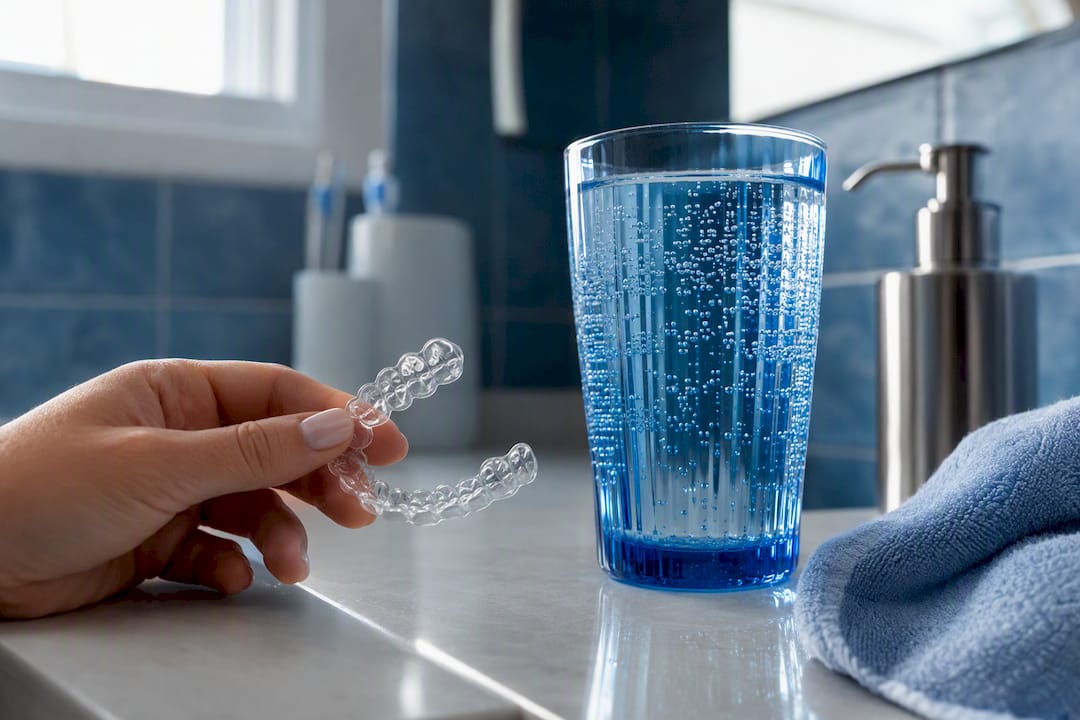
Take your aligners out before you eat anything. While they’re in, drink only plain water at a cool or room temperature. Rinse or brush before you put your trays back in so you’re not sealing sugar or acid against your teeth. And keep your total wear time around the recommended daily target, so the eating breaks stay short.
TL;DR:
Always remove aligners before eating or drinking anything other than water to prevent plastic damage, staining, and warping.
Only consume water with aligners in, as other beverages can cause discoloration, warping, and increase enamel decay risk if trapped underneath.
After meals, rinse your mouth and clean your trays thoroughly with a soft brush before reinserting them to maintain treatment accuracy.
Aim for at least 20 hours of daily wear, limiting meal and cleaning breaks to ensure steady teeth movement within the recommended schedule.
If you accidentally eat or drink with trays in, inspect and clean them immediately, and consult your provider if damage or warping is evident.
Table of Contents
Invisalign Eating and Drinking: The Ground Rules Nobody Skips
Every rule in this guide traces back to one habit: your aligners come out before food touches your mouth. Trays are built to hold a precise shape against your teeth, and biting down on anything, even something soft, can flex or crack that plastic in ways you won’t notice until your fit feels off weeks later.
Here’s what that looks like at an actual meal or snack:
Take your trays out before the first bite, and put them straight into their case, not a napkin or your pocket.
Skip chewing gum entirely while aligners are in. It sticks to the plastic and to your teeth in ways that are genuinely hard to undo.
Never try to bite through food with trays on, even a soft roll or a cracker. It stresses the plastic at the exact spots it’s designed to stay rigid.
Cluster your snacks. Three small snacking sessions eat into your wear time three separate times; one grouped snack break only costs you once.
Carry a small kit everywhere: your case, a travel toothbrush, and floss. Lunch out is a lot less stressful when you’re not scrambling for a napkin to protect a $5,000 orthodontic device.
Pro Tip: Keep a spare aligner case in your bag, car, and desk drawer. The single most common way people damage trays isn’t eating with them in. It’s setting them on a restaurant table wrapped in a napkin that gets swept away.
What Can You Drink With Invisalign In?
Plain water, at a cool or room temperature, is the only drink that’s genuinely safe with your trays in. Everything else needs the aligners out first, and the reasoning isn’t just about staying tidy. It’s backed by lab research on how these materials actually behave.
A 2025 peer-reviewed study on clear aligner materials tested polyurethane aligners like Invisalign against common beverages and found visible, clinically noticeable discoloration after just 6 to 12 hours of coffee or tea exposure, with coffee causing the most severe color change of any drink tested. That’s not a hypothetical stain risk. It’s measurable material change (ΔE* greater than 3.3, the threshold researchers consider clinically obvious) happening in less time than most people wear a single tray change.
Heat compounds the problem. Coffee and tea aren’t just pigmented, they’re often hot, and hot liquids can warp the thermoplastic your trays are molded from, according to guidance from the American Association of Orthodontists. A warped tray doesn’t just look cloudy. It stops tracking your teeth correctly.
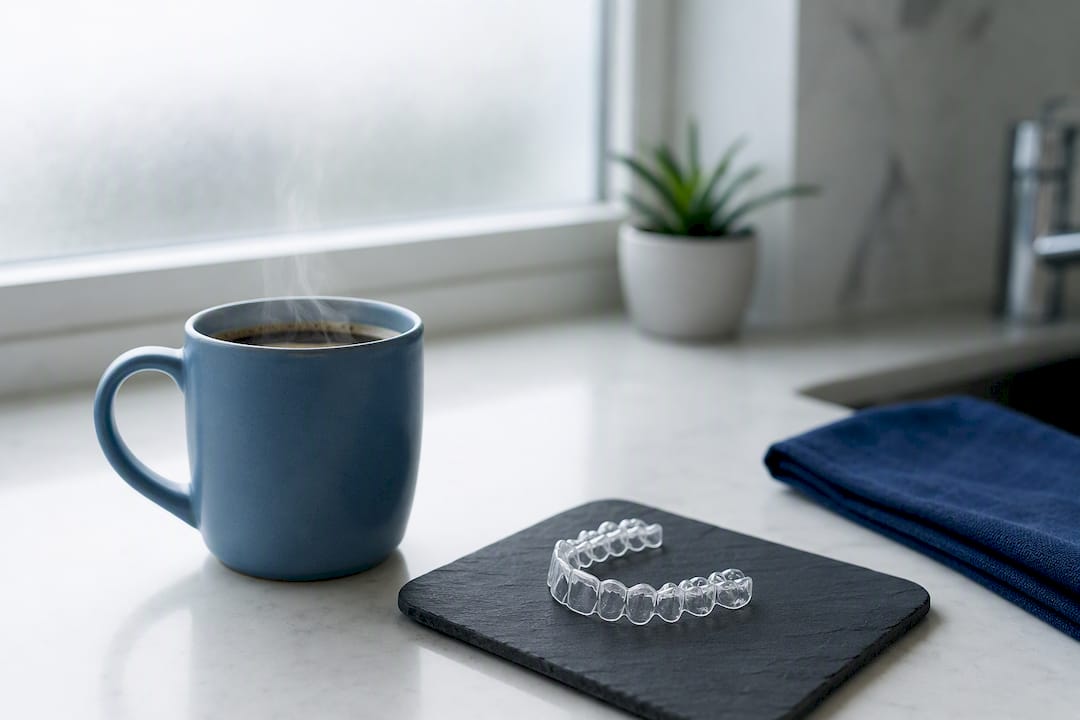
Sugary and acidic drinks add a third problem: trapped liquid under a tray sits directly against your enamel for hours, raising your decay risk far more than the same drink swallowed and rinsed away normally.
A few quick rules for the drinks people ask about most:
Water (cool or room temp): safe with trays in, anytime.
Coffee, tea, soda, juice, wine, sports drinks: remove your aligners first, no exceptions.
Straws: they reduce contact with your front teeth but don’t stop liquid from seeping under the tray, so they’re not a real workaround for colored or acidic drinks.
If you’re curious how different beverages compare on acidity and pigment load beyond coffee and tea, this breakdown of iced coffee versus iced tea is a useful primer on why some drinks stain and erode enamel faster than others.
How Do You Clean Your Mouth and Trays Before Reinserting?
Getting this sequence right after every meal is what actually keeps your treatment on schedule. Here’s the routine dentists and Invisalign’s own guidance point to:
Rinse your mouth with water immediately after eating, even if you can’t brush right away.
Brush and floss when you can. A quick rinse helps, but Invisalign’s manufacturer guidance is clear that brushing before reinserting is the better standard, since rinsing alone doesn’t fully clear trapped food particles.
Rinse the trays themselves under cool or lukewarm water. Never hot. Heat is exactly what warps them, whether it comes from your coffee or your tap.
Use a soft brush, not the stiff-bristled kind, to clean the inside of each tray without scratching the plastic.
Soak periodically using a cleaner your provider recommends rather than whatever’s under the sink. Abrasive pastes and harsh chemicals can dull the plastic’s clarity over time.
Handle your trays in public the same way you’d handle a retainer: case in, case out, never loose in a pocket or purse where they pick up lint and bacteria.
Pro Tip: If you’re in a rush and can’t brush, at least swish with water for a full 30 seconds before reinserting. It’s not a substitute for brushing, but it meaningfully cuts down what gets sealed against your enamel.

How Many Hours a Day Should You Actually Wear Your Aligners?
Patients are generally advised to aim for approximately 20 or more hours of daily wear, leaving limited time for meals, snacks, and cleaning sessions combined. That’s tighter than it sounds once you map it against a real day.
A realistic schedule might look like this:
Breakfast: 20 minutes, trays out, brush after.
Lunch: 30 minutes, same routine.
One afternoon snack, grouped rather than grazed across the afternoon: 15 minutes.
Dinner: 30 to 45 minutes, especially if it’s a social meal.
That adds up to under two hours out of your mouth on a disciplined day, well inside your 20 to 22 hour window. The “30-minute rule” some clinics reference isn’t an official Invisalign standard, but it’s a practical ceiling: if a single meal or snack is pushing past 30 minutes, your cumulative wear time for the day starts slipping fast. A structured approach to meal timing makes hitting the daily target dramatically easier than winging it.
Long, leisurely dinners or grazing through an afternoon of snacking are the two habits that most reliably extend a treatment plan. Every extra 30 minutes out of your mouth is 30 minutes your teeth aren’t moving.
What Should You Do If You Accidentally Ate or Drank With Trays In?
It happens. You forget, you’re rushed, someone hands you a coffee before your brain catches up. Here’s what to do next, in order:
Remove the trays right away and inspect them for cracks, cloudiness, or a warped edge that doesn’t sit flush anymore.
Rinse your mouth and the trays with cool water.
Brush and floss before putting the aligners back in.
If a tray looks warped or cracked, stop wearing it and call your provider instead of trying to fix it yourself.
Never attempt to reshape a warped tray with hot water at home. It changes the fit unpredictably, and a tray that no longer tracks correctly can undo weeks of progress rather than saving you an office visit. One slip rarely causes lasting damage, but repeated slips are a common reason treatment plans run longer than originally mapped, with extra check-ins added to catch up on movement that didn’t happen on schedule.
Get a Second Set of Eyes on Your Fit
Reading the rules is one thing. Knowing whether your specific trays, especially if you have attachments bonded to your teeth, are handling your daily routine well is another. Attachments change how tightly a tray seats and how long you can safely leave it out, so generic advice only gets you so far.
Mersaldental offers free Invisalign consultations where we check tray fit, look for early signs of warping or staining, and answer questions specific to your treatment stage. If a tray’s cracked or clouded from a rough week, we can assess it and get you back on track quickly. Bring your case, your current trays, and any questions about the Invisalign treatment you’re on.
The Advice That Gets Skipped, and Why It Matters More Than People Think
Most Invisalign guidance treats eating and drinking rules like etiquette tips. We’d argue they’re closer to compliance mechanics. The 2025 staining research found something worth sitting with: aligners that discolor visibly don’t just look worse, they make people less likely to wear them consistently. A patient embarrassed by a yellowed tray starts skipping hours here and there, and those skipped hours are exactly what stretches a 12-month plan into 15.
So the priority isn’t memorizing every drink on a banned list. It’s protecting your wear-time budget first, because that’s what actually drives your timeline. Coffee lovers don’t need to quit coffee. They need fifteen seconds to pull trays before the first sip and a rinse before they go back in. That’s the whole trade.
Where we’d push back on generic advice: treating every beverage the same wastes your attention on low-risk choices while under-warning on the real threats, hot liquids and pigmented ones. Get those two right and the rest falls into place.
— Mersal
Ready for a Tray Check or Repair? Book With Mersal Dental
If a tray’s cracked, cloudy, or just doesn’t feel right anymore, don’t wait for your next scheduled visit to find out why. Mersaldental is set up for same-day assessments in downtown Ottawa, so a damaged aligner doesn’t turn into weeks of lost progress while you wait for an opening elsewhere.
Book a free Invisalign consultation and bring your current trays, a photo of any staining or cracking you’ve noticed, and a list of questions about your specific treatment stage. We’ll check fit, flag any warping early, and walk you through next steps, whether that’s a quick clean, a repair, or a refinement. Direct insurance billing and CDCP acceptance mean cost isn’t a reason to put it off. Start by visiting Mersal Dental to find a time that works.
Sources
Recommended
Comments