Beat Invisalign Pain in Week One: Clinic Plan for Days 1–3

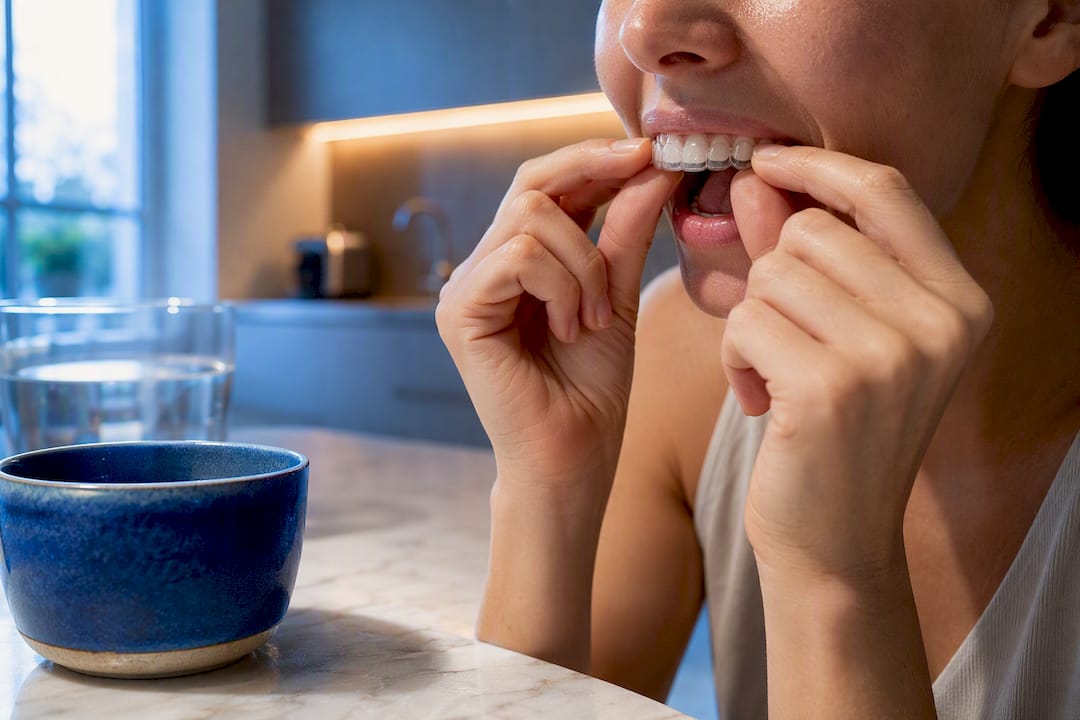
Mild-to-moderate soreness during the first week of Invisalign is normal, and it usually peaks between days one and three before easing by day five to seven. Most patients need nothing more than over-the-counter pain relief, cold therapy, and patience. Sharp or worsening pain after a week, though, is not typical, and that is your signal to call your dentist.
TL;DR:
Most Invisalign pain peaks within days two and three of a new tray, but discomfort typically lessens significantly by day five to seven.
Applying cold packs, taking anti-inflammatory medication before tray insertion, and using orthodontic wax can reduce initial soreness effectively.
Pain that persists beyond seven days, is sharp or localized, or involves swelling and bleeding requires prompt dental consultation.
Inconsistent wear time and rough tray edges are common causes of increased discomfort or fit issues, which can be addressed during a professional adjustment.
Maintaining a routine of soft foods, scheduled tray removal, and speaking practice helps ease adaptation during the first week of treatment.
Table of Contents
Is Invisalign Painful in the First Week? A Day-by-Day Timeline
Yes, most people feel some pressure or soreness in week one, but the intensity follows a predictable curve rather than staying constant. Knowing that pattern in advance makes the discomfort far easier to tolerate, because you are not wondering whether something has gone wrong.
Day 0 to 1: The new tray feels tight, almost like a mouth guard that does not quite fit yet. You may notice extra saliva, a mild lisp, and gentle pressure across several teeth as the aligner starts doing its job.
Day 2 to 3: This is the peak. Chewing on that side of your mouth can feel tender, and some patients report their bite feeling slightly off or their sleep interrupted by low-grade aching.
Day 4 to 7: Soreness fades noticeably. Speech returns to normal, removing and reinserting the tray gets easier, and most people forget they are wearing anything by the weekend.
A large majority of aligner users adapt within that first week, with many reporting only mild discomfort and some reporting none at all. The pattern often repeats with each new tray in your series, though clinical and patient-advice sources consistently report that later changes tend to hurt less than the first, since your teeth and gums have already learned what to expect.
Why Does Invisalign Hurt in the First Place?
Soreness is not a sign of damage. It is the physical evidence that your teeth are actually moving, which is the entire point of treatment. Each new tray applies calculated pressure to your periodontal ligament, the tissue anchoring tooth to bone, and that ligament responds by remodeling itself around the new position. That process causes tenderness for a few days before it settles.
Attachments, the small tooth-colored bumps that help trays grip certain teeth, can concentrate pressure in specific spots and make those areas feel more sensitive than the rest of your mouth. A tray that has not fully seated can do the same thing, creating sharper, localized irritation rather than the even, dull ache most people describe.
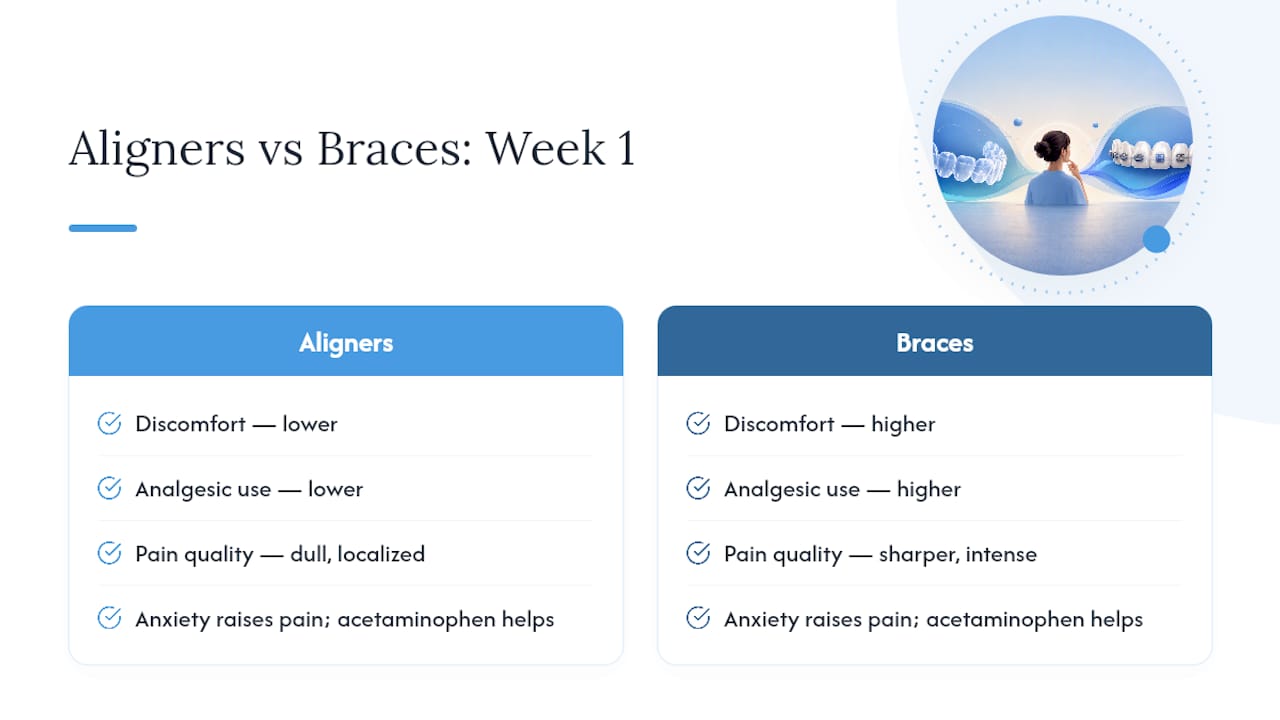
Not everyone feels the same amount of pain from the same amount of pressure. Retrospective research links higher dental anxiety to greater perceived pain in aligner patients, and the same research found acetaminophen worked especially well for reducing discomfort in that group. A randomized clinical trial comparing clear aligners to traditional braces found fixed appliances caused significantly more discomfort and higher analgesic use in the first week, which helps explain why Invisalign has a reputation as the gentler option.
How to Relieve Invisalign Pain During Week One
You do not have to just wait it out. A handful of tactics, used together, make a real difference in how the first several days feel.
Take an OTC anti-inflammatory like ibuprofen roughly 45 to 60 minutes before inserting a new tray, if it is medically safe for you, rather than waiting until pain sets in.
Apply a cold pack wrapped in a cloth to your jaw, or eat chilled soft foods like yogurt or a smoothie, to calm inflammation in sore areas.
Bite down on a chewie for five to ten minutes right after inserting a new tray. This seats the aligner fully and spreads pressure more evenly across your teeth instead of concentrating it on one or two.
Dab a small piece of orthodontic wax over any attachment or edge that is rubbing your cheek or gum, and mention persistent rough spots to your dentist, who can smooth them in minutes.
Use a dab of topical benzocaine gel on a single tender spot for short-term numbing when a specific area is bothering you more than the rest.
Switch to your new tray right before bed instead of in the morning. You sleep through several hours of the worst discomfort and wake up already past the peak.
Pro Tip: Pre-dosing with an anti-inflammatory before your tray change tends to work better than waiting for pain to build. Preventing inflammation is easier than reversing it once it sets in.
Staying close to the recommended 20 to 22 hours of daily wear matters here too. Invisalign’s own guidance describes the sensation as steady, gentle pressure rather than sharp pain, and it frames consistent wear-time as the reason that pressure stays predictable instead of spiking every time you reinsert a tray you took out for too long.
When Invisalign Pain Means You Should Call Your Dentist
Most week-one soreness is routine, but a few signs are not, and they deserve a phone call rather than another dose of ibuprofen.
Pain that stays just as bad, or gets worse, after five to seven days instead of easing off.
A sharp, stabbing pain concentrated in one specific tooth, or sudden swelling and bleeding along the gumline.
A tray that will not seat properly no matter how you try, or one that feels dramatically loose compared to how it fit on day one.
A sore spot on your cheek or gum that will not heal, or any sign of infection like pus, unusual warmth, or a bad taste that will not go away.
Swollen or irritated gums can accompany orthodontic adjustment, but persistent swelling that does not improve with better hygiene is worth a professional look rather than home management.
Making It Through Week One: Eating, Talking, and Daily Habits
Small adjustments to your routine take a lot of friction out of the first week.
Practice reading out loud or talking to yourself for a few minutes each day. It speeds up how quickly your tongue adapts to the trays and reduces the lisp faster than staying quiet does.
Stick to soft, chilled foods for the first 48 to 72 hours, since chewing firmer foods when your teeth are tender just adds unnecessary discomfort.
Remove trays by loosening the back molars first, working forward toward the front teeth, and use a removal tool if your fingers are struggling.
Set fixed windows for eating and brushing so you are not constantly popping trays in and out, which protects your wear-time total.
Keep a small kit on hand, a case, travel toothbrush, chewies, and orthodontic wax, so you are never caught without what you need.
How Mersal Dental Supports Patients Through the First Week
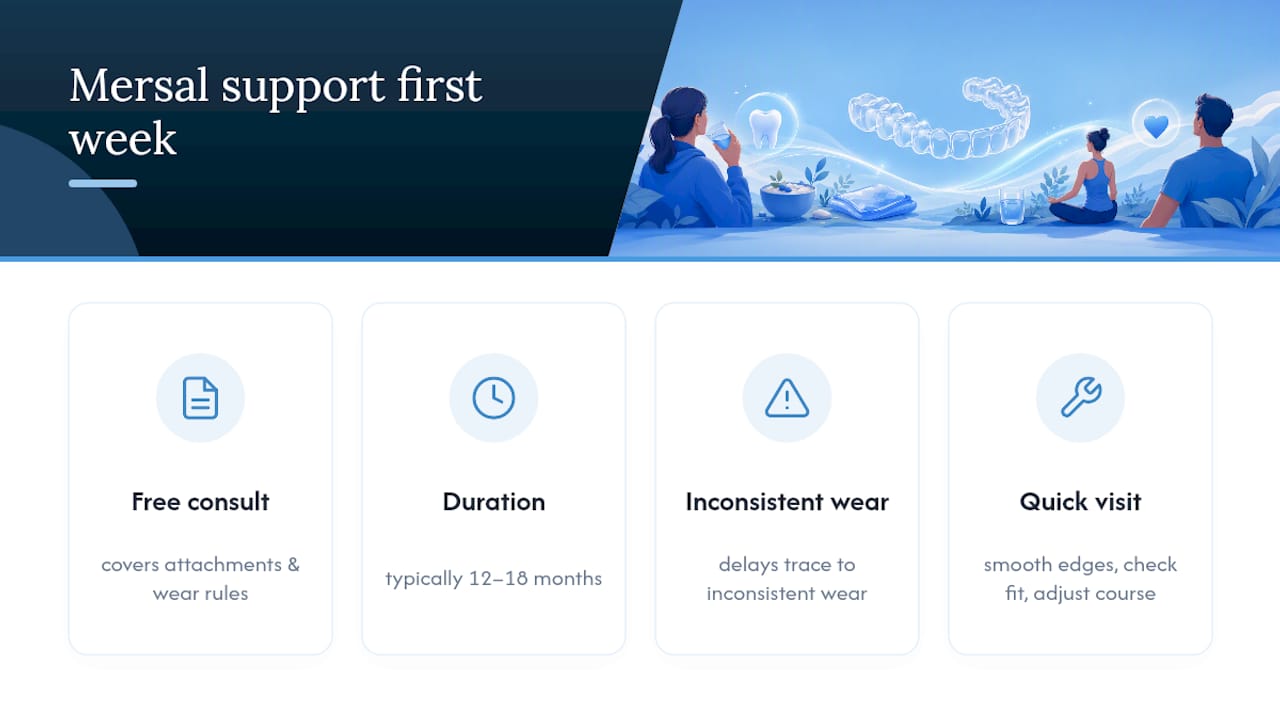
Mersal Dental offers free Invisalign consults that walk new patients through attachments, wear-time rules, and what to expect before treatment even starts. Our clinic data shows most Invisalign cases run 12 to 18 months, with delays usually tracing back to inconsistent wear-time rather than the aligners themselves. If a tray edge is bothering you or an attachment feels off, a quick visit lets us smooth edges, check fit, and adjust course before small irritations turn into bigger setbacks.
A Quick Word From the Chair
Nearly every new Invisalign patient describes the same first week: tight, tender, a little strange when talking, then suddenly fine. That timeline holds for the overwhelming majority of people. Stick with your wear schedule, use the relief tactics that fit your routine, and call us if something feels sharper or more persistent than plain soreness should.
— Mersal
Get Help From Mersal Dental Before Small Discomfort Becomes a Bigger Problem
If your week-one soreness feels more intense than it should, or a tray simply will not sit right, waiting it out is not your only option. Mersal Dental offers a free Invisalign consult where we check attachment placement, smooth rough edges, and walk you through wear-time expectations so the rest of your treatment goes smoother than week one did.
The consult covers a fit check, a look at how your specific attachments are seated, and honest answers about your treatment timeline based on your actual mouth, not a generic estimate. If you call with sharp or sudden pain, a dental team may provide same-day attention when immediate care is needed rather than a routine callback. Whether you are mid-treatment and dealing with an uncomfortable tray or considering starting Invisalign for the first time, visit our Invisalign page or reach out through Mersaldental to book a time that works for you. Direct insurance billing and acceptance of dental coverage programs can help reduce cost barriers to getting dental care.
This article is general information, not a substitute for advice from a qualified doctor. Consult a qualified healthcare professional about your own circumstances before acting on anything here.
Sources
Recommended
Comments