Mouthwash for Sensitive Teeth: Real Pain Relief Options

Updated: Jul 27

What actually works for sensitive teeth pain relief
The most effective mouthwashes for sensitive teeth use one of two active ingredients: potassium oxalate (1.4% w/v) or arginine-calcium carbonate technology. Both work by sealing the microscopic channels in your teeth that carry pain signals to the nerve. Used regularly as directed, they build a protective layer over time, reducing the sharp sting from cold drinks, hot food, and sweet treats.
Two products stand out for consistent, clinically supported results:
LISTERINE Clinical Solutions Sensitive Teeth Mouthwash: Uses potassium oxalate to block exposed dentin tubules and reduce pain signals. Rinse twice daily and, critically, do not rinse with water afterward. Washing away the active compound right after use undermines the whole treatment.
Sensodyne mouthwash: Pairs with Sensodyne toothpaste for a combined sensitivity approach that targets pain from multiple angles. The mouthwash reaches areas a toothbrush can miss, including between teeth and along the gumline.
Both are alcohol-free, which matters if your gums are already irritated or receding. If sensitivity persists despite consistent use, that is a clear signal to book a dental appointment rather than switch products.
Why your teeth hurt: the causes behind sensitivity
Tooth sensitivity happens when dentin, the layer beneath your enamel, becomes exposed. Dentin contains thousands of tiny fluid-filled tubules that connect directly to the tooth nerve. When something hot, cold, acidic, or sweet contacts those tubules, fluid moves inside them, and the nerve fires.
Several things strip away the enamel or gum tissue that normally protects dentin. Enamel erosion from acidic foods and drinks is one of the most common culprits. Gum recession, whether from aggressive brushing or gum disease, exposes the root surface, which has no enamel at all. Cracked teeth, worn fillings, and untreated cavities can all trigger sharp tooth pain through the same mechanism.
The pain itself is usually brief but intense. It spikes with the trigger and fades within seconds or minutes. That pattern is what separates sensitivity from a toothache caused by infection or a cracked tooth, where pain tends to linger or throb.
How desensitizing mouthwash actually reduces pain
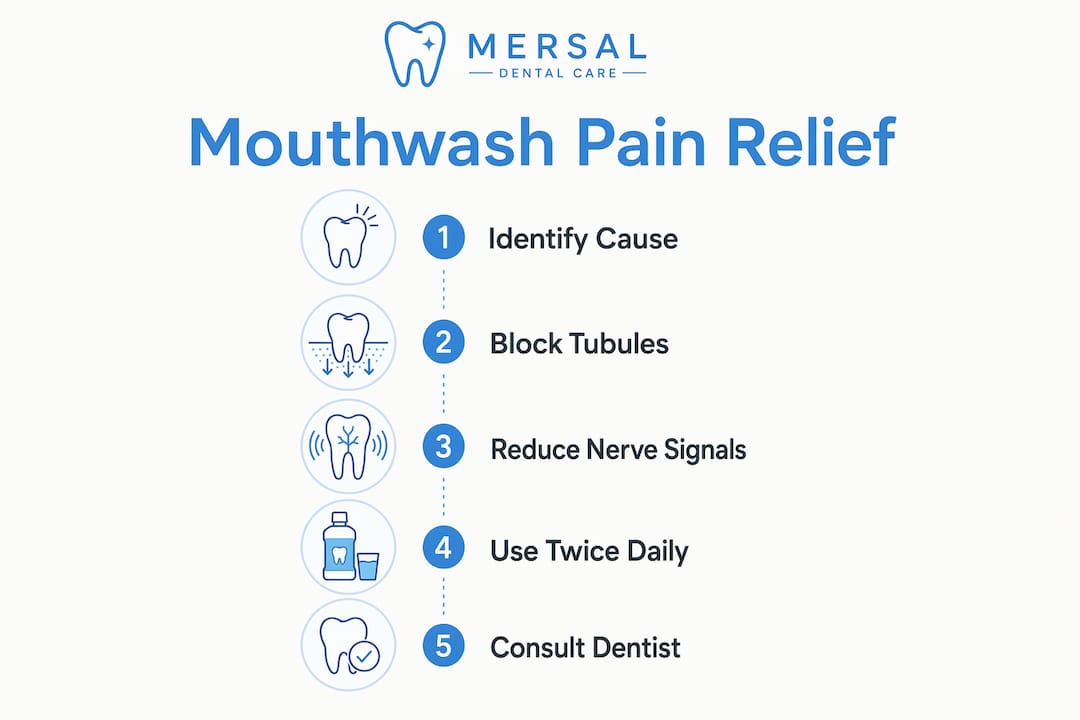
Desensitizing mouthwashes work through two distinct mechanisms, and understanding which one applies to your product helps you use it correctly.
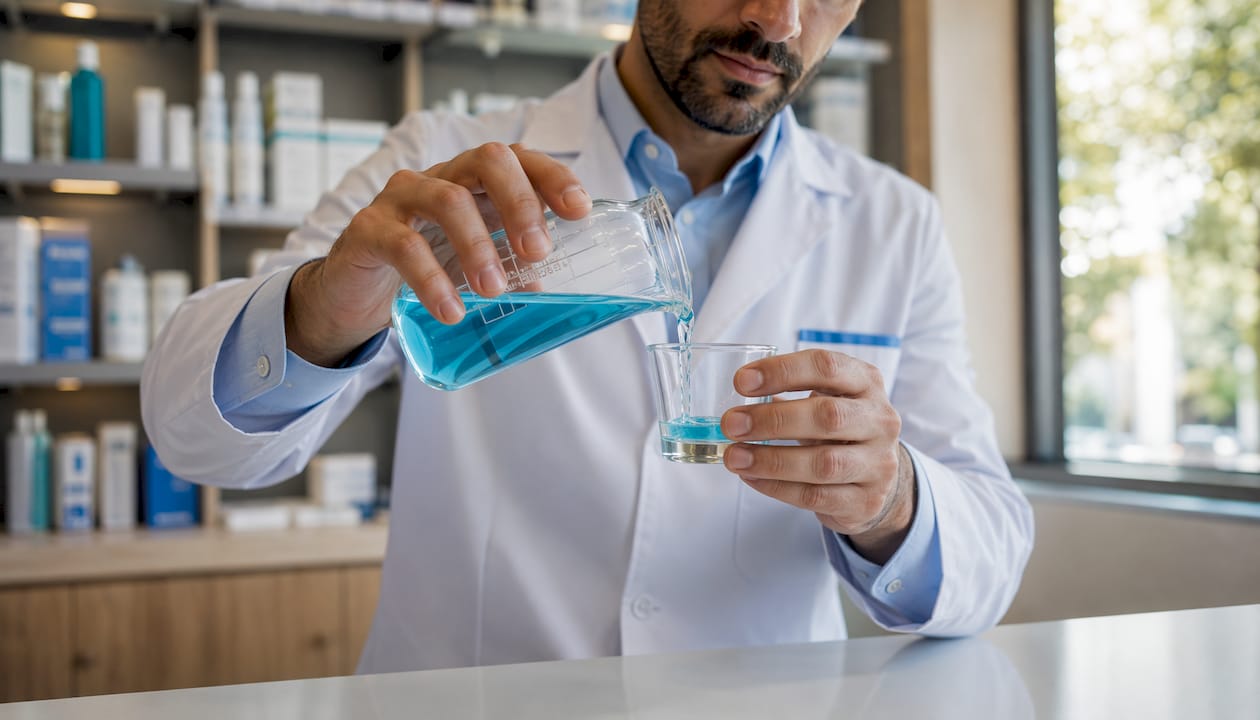
The first approach is tubule blocking. Potassium oxalate and arginine-calcium carbonate both form mineral deposits inside exposed dentin tubules, physically preventing fluid movement and stopping the pain signal before it reaches the nerve. The arginine-calcium carbonate technology is clinically shown to provide both instant and sustained relief with twice-daily use.
The second approach is nerve calming. Potassium ions from potassium nitrate (found in some formulas) reduce the nerve’s ability to fire repeatedly, lowering its sensitivity to stimulation over time.
Key usage rules that most people skip:
Rinse for the full time listed on the label, usually 60 seconds.
Do not eat, drink, or rinse with water for at least 30 minutes after use. The ADA guidelines on mouthwash use specifically caution against washing away active sealing agents immediately after rinsing.
Use it twice daily, morning and night, without skipping days. Protective layers build gradually; missing sessions slows progress.
Pro Tip: Mouthwash reaches the gumline and interproximal spaces that toothpaste often misses. Use it after brushing, not before, so the active ingredients sit on clean tooth surfaces.
Compared to desensitizing toothpaste alone, a mouthwash covers the full mouth evenly. Toothpaste applied with a brush tends to concentrate on the biting surfaces. Using both together gives you broader coverage than either product alone.
Other ways to relieve sensitive teeth pain at home
Mouthwash is one piece of a larger picture. Combining it with other approaches produces noticeably better results than relying on a single product.
Desensitizing toothpaste applied directly: Rather than brushing normally, press a small amount onto the sensitive spot and leave it for a minute before rinsing. This targeted application lets the active agents concentrate where you need them most.
Soft-bristled toothbrush: Firm bristles and heavy pressure accelerate enamel wear and gum recession. Switch to a soft brush and lighten your grip.
Straw for acidic drinks: Coffee, citrus juice, and soda contact your teeth for far less time when you drink through a straw. It is a small change with a real protective effect.
Alcohol-free oral care products: Alcohol in mouthwash irritates already-inflamed gum tissue. Choosing alcohol-free rinses keeps the gumline calmer, especially if you have gum sensitivity or recession.
Professional fluoride varnish: Applied in-office, fluoride varnish creates a concentrated protective coating on exposed dentin. It works faster than over-the-counter products and lasts several months per application.
Mouthguard for grinding: Bruxism wears enamel from the biting surfaces and can cause widespread sensitivity across multiple teeth. A custom nightguard from your dentist stops the damage at the source.
The Mayo Clinic recommends combining soft-bristled brushing, straw use for acidic drinks, and professional fluoride treatment for patients with moderate to severe sensitivity. No single product resolves the problem when multiple factors are at play.
When to see a dentist instead of managing it yourself
Home care works well for mild, stable sensitivity. But certain signs mean the problem has moved beyond what mouthwash can address.
See a dentist if sensitivity has lasted more than four weeks despite consistent home treatment. Worsening pain, pain that lingers after the trigger is gone, visible swelling, or a tooth that hurts when you bite down all suggest something structural is happening. Johns Hopkins Medicine notes that sensitivity can signal cracked teeth, cavities, or gum disease, and that delaying care on those conditions often leads to more involved treatments like root canals.
New sensitivity that appears suddenly, especially in a tooth that felt fine before, deserves prompt attention. A dentist can identify whether the cause is a cavity, a failing restoration, or early gum disease, and treat it before it progresses. Regular checkups also catch enamel erosion and recession early, when they are far easier to manage.
Expert guidance on getting the most from your sensitivity treatment
Dental professionals are consistent on one point: mouthwash treats symptoms, not causes. It is an adjunct to good oral hygiene and professional care, not a replacement for either. Identifying the underlying reason for your sensitivity, whether it is enamel erosion, gum recession, or a structural issue, shapes which treatments will actually work long-term.
“Not all sensitivity mouthwashes are created equal. Products containing peroxide or harsh abrasives can worsen sensitivity rather than relieve it. Alcohol-free formulas are preferred, particularly for patients with inflamed or receding gums, since alcohol can further irritate compromised tissue.” — Dental hygiene clinical guidance, RDH Magazine
Whitening mouthwashes deserve special caution. Many contain peroxide at concentrations that can temporarily increase sensitivity, which is the opposite of what you need. If you want to whiten without enamel damage, talk to your dentist about options that do not compromise an already-sensitive mouth.
Pro Tip: The ‘massage method’ applies desensitizing paste directly to the painful spot for one minute before rinsing. Clinical evidence shows this targeted approach seals tubules faster than standard brushing alone.
Consistency matters more than the specific brand you choose. A good alcohol-free mouthwash used faithfully twice a day, combined with a desensitizing toothpaste and gentle brushing habits, produces steady improvement for most people within four to six weeks.
Key Takeaways
The most effective approach to sensitive teeth pain combines a clinically proven desensitizing mouthwash used twice daily with complementary home care and timely professional evaluation.
Point | Details |
Choose the right active ingredient | Potassium oxalate and arginine-calcium carbonate both seal dentin tubules and reduce pain signals. |
Never rinse after rinsing | Washing with water immediately after mouthwash removes the sealing agents and reduces treatment effectiveness. |
Expect gradual results | Protective layers build over several weeks; if sensitivity persists past four weeks, see a dentist. |
Combine products for better coverage | Using mouthwash and desensitizing toothpaste together covers more tooth surfaces than either product alone. |
Avoid alcohol and peroxide rinses | Alcohol irritates inflamed gums, and peroxide-based whitening rinses can worsen sensitivity rather than relieve it. |
At Mersaldental, we see patients with tooth sensitivity every week, and we know how much it affects daily life. Whether you need a professional fluoride treatment, a custom nightguard, or a full dental evaluation, our team in downtown Ottawa is ready to help. We accept new patients, offer direct insurance billing, and work with the CDCP program. Same-day appointments are available for urgent concerns.

Recommended
Comments