One Tooth Suddenly Sensitive: Causes and What to Do

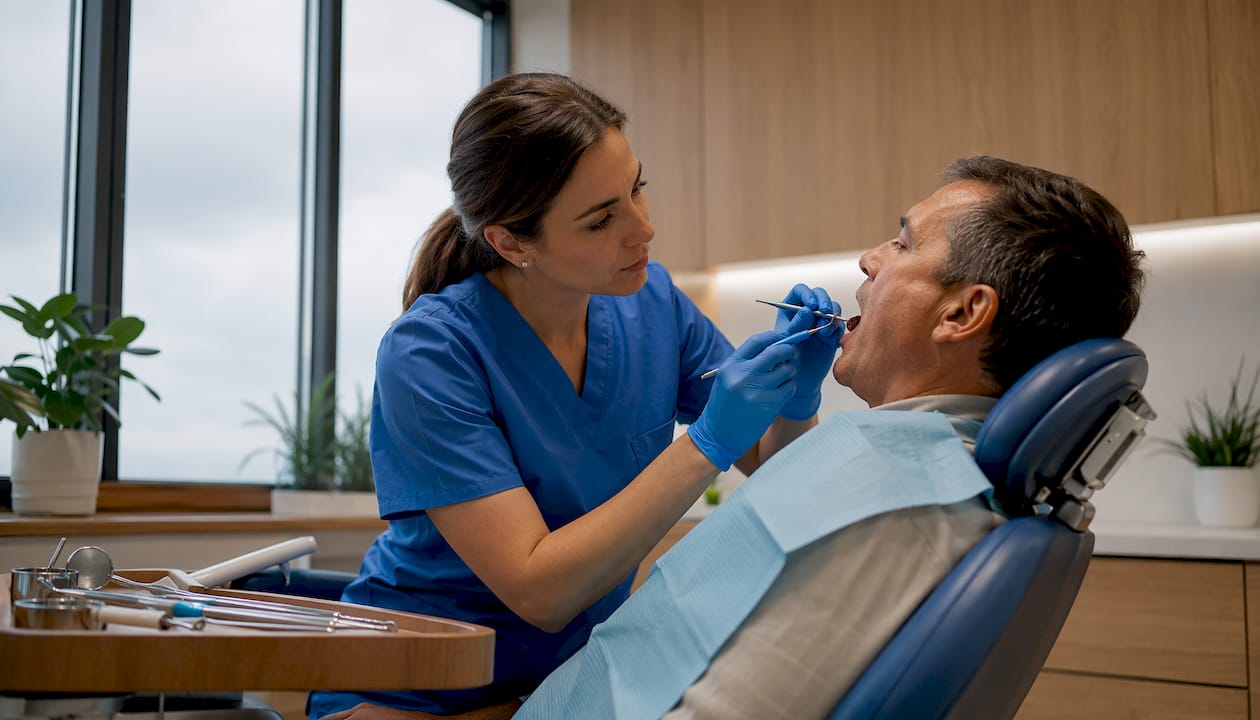
When one tooth suddenly becomes sensitive, the most likely explanation is a localized structural problem — a cavity reaching the dentin, a crack, or a failing filling — not the generalized enamel wear that affects many teeth at once. Colgate’s clinical guidance confirms that an isolated sudden sensitivity is often due to exactly these causes. If the pain is mild and triggered only by temperature, short-term self-care can help while you wait for an appointment. If the pain is sharp, lingers after the trigger is gone, happens when you bite, or comes with swelling or fever, seek urgent dental care today.
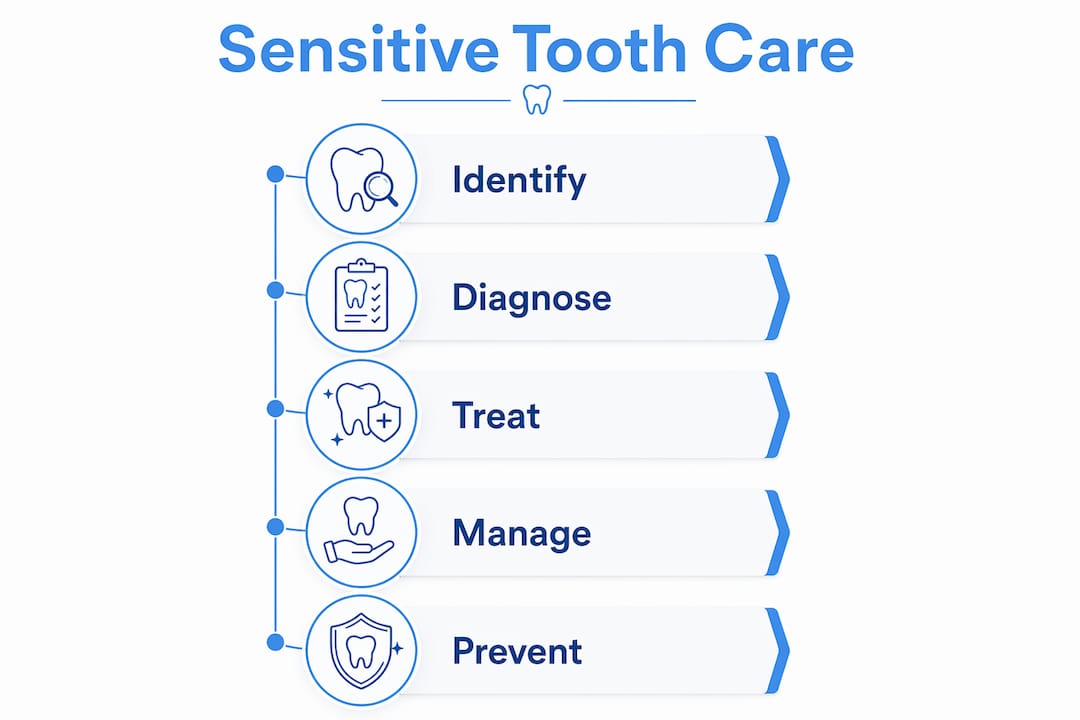
The American Dental Association recommends a targeted clinical exam and X-ray for single-tooth complaints because the cause is rarely obvious from symptoms alone. At Mersaldental, we see this presentation regularly, and the right diagnosis almost always changes the treatment plan.
Table of Contents
Why does one tooth suddenly become sensitive?
Localized sensitivity in a single tooth usually traces back to one of these causes:
Tooth decay (cavity): Bacteria erode enamel and reach the dentin layer beneath. Once dentin is exposed, temperature and pressure signals travel through tiny dentin tubules straight to the nerve, producing that sharp, sudden sting.
Cracked or fractured tooth: A hairline crack can be invisible on X-ray yet cause sharp pain on biting that disappears the moment you release pressure. Colgate notes this bite-triggered, release-relieved pattern as a classic sign of a cracked tooth.
Worn or failing restoration: A loose filling or a crown with a broken seal lets bacteria and fluids reach the dentin underneath, causing sensitivity that can feel identical to a new cavity.
Gum recession near one tooth: When the gum pulls back from a single tooth, the root surface — which has no protective enamel — is exposed directly to temperature and touch.
Recent dental work or whitening: Fillings, cleanings, and whitening treatments can irritate the pulp temporarily. Johns Hopkins Medicine confirms this sensitivity is common and usually resolves within days to a few weeks.
Occlusal trauma: A bite that hits one tooth harder than the others — sometimes after a new filling is placed slightly high — causes pulpal inflammation and sensitivity on biting.
Less common causes: Root resorption, an abscess forming at the root tip, or referred pain from a sinus infection can all mimic single-tooth sensitivity. Upper back teeth sit close to the sinus floor, so sinus pressure sometimes feels like a toothache.
Statistic callout: According to the ADA’s published guidance, common culprits for tooth sensitivity include decay, cracked or fractured teeth, trauma, grinding, worn fillings, and gum recession — all of which are localized problems when they affect a single tooth.
Why is only one tooth affected?
Sensitivity in one tooth versus many is a meaningful clinical distinction. When enamel erosion or acid exposure is the cause, the damage tends to be widespread, and multiple teeth hurt. A single sensitive tooth points at something discrete happening in or around that specific tooth.
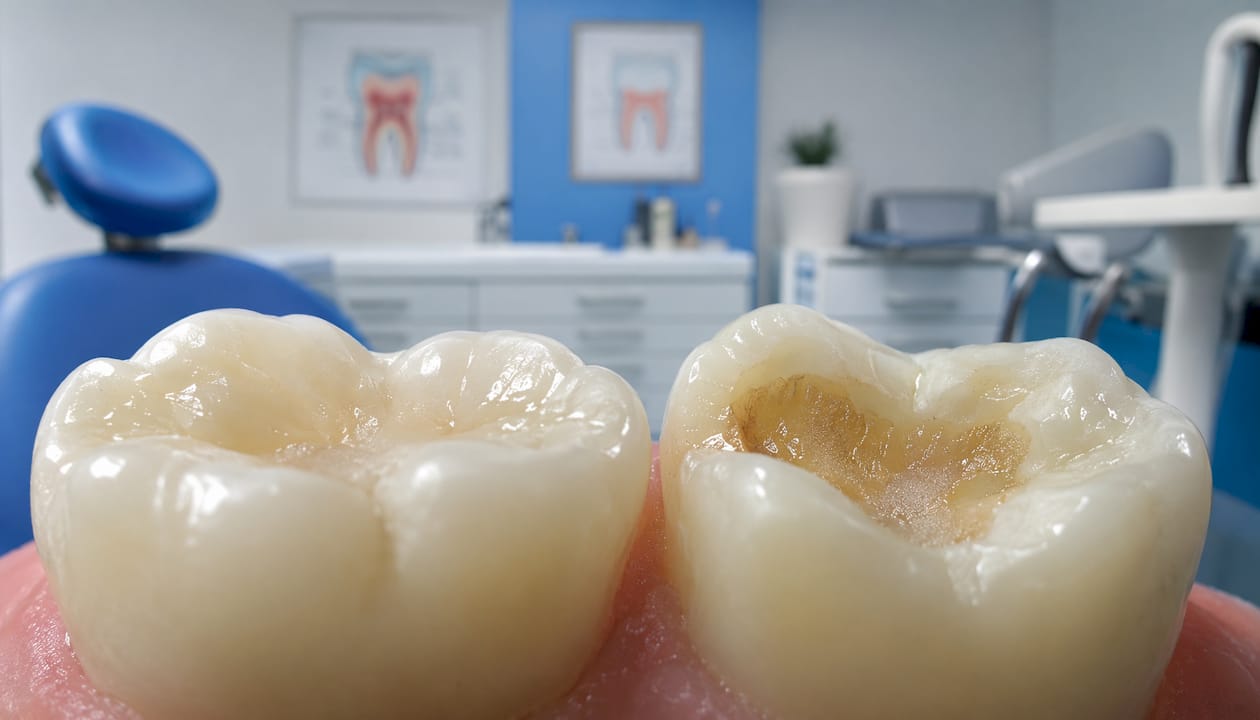
The mechanism is the same regardless of cause: dentin tubules transmit sensations to the pulp nerve when the protective enamel or cementum layer is breached. But when that breach is focal — a crack in one spot, a cavity in one tooth, a gap under one filling — only that tooth sends the pain signal. Johns Hopkins Medicine explains that dentin hypersensitivity causes short, sharp bursts of pain when dentin becomes exposed, and that generalized sensitivity usually affects multiple teeth.
That localization is actually useful information for your dentist. A single affected tooth statistically increases the likelihood that an X-ray and targeted tests will identify a treatable structural problem. Skipping the exam means the underlying cause continues to progress.
Pro Tip: If your sensitivity is triggered specifically by biting down and then fades when you release pressure, mention that exact pattern when you call the clinic. It points strongly toward a cracked tooth and helps the dentist prepare the right diagnostic tools before you arrive. You can also read more about bite-triggered tooth pain on the Mersaldental blog.
What does a dentist do to find the cause?
A targeted exam for a single sensitive tooth follows a clear sequence. Knowing what to expect makes the visit less stressful.
Patient history: The dentist asks when the sensitivity started, what triggers it (cold, heat, biting, sweets), how long the pain lasts after the trigger, and whether there has been any recent dental work or trauma.
Visual and tactile exam: The dentist inspects the tooth for visible cracks, decay, or a failing restoration margin, and checks the surrounding gum tissue for recession or swelling.
Percussion and bite testing: Tapping the tooth with a dental instrument checks for root inflammation or an abscess. A bite stick isolates whether pressure on a specific cusp reproduces the pain, which helps identify crack location.
Cold testing: A cold stimulus applied to the tooth differentiates reversible pulpitis (pain that fades quickly — the nerve is irritated but alive) from irreversible pulpitis (pain that lingers — the nerve is dying and likely needs a root canal).
Dental X-rays: Periapical or bitewing X-rays reveal decay under existing restorations, bone loss at the root tip suggesting an abscess, or root problems invisible to the naked eye. The Merck Manual identifies this diagnostic sequence — history, percussion, cold testing, and X-rays — as the standard approach for a toothache. Understanding why dental X-rays matter can help you feel confident about this step.
If infection is suspected, the dentist may act the same day: isolate the tooth, take an X-ray, and either begin definitive treatment or prescribe antibiotics as a temporary measure. Antibiotics can slow the spread of infection but cannot fix the underlying structural problem — definitive dental treatment is always required.
What treatment options are available?
Treatment depends entirely on what the exam and X-ray reveal. Here is how the most common causes map to their solutions:
Cause | Treatment | Expected outcome |
Exposed dentin, mild reversible sensitivity | Desensitizing toothpaste (e.g., Sensodyne) or in-office fluoride varnish | Toothpaste takes several weeks; fluoride varnish acts faster |
Cavity reaching dentin | Composite filling or replacement of existing filling | Sensitivity resolves within days to a few weeks after repair |
Cracked tooth (pulp not involved) | Dental bonding, onlay, or crown to stabilize the crack | Pain on biting typically resolves once the crack is protected |
Cracked tooth (pulp involved) or irreversible pulpitis | Root canal therapy, then crown | Sensitivity resolves after the infected pulp is removed |
Abscessed tooth | Root canal or extraction, with antibiotics if infection is spreading | Pain resolves after the infection source is eliminated |
Failing or leaking restoration | New filling or crown | Sensitivity resolves once the seal is restored |
Gum recession exposing root | Fluoride varnish, dental sealant, or gum graft | Depends on severity; graft gives the most durable result |
Desensitizing agents work by sealing dentin tubules, but regular application is required for effect. Over-the-counter products like Sensodyne are a reasonable first step for mild sensitivity, but they will not fix a crack, a cavity, or a failing restoration. If the underlying cause is structural, the sensitivity will return or worsen until the tooth is repaired.
Root canal therapy becomes necessary when the pulp is irreversibly inflamed or infected. It removes the damaged nerve tissue and seals the canal, saving the tooth. Extraction is a last resort when the tooth cannot be restored. Same-day extraction is available at some clinics when the situation warrants it.
How can you ease the pain at home while you wait?
Short-term self-care can reduce discomfort, but it is not a substitute for a dental exam. These steps are safe and evidence-based:
Do:
Switch to a desensitizing toothpaste such as Sensodyne and use it consistently. It needs several weeks of regular use to build effect, but it is safe to start immediately. Explore sensitive teeth toothpaste options if you are unsure which formula suits you.
Rinse gently with warm salt water to reduce inflammation around the gum.
Use a soft-bristled brush with gentle, circular strokes — hard brushing on an already-sensitive tooth worsens irritation.
Take an over-the-counter pain reliever (ibuprofen or acetaminophen) at the recommended dose to manage discomfort.
Avoid very hot, very cold, and very sweet foods until you are seen by a dentist.
Do not:
Place aspirin directly against the tooth or gum. It does not absorb through tissue and can cause a chemical burn.
Use abrasive whitening toothpastes or whitening strips on a sensitive tooth — they can deepen irritation.
Ignore symptoms that are getting worse. Reversible sensitivity may improve in days to weeks, but pain that persists or intensifies signals a deeper problem that will not resolve on its own.
Pro Tip: If sensitivity started after a recent filling or whitening appointment, give it 1–2 weeks before assuming something is wrong. Johns Hopkins Medicine confirms that temporary pulpal irritation from dental procedures is common and usually settles without further treatment.

When does a sensitive tooth become a dental emergency?
Some symptoms mean you should not wait for a routine appointment.
Call your dentist immediately or go to the emergency room if you have:
Visible swelling of the face, jaw, or neck
Fever above normal or chills
Severe, unrelenting pain that does not respond to over-the-counter pain relievers
Spreading redness or warmth in the face
Pus draining from the gum near the tooth
Difficulty breathing or swallowing
A dental fracture from trauma
Harvard Health warns that dental infections can spread beyond the mouth and that swelling, fever, or spreading facial pain should prompt urgent care or an ER visit if a dentist is unavailable. Breathing or swallowing difficulty means go to the ER immediately — do not wait.
When pain is severe but there are no systemic signs (no fever, no swelling, no difficulty breathing), call your dental clinic first. Many offices, including Mersaldental, offer same-day emergency appointments. When you call, tell the receptionist: “I have sharp pain in one tooth that is getting worse, and I need to be seen today.” That description helps the team triage you correctly.
How do you prevent single-tooth sensitivity from coming back?
Prevention targets the root causes: enamel loss, gum recession, and restoration failure.
Brush correctly: Use a soft-bristled brush and gentle circular strokes. The ADA’s published guidance60601-2/fulltext) specifically warns that hard brushing and stiff bristles cause gum recession and enamel wear, both of which expose dentin.
Reduce acid exposure: Carbonated drinks, citrus, and wine erode enamel over time. When you do consume acidic foods or drinks, wait about 60 minutes before brushing — brushing immediately after acid exposure removes softened enamel faster.
Wear a nightguard if you grind: Bruxism wears down enamel and can fracture restorations. A custom nightguard from your dentist protects both. Johns Hopkins Medicine lists occlusal protection as a key prevention measure.
Keep up with regular checkups: Small cavities and early restoration failures are easy to fix. Left undetected, they become root canals or extractions.
Pro Tip: If your dentist has noted progressive enamel loss at past visits, ask about in-office fluoride varnish at your next cleaning. It strengthens enamel faster than daily toothpaste alone and can be applied in minutes.
Why a single sensitive tooth usually needs a professional exam
The underlying mechanism of tooth sensitivity is well understood: when dentin is exposed, its microscopic tubules carry temperature, pressure, and chemical signals directly to the pulp nerve. That part is consistent across all causes. What changes is why the dentin became exposed in the first place, and that question almost always requires a clinical exam to answer.
When only one tooth is affected, the statistical likelihood of a discrete structural problem — a cavity, a crack, or a failed restoration — is high. Generalized causes like acid erosion or enamel wear tend to affect many teeth simultaneously. A single sensitive tooth is the tooth’s way of signaling something specific is wrong in that location.
Early diagnosis is the most effective way to keep treatment simple. A cavity caught before it reaches the pulp is a filling. A crack identified before the pulp is involved is a crown. The same problems, found later, become root canals or extractions. A targeted exam with X-rays and pulp testing is the most efficient path to a clear answer — and often to a much simpler fix.
Delaying care risks progression from reversible pulpitis to irreversible pulpitis or abscess.
An abscess can spread beyond the tooth and, in rare cases, become life-threatening.
Early treatment preserves the tooth and avoids more complex, costly procedures.
Key Takeaways
A single tooth that suddenly becomes sensitive almost always signals a localized structural problem — cavity, crack, or failing restoration — that requires a targeted exam and X-ray to diagnose and treat correctly.
Point | Details |
One tooth, one cause | Isolated sensitivity points to a local structural problem, not generalized enamel wear affecting many teeth. |
Self-care has limits | Desensitizing toothpaste like Sensodyne helps mild cases but will not fix a crack, cavity, or failing restoration. |
Diagnosis requires an exam | A dentist uses percussion, cold testing, and X-rays to identify the cause and choose the right treatment. |
Know the red flags | Swelling, fever above normal, or spreading pain means seek urgent care or go to the ER immediately. |
Mersaldental can help | Mersaldental offers same-day and emergency appointments, direct insurance billing, and full restorative care in Ottawa. |
A dentist’s perspective on sudden single-tooth sensitivity
The patients who do best are the ones who come in early. When someone describes sharp pain in one tooth that started suddenly, our first instinct is not to reassure them that it will pass — it is to find out why. A single sensitive tooth is a specific complaint that deserves a specific answer, and we have the tools to find it.
Our routine at Mersaldental is straightforward: we take a brief history of the symptom, do a targeted exam, run a cold test and percussion check, and take an X-ray when the clinical picture calls for it. Most of the time, we can give a clear diagnosis and a treatment plan in the same visit. When the problem is caught early — a small cavity, a crack that has not yet reached the pulp, a filling that needs replacing — we can often complete the repair the same day.
We offer fillings, crowns, root canal therapy, and extractions, all under one roof. We also handle direct insurance billing and accept the CDCP, so cost concerns do not have to delay care. If you are grinding your teeth, we can fit you for a nightguard. If your sensitivity turns out to be mild and reversible, we will show you exactly how to manage it at home and what to watch for. The goal is always to preserve the tooth with the least invasive treatment possible.
Ready to get your sensitive tooth checked?
Sudden pain in one tooth is not something to wait out. Mersaldental, located in lower town Ottawa, offers same-day and emergency dental appointments for exactly this kind of situation. Whether the cause turns out to be a simple filling or something that needs a crown or more complex repair, we will walk you through every step clearly and comfortably.

We accept new patients, offer direct insurance billing, and work with the CDCP and IFHP programs. When you call, simply tell us you have sharp or persistent sensitivity in one tooth and that you need to be seen promptly. Our team will find the earliest available slot and make sure you know what to expect before you arrive. Book your appointment online or call us directly — same-day slots are available for urgent cases.
This article is for general information only and is not a substitute for professional dental advice. Please consult a qualified dentist for an assessment of your specific situation.
Useful sources
Harvard Health: Is that dental pain an emergency? — Clinical guidance on when dental pain requires urgent or emergency care, including signs of spreading infection.
Johns Hopkins Medicine: Sensitive Teeth — Explains the dentin tubule mechanism, common causes of sensitivity, and when temporary sensitivity is expected after dental work.
Colgate: Is One Sensitive Tooth a Serious Issue? — Consumer-facing overview of localized single-tooth sensitivity causes, including cracked tooth signs.
Merck Manual: Toothache — Standard clinical diagnostic sequence for toothache, including percussion, cold testing, and X-rays.
Medical News Today: Dentin Hypersensitivity — Detailed review of desensitizing agents, fluoride varnish, and realistic timelines for sensitivity relief.
ADA Journal (JADA): Preventing and Treating Tooth Sensitivity60601-2/fulltext) — Peer-reviewed ADA article covering causes, prevention strategies, and in-office treatment options.
Mayo Clinic: Sensitive Teeth — Expert answers on causes and treatment options, including fluoride, sealants, and gum grafts.
Mayo Clinic: Toothache First Aid — Practical first-aid steps and guidance on when to call a dentist or go to the ER.
Mersaldental: Emergency Dental Care — Same-day and emergency dental services at Mersaldental in Ottawa.
Recommended
Comments