Avoid Surprise Dental Bills: Ontario Fee Guide to Get an Estimate
- Mayde Mersal
- 11 minutes ago
- 6 min read


The ODA Suggested Fee Guide is a reference schedule published by the Ontario Dental Association, and dentists may use it but are not required to follow it. Fees vary from office to office based on overhead, location, and treatment complexity. Before booking a procedure, ask your dentist for a written estimate or check your Canadian Dental Care Plan (CDCP) eligibility, since a dentist charging above suggested amounts must tell you.
TL;DR:
Dentists in Ontario set their own fees based on overhead, location, materials, and practice choices, meaning costs can vary significantly even for identical procedures.
Asking for a written estimate that separates professional fees, lab charges, and includes the procedure explanation helps prevent surprises and clarifies what you are paying for.
The Ontario Dental Association’s fee guide is a reference, not a fixed price list, and insurance reimbursements often follow different fee grids, such as the Canadian Dental Care Plan rates.
Typical costs for common procedures in Ontario are higher on average, but out-of-pocket expenses depend heavily on your insurance coverage and treatment complexity.
To limit dental costs, verify eligibility for government plans, compare insurance options, request direct billing, and consider staged or lower-cost treatment alternatives when appropriate.
Table of Contents
What Is the ODA Suggested Fee Guide?
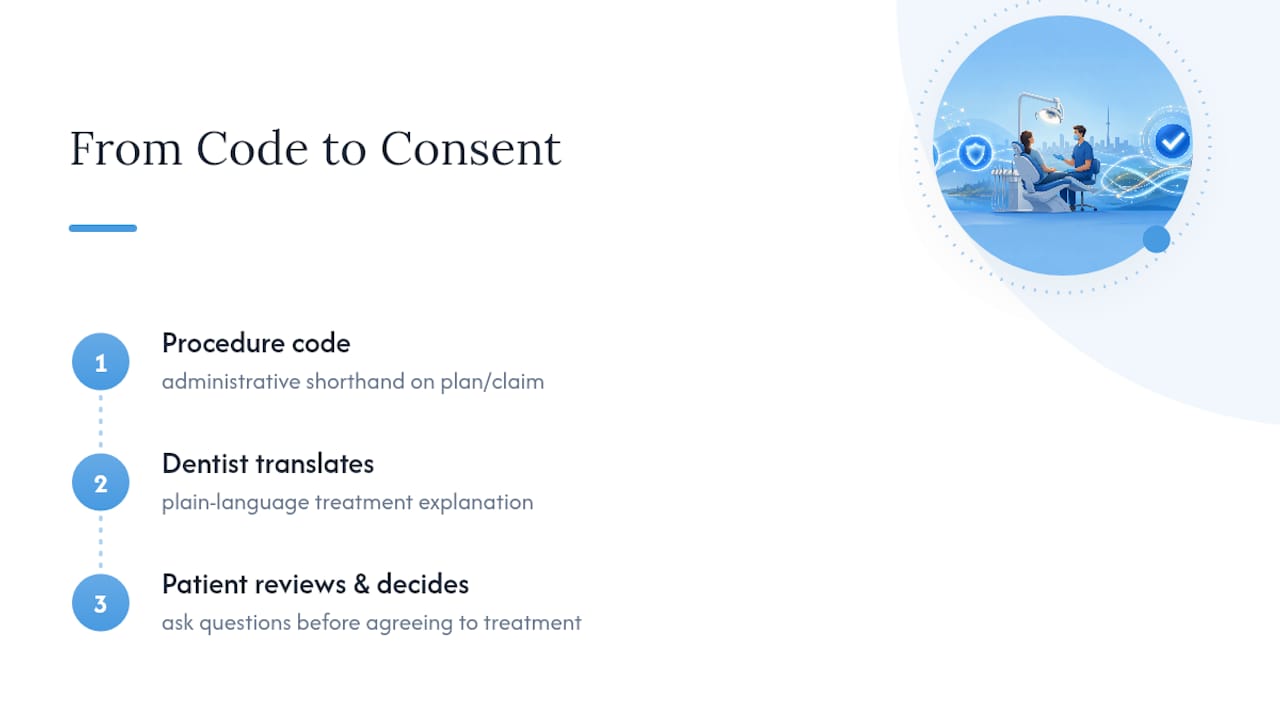
The ODA Suggested Fee Guide is a technical fee schedule built around procedure codes, the kind of shorthand you’ll see on a treatment plan or insurance claim. It exists as a reference point, not a price list every dentist has to honor.
Dentists across Ontario set their own fees based on their own practice realities. Many insurance companies still lean on a fee grid, often close to the ODA numbers, when calculating what they’ll reimburse you.
Here’s where patients get tripped up: the guide uses coding language built for administrators, not patients. A procedure code tells your dentist and your insurer exactly what was done, but it won’t mean much to you at a glance. We always recommend asking your dentist to translate the code into plain language before you agree to treatment. It’s a fair question, and a good office will answer it without hesitation.
Why Do Dental Fees Vary Between Ontario Dentists?
Two dentists performing the same filling can charge different amounts, and neither one is wrong. Fees reflect real differences in how a practice operates.
Overhead and location: rent in downtown Ottawa or Toronto costs more than rent in a smaller town, and that gets built into fees.
Time-based billing: many procedures bill in 15 minute units, so a longer or more complicated case costs more than a straightforward one.
Materials and lab charges: crowns, bridges, and dentures involve outside lab work billed at cost, and those charges get passed along.
Specialist involvement and practice choices: newer technology, extra staff training, and updated safety protocols all show up in the final bill.
Insurance trends: utilization and renewal patterns can push what you pay out of pocket even when your plan’s coverage percentage hasn’t changed.
No two treatment plans are identical, even for what sounds like the same procedure on paper.
How Do You Read Fee Codes and Get a Written Estimate?
You have the right to understand exactly what you’re paying for before you sit in the chair. Here’s how to get there:
Ask for the procedure name, its fee code, and a plain-language explanation of what it covers.
Request a written estimate that separates the professional fee from any lab or material charges.
Confirm how many time units apply if the procedure bills per unit, and ask about likely additional fees.
Ask whether a clinically acceptable, lower-cost alternative exists, or whether staged treatment is an option.
Understand that if your dentist finds something new mid-appointment, informed consent and cost disclosure come before any additional work, not after.
Pro Tip: Bring your insurance card and ask the front desk for a benefits check before your appointment. It takes a few minutes and can save you an unpleasant surprise at checkout.
Where Do You Find Official Ontario Fee Grids?
Two documents matter here, and they aren’t the same thing.
The ODA Suggested Fee Guide is the reference dentists and many insurers use as a baseline, but it’s not a legislated price list.
The Canadian Dental Care Plan publishes its own fee grid and coverage guide on Canada.ca, separate from the ODA numbers.
If you’re covered under CDCP, your reimbursement follows the federal plan’s own schedule, which can sit lower than ODA suggested amounts. That gap is exactly why it pays to ask which grid your dentist and your coverage are actually using before treatment starts.
What Do Common Dental Procedures Cost in Ontario?
Provincial benchmark data gives a useful starting point, though it’s never a substitute for your own written estimate. According to cost comparisons across Canadian provinces, Ontario tends to run on the higher end nationally for routine and complex care alike.
Typical dental procedure cost ranges in Ontario vary by office and treatment specifics. Exams, cleanings, fillings, crowns, and implants can each vary widely depending on factors such as location, materials, and provider.
Your actual out-of-pocket cost depends heavily on your insurance reimbursement percentage and your plan’s annual maximum, which is why the same crown can cost one patient $200 and another $1,800.
How Can You Limit Your Dental Costs in Ontario?
A few practical moves make a real difference to your bottom line.
Check whether you qualify for the CDCP, which sets its own coverage levels and annual maximums for eligible Canadians.
Compare private insurance plans on premiums, coverage percentage, and waiting periods, since premiums and coverage vary widely across Ontario providers.
Ask your dentist about direct billing so your insurer is billed straight from the office instead of you paying upfront and waiting on reimbursement.
Request a written estimate every time, and ask whether staged care or a lower-cost material is clinically appropriate for your case.
Pro Tip: Regular cleanings cost far less than the fillings and crowns that come from delaying care, so keeping hygiene appointments on schedule is one of the cheapest habits in dentistry.
How Mersal Dental Explains Fees to Ottawa Patients
At our dental practice, we run a benefits check before your appointment whenever possible, bill CDCP and IFHP directly where you qualify, and walk through each code in plain language before you commit to treatment. Bring your plan details and any past dental records so we can build an accurate estimate from day one.
What Ontario Patients Get Wrong About Fee Guides
The biggest misunderstanding we see is patients treating the ODA Suggested Fee Guide as a price tag rather than a starting reference. It isn’t a rate card, and no regulation forces a dentist to charge those exact numbers. That single misconception drives a lot of unnecessary sticker shock.
The more useful mindset: stop comparing a single code price across clinics and start asking what’s actually included in your treatment plan. A $180 filling estimate at one office and a $220 estimate at another might reflect different materials, different time allotted, or a different approach to a borderline cavity, not a markup.
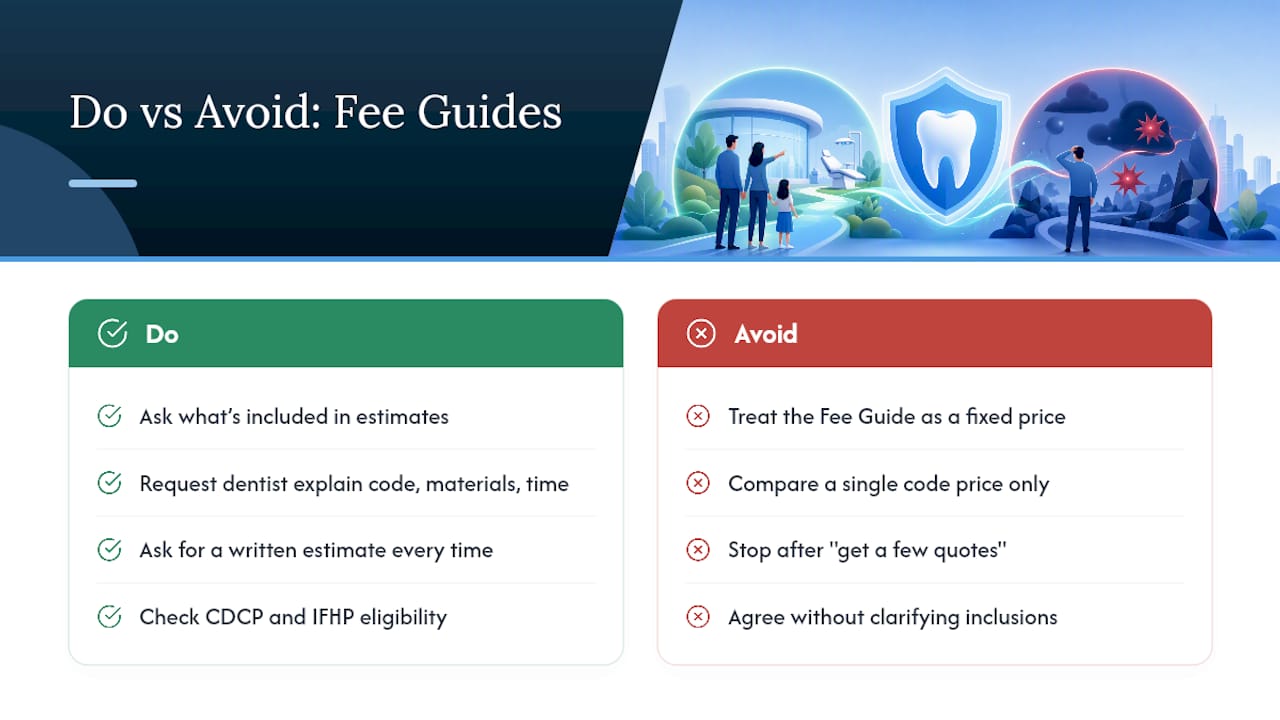
Where conventional advice falls short is in stopping at “get a few quotes.” That’s fine, but it skips the step that actually protects your wallet: asking your own dentist to walk you through the code, the material cost, and the time units before you agree to anything. CDCP and IFHP eligibility checks matter too, and they’re often skipped simply because patients don’t know to ask.
If you take one thing from this guide, make it this: a written estimate isn’t a courtesy your dentist offers. It’s something you’re entitled to ask for, every time.
— Mersal
Get a Written Estimate at Mersal Dental
This dental office gives you a real number before treatment starts, not a guess based on a suggested fee schedule you’ll never see itemized elsewhere. They run a CDCP and IFHP benefits check ahead of your visit, bill your insurer directly, and put professional fees and lab charges on separate lines so you know exactly what you’re paying for.
Bring your insurance policy details, any past dental records, and a note of alternatives you’d want discussed, like a lower-cost filling material or a staged treatment plan. Our team will use that to build an estimate that actually holds up once you’re in the chair. Ready to check what you qualify for? Visit our CDCP and IFHP programs page to start, or browse our services to book an appointment in Lower Town Ottawa.
Sources
Recommended
Comments