Single Tooth Implant Timeline: What to Expect
- Mayde Mersal
- Aug 12
- 13 min read

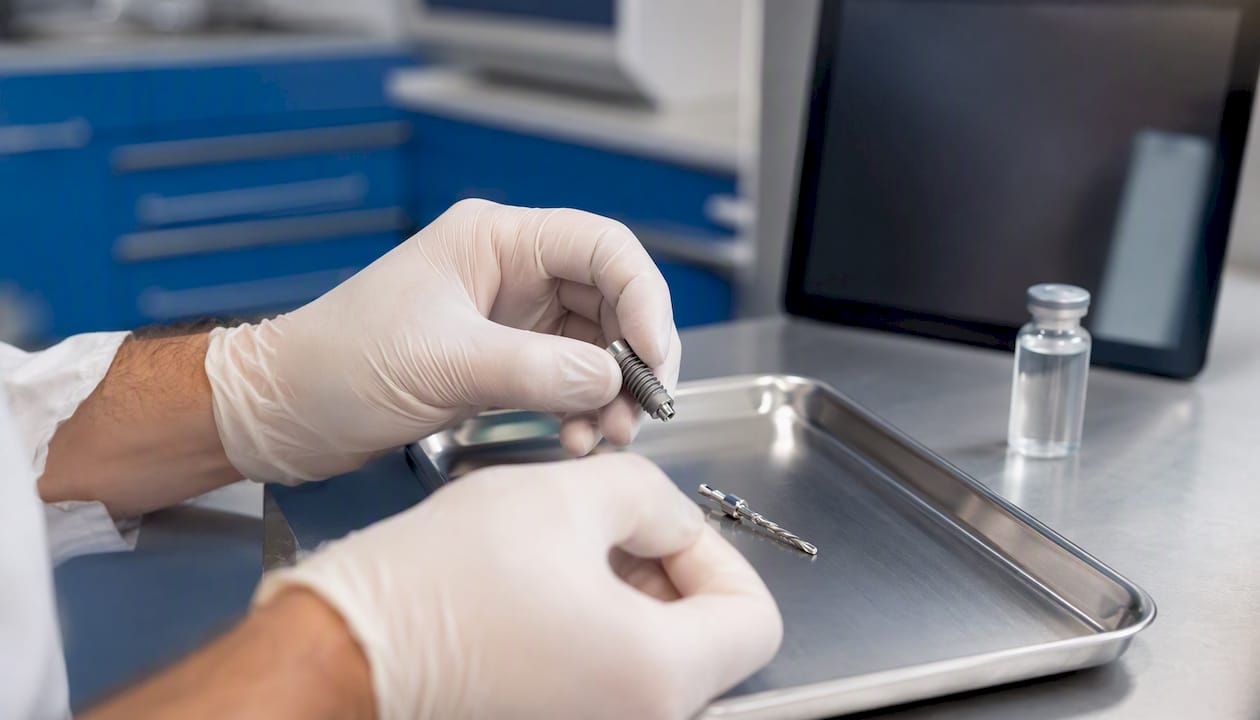
A single tooth implant typically takes several months from your first consultation to the delivery of your final crown. That range assumes no major bone work is needed. When a tooth extraction, bone graft, or sinus lift is part of your plan, the total timeline commonly extends to several additional months or longer.
The main reason the process takes months rather than weeks is osseointegration — the biological process by which your jawbone gradually fuses to the titanium implant post. You cannot rush that phase. Everything else in the schedule, including the surgical appointments themselves, is relatively brief.
Here is a quick planning reference:
Fastest realistic scenario: a few months (healthy bone, healed extraction site, lower jaw)
Typical case: several months (standard placement, upper or lower jaw, no grafting)
Longer case: many months (extraction plus bone graft or sinus lift required)
Key Takeaways
Most single-tooth implant timelines run 3–6 months for straightforward cases, and 6–12+ months when extraction, bone grafting, or a sinus lift is required — with osseointegration accounting for the majority of that calendar time.
Point | Details |
Typical total timeline | Most uncomplicated cases take 3–6 months; grafting or sinus lifts extend this to 9–12+ months. |
Osseointegration drives the schedule | Bone fusing to the implant takes 2–6 months and cannot be accelerated; most waiting time is biological. |
Smoking and bone volume are key variables | Smoking and inadequate bone are the two most common reasons timelines lengthen significantly. |
Temporary teeth keep you comfortable | Flippers, provisional crowns, or immediate temporaries are available while your implant heals. |
Mersaldental offers a personalized plan | Mersaldental provides a full consultation with CBCT imaging, direct insurance billing, and CDCP/IFHP acceptance. |
Table of Contents
What is a single tooth implant and why does the timeline vary?
A single-tooth implant is a three-part restoration: a titanium post surgically placed into the jawbone, a small connector piece called an abutment, and a custom crown that matches your natural teeth. Unlike a bridge, which relies on the two adjacent teeth for support, this approach preserves surrounding bone and leaves neighboring teeth untouched.
The central timing factor is osseointegration. According to the Mayo Clinic, bone fusing to the implant can take several months, and many procedures are completed in stages with deliberate healing time between visits. You are not waiting because the dentist is slow. You are waiting because bone biology has its own schedule.
Four variables most commonly shift that schedule:
Whether a tooth still needs to be extracted — a fresh socket requires healing before or alongside implant placement.
Bone volume and density — thin or resorbed bone requires grafting before an implant can be placed securely.
Jaw location — lower jaw bone tends to be denser and heals faster; upper jaw, especially near the sinuses, often takes longer.
Systemic health and lifestyle — smoking, poorly controlled diabetes, and certain medications all slow healing and can add weeks or months.
Pro Tip: If you are having a tooth extracted, ask your dentist about socket preservation at the same appointment. Packing the socket with a bone graft material right after extraction typically adds only 4–8 weeks of healing, compared to a separate ridge augmentation procedure later that can add 3–6 months to your overall timeline.
How the single tooth implant timeline breaks down stage by stage
Dental implant surgery is an outpatient procedure done in stages, and some steps can be combined when bone condition and clinical judgment allow. The total number of active appointments for a straightforward case is usually four to six visits. Most of your calendar time is spent waiting for biology, not sitting in the chair.
Stage | Typical Duration | Active Visits? |
Consultation and records | a short period | Yes — exam, X-rays, CBCT scan |
Extraction (if needed) | Same day as consult or separate | Yes — 60–90 min procedure |
Socket preservation / bone graft | several weeks to months of healing (socket preservation is shorter; ridge graft is longer) | Minimal — mostly waiting |
Implant placement surgery | 60–90 min procedure | Yes |
Osseointegration | several months | No active visits; check-up at 6–8 weeks |
Abutment placement | 1–2 week healing | Yes — brief appointment |
Impressions and crown fabrication | 2–4 weeks | Yes — impression appointment |
Final crown delivery | Same day or next visit | Yes |
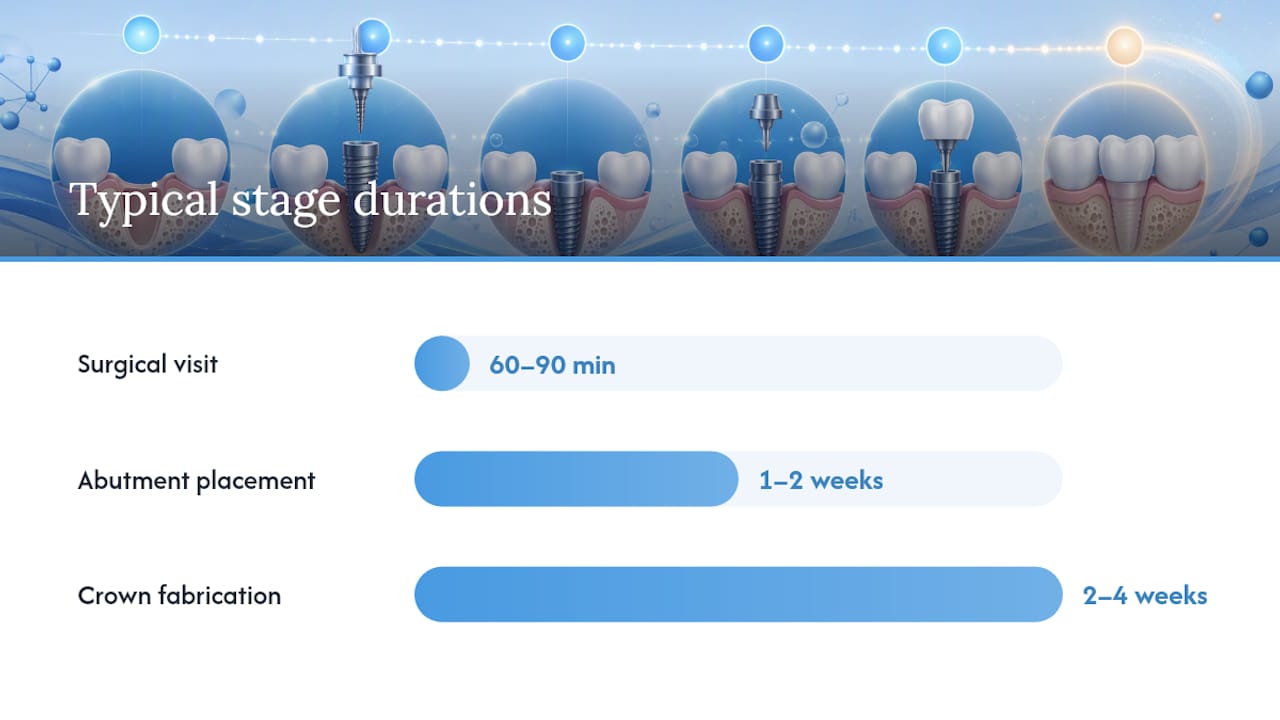
The American Academy of Periodontology notes that implant and bone bonding commonly takes several months, with grafting extending that window further. Implant placement itself typically runs about 60–90 minutes for a single tooth. The crown fabrication step, once impressions are taken, usually takes two to four weeks at the dental lab.
A few steps can occasionally be combined. When bone is healthy and adequate, some clinicians place the implant at the same appointment as the extraction, a technique called immediate placement. When stability is excellent and bite forces are low, a temporary crown can sometimes be attached the same day. These options are discussed in detail in the faster options section below.
Week-by-week recovery after implant placement
Understanding what your body is doing each week makes the waiting period far less stressful. Here is what most patients experience after the implant placement surgery itself.

Week 1: managing the immediate post-op period
Swelling, mild bleeding, and soreness are normal for the first 48–72 hours. Most patients manage discomfort with over-the-counter ibuprofen or acetaminophen, though your dentist may prescribe a short course of antibiotics or a stronger analgesic depending on your case. Stick to soft foods — yogurt, scrambled eggs, mashed potatoes, smoothies — and avoid anything hot, crunchy, or chewy near the surgical site. Keep the area clean with gentle salt-water rinses starting 24 hours after surgery, but do not brush directly over the implant site yet.
Weeks 2–4: soft tissue closes, discomfort fades
By the end of week two, most patients notice a significant drop in swelling and discomfort. Sutures, if non-dissolving, are typically removed around day 7–10. You can gradually reintroduce firmer foods, though chewing directly on the implant site is still off the table. A follow-up check at this stage lets your dentist confirm that the gum tissue is healing cleanly and that there are no early signs of infection.
Weeks 5–12: bone healing progresses beneath the surface
This is the quiet phase. You will likely feel close to normal, but osseointegration is actively happening inside the bone. Most patients return to a fully normal diet by weeks 6–8, avoiding only very hard or sticky foods near the implant. Your dentist may take a periapical X-ray around the 6–8 week mark to assess early bone integration. If you received a temporary flipper or provisional crown, it may be adjusted during this period for comfort and fit.
Months 3–6: osseointegration confirmed, final restoration begins
At the 3–6 month mark, your dentist will assess osseointegration through clinical testing and imaging. Cleveland Clinic reports that most uncomplicated cases reach this milestone within 3–6 months, with some cases extending to 9 months depending on patient factors. Once integration is confirmed, the abutment is placed and impressions are taken for your final crown. Upper jaw cases and grafted sites typically sit at the longer end of that window.
Recovery dos and don’ts
Do:
Take prescribed medications as directed and complete any antibiotic course fully.
Rinse gently with warm salt water after meals starting 24 hours post-surgery.
Sleep with your head slightly elevated for the first few nights to reduce swelling.
Attend every scheduled follow-up, even when you feel fine.
Brush and floss all other teeth normally to maintain overall oral health.
Don’t:
Smoke or use tobacco products during healing — this is the single most controllable risk factor for implant failure.
Drink through a straw for the first 24 hours after surgery.
Eat hard, crunchy, or sticky foods near the implant site until cleared by your dentist.
Skip follow-up appointments or imaging checks.
Ignore persistent pain, swelling, or a loose-feeling implant — contact your dentist promptly.
Call your dentist immediately if you notice: severe or worsening pain after day 3, pus or discharge around the implant, the implant feeling loose or shifting, a fever above 101°F, or significant swelling that spreads beyond the jaw.
What factors lengthen or shorten your implant timeline?
Not every patient follows the same schedule. Several clinical and personal factors can add weeks or months, and a few can shorten the process.
Patient factors that add time:
Smoking — nicotine restricts blood flow to healing tissue and significantly raises the risk of implant failure and slow osseointegration. Patients who smoke often need longer healing windows and face higher complication rates.
Uncontrolled diabetes — elevated blood sugar impairs wound healing and bone metabolism. Patients with well-managed diabetes can be excellent implant candidates; those with poorly controlled levels may need to stabilize before surgery.
Certain medications — bisphosphonates (used for osteoporosis), immunosuppressants, and some blood thinners can affect bone healing and may require a medication review before treatment begins.
Poor oral hygiene — active gum disease or untreated decay must be resolved before implant placement. Periodontal health directly affects implant candidacy and timeline.
Clinical factors that add time:
Bone grafting — ridge augmentation typically adds 3–6 months of healing before implant placement can proceed. If you have existing bone loss, augmentation options are available but they do extend the schedule.
Sinus lifts — required when upper back teeth are being replaced and the sinus floor sits too close to the jaw. This procedure adds roughly 4–6 months.
Socket preservation at extraction — when done at the same time as extraction, this adds only 4–8 weeks compared to a delayed graft that can add months. Timing this correctly is one of the most practical ways to keep your overall schedule shorter.
Upper jaw location — maxillary bone is generally less dense than mandibular bone, so osseointegration in the upper jaw tends to take longer.
Pro Tip: Stopping smoking at least 8 weeks before implant surgery and maintaining that through the healing period is one of the most effective steps you can take to protect your timeline and your investment. Ask your dentist about cessation resources if you need support.
Are faster or same-day implant options right for you?
Some patients can complete the process in significantly less time through immediate placement, immediate loading, or same-day crown protocols. These are not shortcuts — they are clinically appropriate options for patients who meet specific criteria.
Immediate placement means the implant post is inserted into the socket at the same appointment as the extraction, skipping a separate healing phase. Immediate loading means a temporary crown is attached to the implant within 48–72 hours of placement, before osseointegration is complete. Same-day crowns (in some cases) use in-office CAD/CAM milling to fabricate the final or provisional crown during a single visit.
Who typically qualifies?
Sufficient bone volume and density at the extraction site with no active infection
Good overall health with no conditions that impair healing (well-controlled systemic health)
Favorable bite mechanics — lower bite forces reduce stress on an unintegrated implant
Front teeth (anterior sites) are often more suitable than back molars, which bear heavier chewing loads
Non-smoker or committed to cessation through the healing period
Pros and cons of faster approaches
Factor | Faster/Same-Day Approach | Conventional Staged Approach |
Total calendar time | Potentially 2–3 months shorter | 3–9+ months |
Number of surgical visits | Fewer | More, but each is planned |
Risk if osseointegration is disrupted | Higher — early loading can stress the implant | Lower — implant is protected during healing |
Patient eligibility | Selective — requires ideal bone and health | Broader — most patients qualify |
Esthetic result during healing | Immediate provisional in place | Flipper or temporary bridge used |
The clinical literature notes that prosthetically driven placement and appropriate timing for loading are important to reduce early failure risk, particularly for single-tooth restorations that face higher masticatory forces without lateral support. Your dentist will assess your bone quality, bite, and health history before recommending any accelerated protocol.
What are the success rates and warning signs to watch for?
Single-tooth implants have a strong clinical track record. A prospective clinical trial of 71 implants in 59 patients followed over a mean period of nearly four years reported a high cumulative success rate, with one implant failure attributed to peri-implant infection. This is a single-study result and should be understood as one favorable data point rather than a universal guarantee, but it reflects the outcomes reported across much of the clinical literature for well-selected patients.
Most common complications and when they tend to occur:
Peri-implantitis (infection around the implant) — can develop months to years after placement; the leading cause of late implant failure.
Early implant failure — occurs within the first few months, usually due to poor osseointegration, infection, or excessive loading before healing is complete.
Soft tissue problems — gum recession or inadequate tissue around the implant, often manageable with minor procedures.
Crown or abutment issues — loosening or fracture of the prosthetic components, typically addressable without removing the implant.
If you notice a problem, here is what to do:
Persistent pain or swelling past day 3–5 — call your dentist the same day; do not wait for your next scheduled visit.
Implant feels loose or moves — stop chewing on that side and contact your clinic immediately.
Pus, bad taste, or visible redness around the implant — these are signs of infection; same-day contact is appropriate.
Crown feels high or your bite has shifted — schedule an adjustment appointment; an uneven bite can stress the implant.
Any concern between appointments — your dental team would rather hear from you early than manage a complication that developed because you waited.
Prompt follow-up imaging at the 6–8 week and 3–6 month marks is one of the most reliable ways to catch integration problems before they become failures.
Questions to ask at your implant consultation
Your dentist will review your medical and dental history, take a CBCT (cone beam CT) scan for 3D imaging of your bone, assess your periodontal health, and analyze your bite before recommending a treatment plan. A thorough planning appointment typically runs 60–90 minutes when imaging is included.
Bring a list of your current medications, any recent dental X-rays, and your insurance information. Here are the questions worth asking before you leave:
Do I need a bone graft or sinus lift, and how will that affect my total timeline?
What is the estimated calendar time from today to my final crown?
What temporary tooth options are available while I heal?
Will my extraction and implant placement happen in the same appointment?
Who performs each step — is everything done here, or will I be referred?
What imaging will you use, and will I need a CBCT scan today?
Am I a candidate for immediate placement or same-day loading?
What are the risks specific to my health history and jaw anatomy?
What does the follow-up schedule look like after surgery?
What is the estimated total cost, and what does my insurance cover?
Documents and imaging to bring:
Current list of medications and supplements
Any recent panoramic X-rays or CBCT scans (within the past 12 months)
Insurance card and plan details
Medical history summary if you have complex health conditions
A treatment planning review in Springer Medicine underlines that anatomy, bone quality, gingival biotype, and occlusal demands all shape timing and technique choices — which is exactly why a detailed consultation is the starting point for any accurate personal timeline.
How Mersaldental manages your implant timeline
At Mersaldental, we walk through the full implant process with you at your first visit so you leave with a clear picture of what your specific timeline looks like, not a generic estimate.
Our typical workflow:
Initial consultation: comprehensive exam, digital X-rays, and CBCT imaging to assess bone volume and anatomy.
Treatment planning: a personalized plan outlining each stage, estimated durations, and any preparatory procedures (extractions, grafting) required.
Surgical scheduling: implant placement coordinated with any extraction or grafting needs; same-day emergency extractions available when urgent.
Healing and follow-ups: scheduled check-ins at 6–8 weeks and at the osseointegration milestone, with imaging to confirm progress.
Crown delivery: abutment placement, impressions, and final crown fabrication coordinated through our in-house workflow.
We offer direct insurance billing, accept the Canadian Dental Care Plan (CDCP) and IFHP, and our multilingual team can communicate in the language you are most comfortable with. If you are dealing with a dental emergency that needs to be resolved before implant planning can begin, we have same-day emergency care available.
Pro Tip: Ask about combining your extraction and socket preservation at your first surgical visit. When clinically appropriate, this single scheduling decision can shorten your overall implant timeline by several months.
What patients commonly say about the experience
Most patients are surprised by how manageable the process actually feels once they are in it. The surgical appointments are brief — implant placement is typically done in under 90 minutes — and the discomfort in the first week is usually well-controlled with standard pain medication. What catches people off guard is the waiting. Weeks pass between appointments, and the implant site feels normal long before osseointegration is complete.
The most common practical tip patients share: prepare your kitchen before surgery. Stock soft foods for at least the first two weeks — soups, yogurt, eggs, smoothies, mashed vegetables. Trying to figure out what to eat while your jaw is sore is an avoidable frustration.
The other thing patients consistently mention is that having a clear timeline from the start makes the waiting easier. Knowing that the quiet phase between placement and crown delivery is biological, not a scheduling delay, removes a lot of anxiety. You are not forgotten. Your bone is just doing its job.
Ready to get your personalized implant timeline?
If you have been putting off replacing a missing tooth because the process feels complicated or the timeline feels uncertain, a single consultation changes that. At Mersaldental, we give you a clear, personalized plan at your first visit — including estimated total time, cost, and every step from today to your final crown.
We accept new patients, offer direct insurance billing, and work with patients covered under the CDCP and IFHP programs. Our team handles everything from initial implant assessment to final crown delivery in one convenient location in lower town Ottawa. Same-day emergency appointments are available when you need urgent care before implant planning can begin.
Book your consultation at Mersaldental and walk away with a timeline that is built around your specific anatomy, health, and schedule — not a generic estimate from a website.
Sources
The timeline and clinical guidance in this article draw on the following sources. We encourage you to bring specific questions to your dentist, as individual anatomy and health history will always shape how these general ranges apply to your case.
This article provides general information about dental implant timelines and is not a substitute for professional dental advice. Consult a licensed dentist to understand how these timelines apply to your specific health history and anatomy.
Recommended
Comments