Why Your Teeth Feel Numb When You Bite Down

Updated: Jul 27
When your teeth feel numb when you bite down, it usually means the nerve or blood supply inside the tooth is under stress or has been compromised. This is not a sensation to wait out. Numbness in a tooth, especially during chewing, is your body’s signal that something has changed inside the pulp, the soft inner core containing nerves and blood vessels that keep the tooth alive.
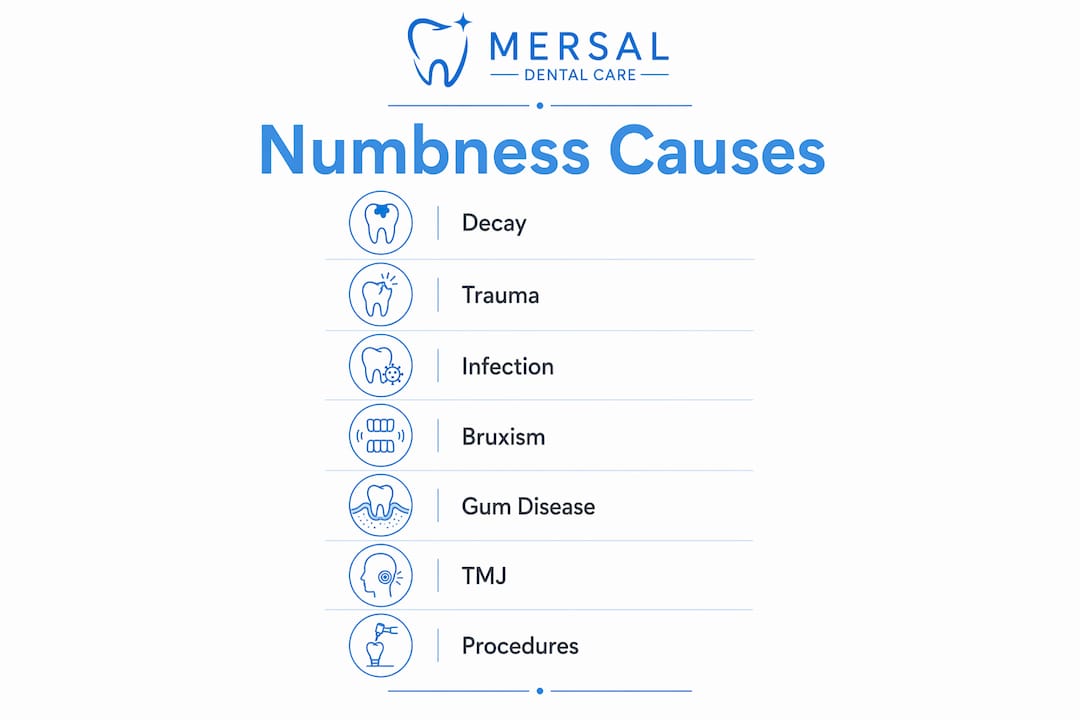
The sensation can range from a faint tingling to a complete “dead” feeling, as if the tooth is barely there. Some people also notice numbness spreading to the gum, jaw, or even the lip or chin. Here is a quick overview of what typically causes numb teeth when biting:
Advanced tooth decay reaching the nerve (pulpitis or necrosis)
Trauma or injury disrupting blood supply to the pulp
Dental abscess or infection compressing nearby nerves
Bruxism (teeth grinding) fatiguing the periodontal ligament and nerve supply
Gum disease (periodontitis) damaging bone and nerve-supporting tissue
TMJ disorder causing referred nerve compression in the jaw
Recent dental procedures such as fillings or root canals causing temporary numbness
Each of these causes has a distinct path to numbness, and identifying the right one determines the treatment. We walk through all seven in detail below.
Table of Contents
1. Tooth decay reaching the nerve
Cavities that go untreated do not stay shallow. Bacteria work their way deeper through enamel and dentin until they reach the pulp chamber. Once inside, they trigger inflammation called pulpitis, which causes pain first. As the nerve tissue is progressively destroyed, that pain fades and is replaced by numbness or a dull, hollow sensation when biting.
This progression can happen quietly. Regular checkups catch decay before it reaches the pulp, which is why early dental X-rays are one of the most reliable tools for spotting the problem before numbness sets in.
2. Trauma or injury to the tooth
A blow to the mouth, a sports injury, or even biting down hard on something unexpectedly can strain or sever the nerves inside a tooth. The trauma disrupts blood flow to the pulp, and the tissue begins to die gradually. In many cases, there is no visible crack, yet numbness develops over days or weeks as internal damage accumulates.

When a tooth does crack or chip, bacteria gain a direct route to the pulp, speeding up infection and the onset of numbness. If you have had any facial impact recently and a tooth now feels odd when chewing, that connection is worth mentioning to your dentist right away.
3. Dental abscess or infection
An abscess is a pocket of infection that builds pressure around the root of a tooth. As that pressure grows, it compresses the nerve branches supplying the tooth and surrounding tissue. The result is numbness that can radiate from the tooth into the jaw, chin, or cheek.
One of the most misread patterns: a tooth that was throbbing suddenly goes quiet and feels numb. That is not improvement. It often means the nerve has died and the infection is progressing silently within the bone. Treatment typically involves root canal therapy or extraction, combined with antibiotics to clear the infection.
4. Bruxism (teeth grinding and clenching)
Chronic grinding places enormous repetitive force on teeth, wearing down enamel and creating micro-cracks that allow bacteria to reach the pulp. Beyond that structural damage, the constant pressure stresses the nerve supply at the root and fatigues the periodontal ligament, the tissue anchoring each tooth in its socket.

Many people who grind their teeth do so during sleep and are unaware of it until a dentist spots the wear patterns. The numbness from bruxism is often described as fuzzy or “not quite there,” distinct from the sharper nerve-death numbness caused by infection. A custom night guard can relieve the mechanical load and, if treated early, allow sensation to return.
5. Gum disease (periodontitis)
Advanced gum disease damages the bone and soft tissue that support teeth. As the disease progresses, it can affect the nerve supply to the roots, causing numbness, particularly as gum recession exposes root surfaces that were never meant to be exposed. The sensation changes gradually rather than suddenly, which is why many patients do not connect it to gum disease at first.
Numbness in the gums while eating, combined with bleeding, swelling, or loose teeth, points strongly toward periodontitis. Treating the underlying gum disease is the necessary first step before any sensation can be restored.
6. TMJ disorder and referred nerve compression
The temporomandibular joint connects your jaw to your skull, and when it is inflamed or misaligned, it can compress nerves that supply the teeth and surrounding facial structures. The result is referred numbness, a sensation that originates at the joint but is felt in the teeth or jaw.
TMJ-related numbness tends to be intermittent and often accompanies jaw clicking, facial tension, or headaches. It is a less common cause of tooth numbness when biting, but worth considering when no obvious dental pathology explains the symptom.
7. Recent dental procedures
After a filling, crown, or root canal, it is normal for a tooth to feel numb or sensitive for a short period while the surrounding tissue settles. Chemical teeth whitening can also cause temporary numbness that resolves within a few days.
If numbness from a recent procedure persists for more than a week, contact your dentist. Persistent post-procedure numbness may indicate an underlying issue that needs attention, such as nerve irritation or an incomplete seal on a restoration.
When should you seek urgent dental care?
Some symptoms alongside tooth numbness require same-day attention, not a scheduled appointment next week. Seek emergency dental care immediately if you notice any of the following:
Sudden numbness in a tooth after a facial injury
A previously painful tooth that abruptly goes numb (possible nerve death)
Numbness spreading to the lip, chin, cheek, or tongue
Swelling in the face or gum near the affected tooth
Fever, chills, or a general feeling of illness alongside tooth numbness
A bad taste in the mouth that persists, suggesting drainage from an abscess
Fever, facial swelling, and numbness together are a same-day emergency. According to the Mayo Clinic, a severe tooth abscess can spread to the jaw, neck, and other areas of the body if not treated promptly. Waiting even a few days in these circumstances risks the infection spreading to bone or deeper facial structures.
Pro Tip: If a tooth that was hurting suddenly stops hurting and feels numb instead, do not assume it is healing. That shift often signals nerve death, and the infection may still be progressing silently inside the bone.
How dentists diagnose and treat tooth numbness
Diagnosis starts with understanding the pattern of your symptoms. Your dentist will ask when the numbness began, whether it followed an injury or procedure, and whether it is constant or comes and goes. From there, the evaluation typically includes:
Digital X-rays to check for decay, bone loss, abscess, or root damage
Pulp vitality testing to determine whether the nerve inside the tooth is still alive
Clinical exam including percussion testing (tapping the tooth) and bite pressure assessment
Differentiating between pain on biting versus sharp pain on release is diagnostically useful. Pain during pressure often points to root inflammation or periodontal ligament involvement, while sharp pain on releasing the bite more commonly suggests a crack in the tooth structure.
Treatment depends on what the diagnosis reveals, including specialist options like root canal therapy for infected or necrotic pulp:
Root canal therapy for infected or necrotic pulp
Antibiotics to address active bacterial infection
Crowns or bridges to restore a tooth after root canal or following trauma
Tooth extraction when the tooth cannot be saved, followed by implant or bridge options
Night guard for bruxism-related numbness to relieve mechanical stress
Periodontal treatment for gum disease affecting nerve-supporting tissue
Before your appointment, avoid chewing on the affected side and skip very hot or cold foods that could aggravate the tooth. Over-the-counter pain relievers can help manage discomfort, but they do not address the underlying cause.
What dental professionals want you to know about tooth numbness
The single most common misconception we see: patients believe numbness means a tooth is healing. In most cases, it means the opposite. Numbness signals that nerve tissue is dying or already dead, and the infection causing that damage may still be active and spreading.
A few expert-level distinctions that guide diagnosis and treatment:
Numbness replacing pain is a red flag, not reassurance. The nerve can no longer send pain signals because it has been destroyed, but the bacterial source remains.
Facial numbness near a sore tooth almost always indicates nerve compression from infection or inflammation. The trigeminal nerve, which supplies feeling to the teeth, gums, jaw, cheek, and chin, is a shared pathway. Pressure on one branch can produce numbness in the lip or chin, pointing directly to which tooth or jaw region is involved.
Tingling differs from numbness. Tingling often indicates nerve irritation, which is reversible with prompt treatment. True numbness, a complete absence of sensation, suggests more advanced nerve compromise and requires faster action.
Post-procedure numbness is expected but time-limited. Numbness after a filling or root canal is normal for a few days. Beyond one week, it warrants a follow-up call to your dentist.
Pro Tip: Tell your dentist exactly when the numbness started, whether it followed any event (injury, procedure, or illness), and whether the sensation has changed over time. That timeline is often the most valuable diagnostic information available.
Early professional evaluation is the single most effective way to preserve the tooth and prevent complications. The longer an infected or damaged nerve goes untreated, the fewer options remain.
Mersaldental is ready to help when your tooth feels numb
Tooth numbness when biting is not something to manage alone at home. At Mersaldental, we offer same-day emergency appointments for exactly these situations, because we know that waiting can mean the difference between saving a tooth and losing it.

We provide direct insurance billing, accept the CDCP and IFHP programs, and welcome new patients at our downtown Ottawa location. Whether you need a dental emergency evaluation, a root canal, a crown, or a full diagnostic workup, our team is here to give you a clear answer and a comfortable path forward. If you are experiencing numbness, tingling, or any unusual sensation when you bite down, contact us today to book your appointment. We are here to help you protect your smile.
Key Takeaways
Tooth numbness when biting is almost always a sign of nerve or tissue compromise that requires professional evaluation, not a wait-and-see symptom.
Point | Details |
Numbness signals nerve compromise | A numb tooth usually means the nerve or blood supply is damaged, not that the tooth is healing. |
Seven main causes | Decay, trauma, abscess, bruxism, gum disease, TMJ disorder, and recent procedures all cause numbness when biting. |
Urgent symptoms to watch | Swelling, fever, facial numbness, or a bad taste alongside tooth numbness require same-day dental care. |
Diagnosis guides treatment | X-rays, pulp vitality tests, and bite assessment determine whether root canal, antibiotics, extraction, or a night guard is needed. |
Mersaldental offers same-day care | Emergency appointments, direct billing, and CDCP acceptance make prompt evaluation accessible in downtown Ottawa. |
Recommended
Comments