Ottawa Same Day Care for a Tooth Abscess: When to Call 911


If you have facial swelling with fever, trouble breathing or swallowing, or confusion, this is a tooth abscess emergency and you need to call 911 or get to the ER immediately. If your pain is severe and localized but you can breathe, swallow, and think clearly, call an emergency dentist today. Either way, don’t wait it out.
TL;DR:
Immediate ER care is necessary if facial swelling involves difficulty breathing, swallowing, confusion, or fever above 100.4°F, with other urgent symptoms requiring prompt medical attention.
Severe, localized pain and swelling with no breathing or swallowing issues should prompt contact with an emergency dentist on the same day, not later.
Antibiotics alone cannot resolve an abscess; drainage, root canal, or extraction are required, with severe cases needing hospital intervention for airway or systemic threats.
Waiting too long can lead to serious spread into the jawbone, facial spaces, or bloodstream, even if symptoms temporarily alleviate after an abscess ruptures.
At-home measures only provide temporary relief and must be coupled with professional treatment to prevent progression or complications.
Table of Contents
What Are the Warning Signs of a Tooth Infection Emergency?
A dental abscess usually announces itself long before it becomes dangerous. The trouble is knowing which signs mean “call your dentist” and which mean “call 911.”
Local symptoms tend to show up first:
Severe, constant throbbing toothache that doesn’t ease with regular painkillers
A tender bump or “pimple” on the gum, sometimes leaking fluid
Foul taste or bad breath that won’t go away with brushing
Sensitivity to hot or cold that lingers well after the exposure
Progression symptoms signal the infection is spreading beyond the tooth itself:
Swelling in the cheek, jaw, or neck
Trismus, or difficulty opening your mouth fully
Swollen, tender lymph nodes under the jaw or in the neck
Emergency symptoms mean the infection may be threatening your airway or your whole system:
Difficulty breathing or swallowing
Trouble managing your own saliva or drooling that won’t stop
Confusion or unusual drowsiness
A high fever, generally defined as 100.4°F (38°C) or higher
Pro Tip: Pain that suddenly stops isn’t always good news. If the throbbing eases but swelling, fever, or a bad taste remain, the infection is likely still active. The nerve may have died even as the infection keeps spreading underneath.
Should I Call 911 or a Dentist for a Tooth Abscess?
Treat this as a two-lane decision, not a guessing game.
Airway or systemic symptoms present? Call 911 or go to the ER now. Don’t drive yourself if breathing feels labored or swallowing is difficult. Have someone else drive, or call an ambulance.
Severe, localized pain with swelling but no breathing or swallowing trouble? Call an emergency dentist or urgent dental clinic today, not next week.
Can’t reach a dentist and you have fever or swelling that’s visibly spreading? Go to the ER. Emergency departments can manage pain, start antibiotics if needed, and stabilize you until you can get dental treatment.
When you call for help, whether it’s a dispatcher or a dental receptionist, give a fast, clear picture: when the pain started, whether you have a fever, whether you can swallow normally, whether your face is swelling, and how quickly that swelling has changed. That information decides how urgently you’re seen.
Pro Tip: Take a photo of any facial swelling every few hours. A side-by-side comparison tells a triage nurse or dentist more in five seconds than a verbal description ever could.
What Treatment Can You Expect for an Abscessed Tooth?
Pain relief is not the same as a cure. An abscess is an infection that needs mechanical drainage, and antibiotics alone won’t fix it.
Dentists and oral surgeons generally rely on three approaches:
Incision and drainage, where the pocket of pus is opened and emptied to relieve pressure immediately
Root canal treatment, which removes infected pulp inside the tooth and allows the tooth to be saved rather than pulled
Extraction, used when the tooth is too damaged or the infection too advanced to save it, described in more detail on extraction treatment options
Antibiotics are prescribed as an adjunct, not a substitute for drainage, and they’re typically reserved for cases where the infection has spread beyond the tooth or the patient has a weakened immune system. Course length varies, with some regimens running 5 days and others 10 to 15 depending on complexity.
Severe cases, ones involving airway compromise, deep-space infection, or failure to improve with outpatient care, get referred to oral and maxillofacial surgery or hospital admission, where airway management and surgical drainage may happen in an operating room.
What Can You Do at Home While Waiting for Care?
A few simple steps can ease pain without masking symptoms you need a professional to see.
Rinse gently with warm salt water several times a day to soothe irritated tissue
Take acetaminophen or ibuprofen at standard doses for pain control
Avoid placing aspirin directly against the gum, since it can burn soft tissue
Skip very hot or cold food and drink, which tends to aggravate the sensitive area
These measures offer temporary relief only, according to guidance from MyHealth Alberta, and a related overview from Paynless Dental on home care for an abscessed tooth makes the same point: never try to lance or drain the abscess yourself. If fever, spreading swelling, or breathing trouble shows up while you’re waiting, stop waiting and seek care.
Why You Shouldn’t Wait Out a Tooth Abscess
A tooth abscess won’t resolve on its own, and untreated infection can travel. Left alone, it can spread into the jawbone, nearby facial spaces, the sinuses, or deep into the neck, and in rare but documented cases it can progress toward the airway or bloodstream, sometimes requiring hospital-level intervention like intubation or surgical drainage in an operating room.
Here’s the part people miss: if the abscess ruptures on its own, pain often drops sharply and patients assume they’re in the clear. That relief is temporary. The infection is still present even after a rupture, and it still needs professional drainage and treatment, not just time.
Jawbone and facial space infection
Sinus involvement
Deep neck infection
Rare progression to sepsis or airway compromise
Mersal Dental’s Same-Day Emergency Care
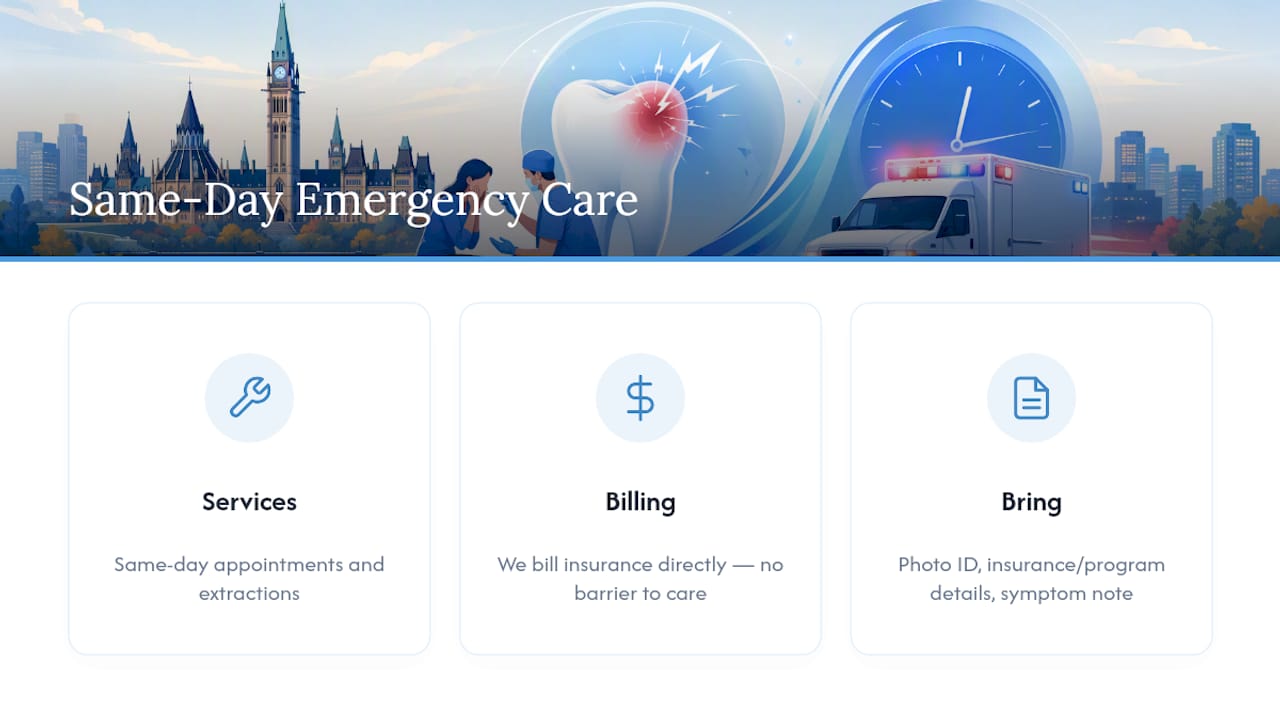
We treat dental infections as the urgent problem they are. Mersal Dental offers same-day appointments for dental emergencies, including same-day extractions when a tooth can’t be saved, and we bill insurance directly so cost isn’t a barrier to getting seen fast.
When attending an emergency dental visit, it’s helpful to bring photo ID, insurance information or public dental program details, and a note on symptom onset and progression to help facilitate timely treatment.
Why Clinicians Push for Prompt Treatment
We consistently see the same pattern: patients wait, hoping the pain will pass, and the infection uses that time to spread. One patient who came in the same day swelling appeared avoided a hospital referral entirely because drainage happened before the infection reached deeper tissue. Early action almost always means a simpler, faster fix.
— Mersal
Get Same-Day Emergency Treatment at Mersal Dental
Mersal Dental is a direct option when you need drainage or extraction the same day, not an appointment three weeks out. Some dental offices treat dental emergencies as same-day priorities, may offer direct insurance billing, and accept public programs including CDCP to help reduce wait times for urgent care.

Booking is simple: call our downtown Ottawa office directly or use the online request form, and mention that you’re dealing with pain, swelling, or a suspected infection so our team can prioritize your visit. If a tooth needs to come out the same day, we can usually accommodate that too, as outlined on our dental emergency page. If unsure about insurance or public dental program eligibility for a visit, the dental office’s front desk may be able to provide information prior to arrival.
Sources
FAQ
Can I Wait Two Weeks for a Tooth Abscess?
No. An abscess does not heal on its own, and waiting risks the infection spreading to your jaw, neck, or bloodstream. Get evaluated within a day or two at most, sooner if swelling or fever develops.
What Are the First Signs of Sepsis From a Tooth Abscess?
Early sepsis signs include high fever, rapid heartbeat, confusion, and feeling unusually unwell alongside facial swelling. These are emergency signs that call for immediate ER care, not a routine dental appointment.
What Is a Stage 4 Abscess Tooth?
There’s no universally standardized grading system used across major dental or medical authorities, so definitions vary by source. Regardless of terminology, spreading swelling, fever, or airway symptoms always warrant emergency evaluation.
Does a Tooth Abscess Count as an Emergency?
It depends on the symptoms. A localized abscess with pain but no breathing, swallowing, or systemic symptoms needs urgent dental care same-day, while facial swelling with fever or breathing trouble is a true medical emergency requiring the ER.
Recommended
Comments