Same Day Tooth Filling Process: 6 Steps at Mersal Dental


A dental filling repairs a cavity by removing decayed tissue and rebuilding the tooth with a durable material, and most patients are in and out in one visit. The tooth filling process usually takes a moderate amount of time under local anesthetic, so you’re numb for the drilling and shaping but back to normal within a few hours. Expect some pressure and vibration during treatment, and mild sensitivity for a day or two afterward.
TL;DR:
Composite resin fillings typically last over a decade with good hygiene, but their longevity depends on material, placement, and grinding habits.
Deeper cavities near the nerve may require a liner and longer-to-harden composite layers, extending the procedure time compared to amalgam.
Patients should wait until numbness subsides before eating and avoid hot or cold foods for a few days to minimize sensitivity.
Extensive decay or structural loss beyond a filling may necessitate a crown or inlay, as the remaining tooth must support the restoration.
Immediate treatment is possible through clinics offering same-day fillings with direct insurance billing, minimizing wait and additional visits.
Table of Contents
What Happens During a Filling, Step by Step?
Every filling appointment follows a predictable sequence, and knowing what’s coming makes the chair feel a lot less intimidating.
Exam and X-rays. We check the tooth visually and with X-rays to see how deep the decay goes and whether it’s close to the nerve. Ask your dentist to show you the image. It helps to see exactly what’s being treated.
Numbing. A topical gel numbs the gum surface first, then a local anesthetic injection takes over. You’ll feel a pinch, then tingling, then nothing. Full numbness usually sets in within a few minutes.
Removing the decay. Using a dental drill, air abrasion, or sometimes a laser, we clear out the damaged tissue. You’ll feel pressure and vibration, not sharp pain. If anything feels off, tell us so we can adjust the anesthetic before continuing.
Cleaning and lining. The cavity gets rinsed and dried. For deeper decay, we place a protective liner over the area near the nerve before filling it.
Placing the filling. Composite resin goes in thin layers, each hardened with a curing light. This layering is exactly why composite fillings can take a little longer than amalgam. Amalgam, by contrast, gets packed in as a single soft mass that hardens on its own.
Shaping, polishing, and the bite check. Once the material sets, we shape it to match your natural tooth contour and polish it smooth. You’ll bite down on a thin strip of articulating paper so we can spot and fix any high spots before you leave.
The whole dental filling procedure is designed around one goal: get the decay out completely, then rebuild the tooth so it functions like it never had a cavity.
Which Filling Material Is Right for Your Tooth?
Not every cavity calls for the same fix. Fillings split into two broad categories: direct restorations placed and shaped inside the mouth in a single visit, and indirect restorations like inlays, onlays, and ceramic pieces that are fabricated in a lab or by CAD/CAM machine and bonded in during a second visit.
Composite resin. Tooth colored, bonded in layers, and cured with light. It blends in well and works for most everyday cavities, though it can wear faster than metal in high bite-force areas.
Amalgam. The old silver filling. Extremely durable and still used in some back teeth, but less common today because of its metallic appearance.
Glass ionomer. Releases fluoride over time, which makes it a useful option for certain pediatric cases or small, low-pressure areas.
Ceramic inlays and onlays. Lab-made pieces that fit into larger cavities where a standard filling won’t hold up structurally. Stronger and more stain-resistant than composite, but they cost more and typically need two visits.
Many composite and amalgam fillings last well over a decade with good daily hygiene and regular cleanings, though exact lifespan depends on the material, its location, and how hard you grind or chew. The trade-off is straightforward: composite wins on looks, amalgam and ceramic win on raw durability, and glass ionomer wins on convenience for smaller jobs.
How Do Dentists Keep the Filling Process Comfortable?
Comfort starts before the needle even shows up. A topical numbing gel goes on the gum first, then the local anesthetic injection takes effect within a few minutes and lasts one to several hours depending on the dose.
For patients who get anxious in the chair, nitrous oxide (laughing gas) is a common option, and some clinics offer oral sedation for more involved appointments. Tell your dentist about any medications, allergies, or past reactions to anesthetic before treatment starts. It changes what’s safe to use.
Pro Tip: Take slow, steady breaths while the anesthetic goes in. Tensing your jaw and shoulders makes the injection feel sharper than it actually is.
What’s Normal During Filling Recovery?
Numbness typically lingers for one to a few hours, so hold off eating until feeling returns. Biting your cheek or tongue while numb is a common, avoidable mistake.
Mild sensitivity to hot, cold, or pressure for a few days afterward is normal, especially with deeper cavities. Desensitizing toothpaste and avoiding extreme temperatures usually resolve it.
Stick to soft foods on the treated side for the first day if the area feels tender.
If your bite feels high or uneven, call your dentist. A too-tall filling is a five-minute fix, not something to live with.
Occasionally a new metal filling causes a brief, sharp “galvanic shock” when it touches another metal restoration. It’s startling but resolves quickly and isn’t a sign of damage.
Persistent pain beyond a few days, or a tooth that stays sensitive, needs a follow-up visit.
If a filling falls out, cover the gap with over-the-counter dental cement temporarily and call your dentist soon. The exposed tooth is vulnerable to further decay.
When Does a Cavity Need More Than a Filling?
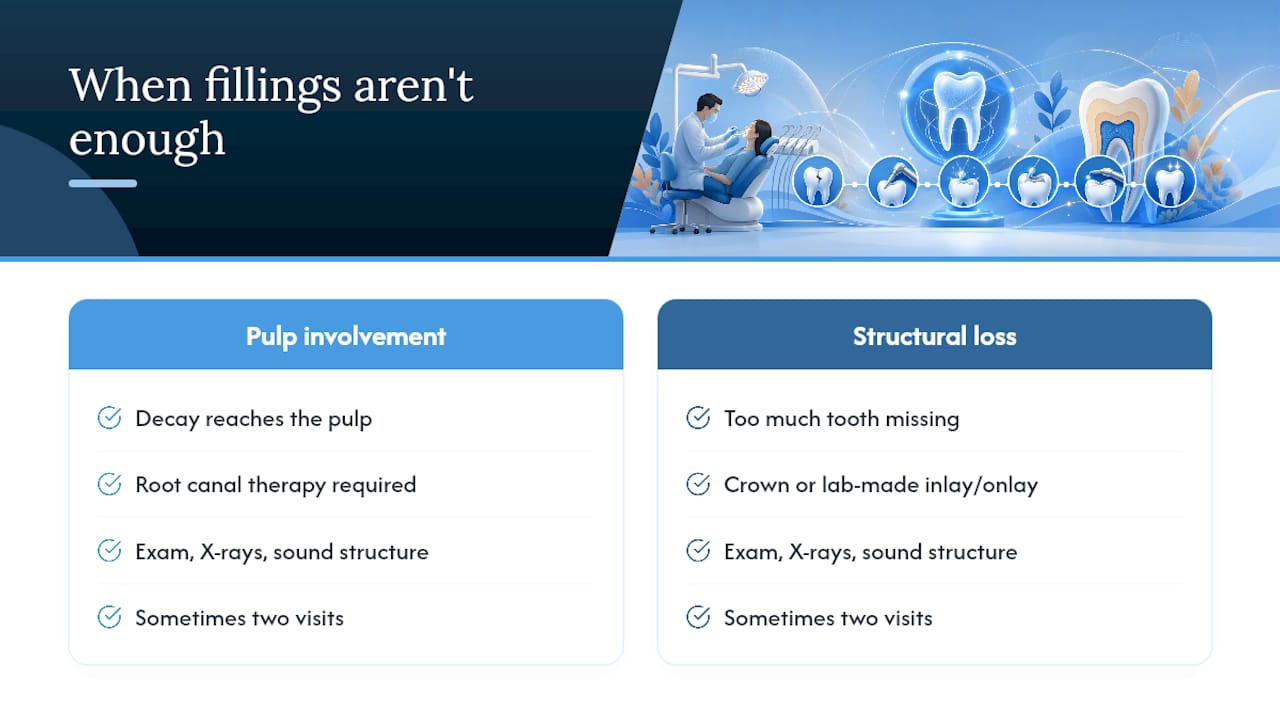
A filling only works if healthy tooth structure remains around the decay. Once decay reaches the pulp, the nerve and blood supply inside the tooth, a filling can’t solve the problem and root canal therapy becomes necessary.
Extensive structural loss is the other trigger. If too much tooth is gone, a filling has nothing to hold onto, and a crown or a lab-made inlay/onlay is the more reliable option. Dentists decide based on the clinical exam, X-rays, and how much sound structure remains, sometimes requiring two visits instead of one.
A Clinic’s View on Timing and Preparation
We consistently see the same pattern: patients who come in when a cavity is small get a quick, straightforward filling appointment. Wait too long, and the same tooth often needs a crown or root canal instead. Bring your insurance details and a list of current medications, eat a light meal beforehand since you’ll be numb afterward, and ask about direct billing while you’re booking. We manage anxious patients daily and can usually fit same-day needs into the schedule without much notice.
— Mersal
Ready for Your Filling? Here’s What Mersaldental Offers
Mersaldental is the option for readers who want a filling handled the same day it’s diagnosed, not scheduled weeks out. Our downtown Ottawa office runs exams, same-day fillings, and emergency appointments side by side, with direct insurance billing so you’re not stuck untangling paperwork after treatment.

Before your visit, jot down any medications you’re taking and bring your insurance card. If X-rays show decay too extensive for a standard filling, our team walks you through crown and bridge options on the spot instead of sending you elsewhere for a second opinion. For a full rundown of what we treat beyond fillings, our services page covers the rest.
If a tooth is bothering you right now, call our Ottawa office or book online and we’ll get you seen.
Sources
This article is general information, not a substitute for advice from a qualified doctor. Consult a qualified healthcare professional about your own circumstances before acting on anything here.
Recommended
Comments