Tooth Infection Treatment: What Actually Stops the Pain

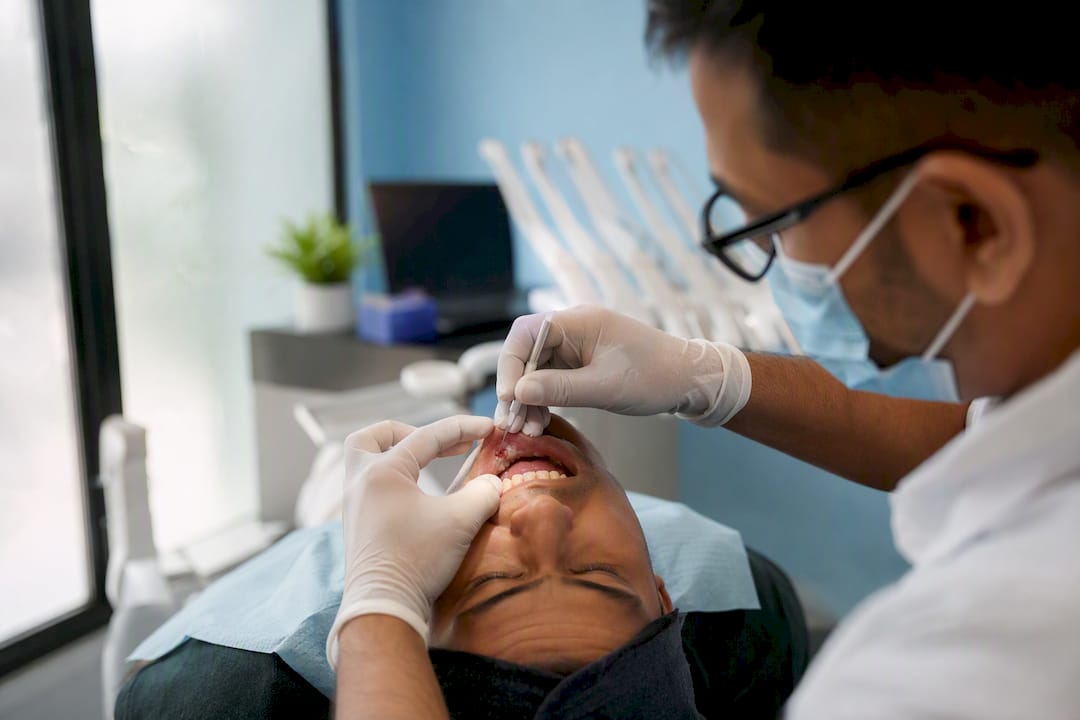
A tooth infection needs professional dental treatment. Home care can ease your pain for a night or two, but it will not clear the infection sitting inside or around your tooth. The three definitive treatments are incision and drainage, root canal therapy, and extraction. Antibiotics play a supporting role and are prescribed when infection has spread or you’re at higher medical risk, not as a stand-alone fix.
Here’s what to do right now:
Book a dental appointment today, or head to an emergency dental clinic if you notice facial swelling, fever, or trouble swallowing.
Rinse with warm salt water and take an over-the-counter pain reliever while you wait for your visit.
Skip anything that promises a cure at home. Nothing sold over the counter or found online will resolve the source of the infection.
Key Takeaways
Tooth infections require dental procedures like drainage, root canals, or extraction to resolve, since antibiotics and home remedies only manage symptoms temporarily.
Point | Details |
Definitive treatment is required | Drainage, root canal, or extraction removes the infection source; home care alone never does. |
Watch for spreading signs | Facial swelling, fever, or trouble breathing or swallowing mean emergency care, not a wait-and-see approach. |
Antibiotics are adjunctive | They’re prescribed for spreading infection or high-risk patients, not as a replacement for a dental procedure. |
Follow-up finishes the job | Crowns after root canals and healing checks after extractions prevent reinfection. |
Mersal Dental offers same-day access | Emergency intake, extractions, root canals, and direct insurance billing including CDCP reduce delays to treatment. |
Table of Contents
How Do You Know If You Have a Tooth Infection?
A tooth infection usually starts small and gets loud fast. Watch for a persistent, throbbing toothache, sharp sensitivity to hot or cold, a bad taste that won’t go away, and a tender bump on the gum that looks like a boil. Some people notice swelling along the jawline before the pain even peaks.
Certain signs mean the infection may be spreading beyond the tooth, and untreated abscesses can spread to surrounding tissue and, in severe cases, require hospital-level care. Call a dentist or go to an emergency room immediately if you have:
Facial or neck swelling that’s growing or spreading toward your eye
A fever, chills, or a general feeling of being unwell alongside the tooth pain
Difficulty breathing, swallowing, or opening your mouth fully
Tooth infections don’t resolve on their own because the bacteria are sealed inside the tooth or trapped in a pocket of tissue. Waiting rarely buys you anything except more pain and a higher chance of the infection tracking into your jaw, neck, or bloodstream.
What Happens During a Dental Diagnosis?
Diagnosing a tooth infection starts with a hands-on exam. Your dentist checks the gum tissue around the tooth, taps on it to see if pressure triggers pain, and runs a cold or electric sensitivity test to check whether the nerve inside is still alive or already dead.
From there, imaging fills in what the exam can’t show:
A periapical or bitewing X-ray reveals dark shadows at the root tip, a telltale sign of infection.
A panoramic X-ray or CT scan comes into play when the infection looks like it’s tracking into the jawbone or sinus.
Standard diagnostic steps include a clinical exam, sensitivity testing, and imaging when spread is suspected, and together these findings tell your dentist whether the tooth can be saved with a root canal, needs draining first, or has to come out.
Bring your insurance card, a list of current medications, and a rundown of when the pain started. That last detail matters more than most patients realize. It helps your dentist judge how fast things are progressing, which shapes whether you’re treated the same day or scheduled within the week. If you’re also dealing with pain triggered by biting, understanding why a tooth hurts under pressure can help you describe your symptoms more precisely.
What Are the Professional Treatment Options?
Every real treatment for a tooth infection is built around the same goal: physically remove the source of bacteria. Here’s how the main options work.
Incision and drainage relieves pressure fast. Your dentist numbs the area, makes a small cut into the swollen tissue, and lets the pus drain out. It’s typically done right in the dental chair, and most patients feel noticeably better within a day, though this step alone doesn’t finish the job. It buys time and comfort while the actual source gets treated.
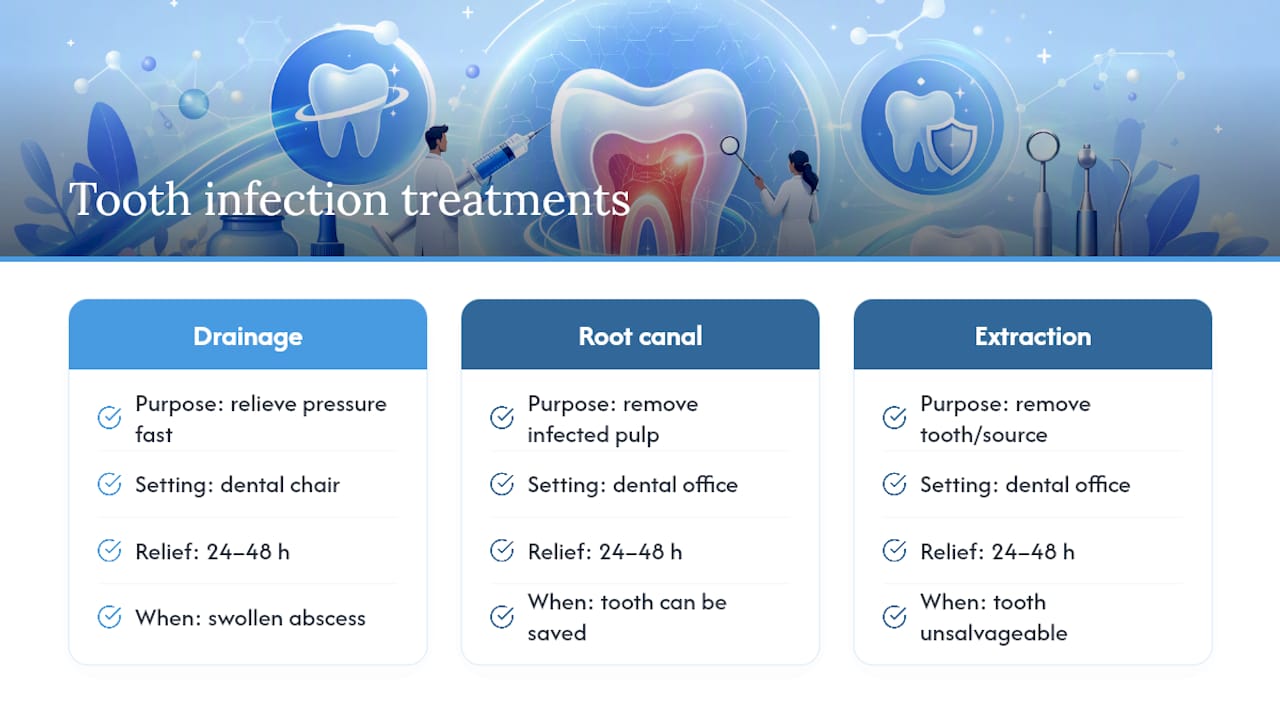
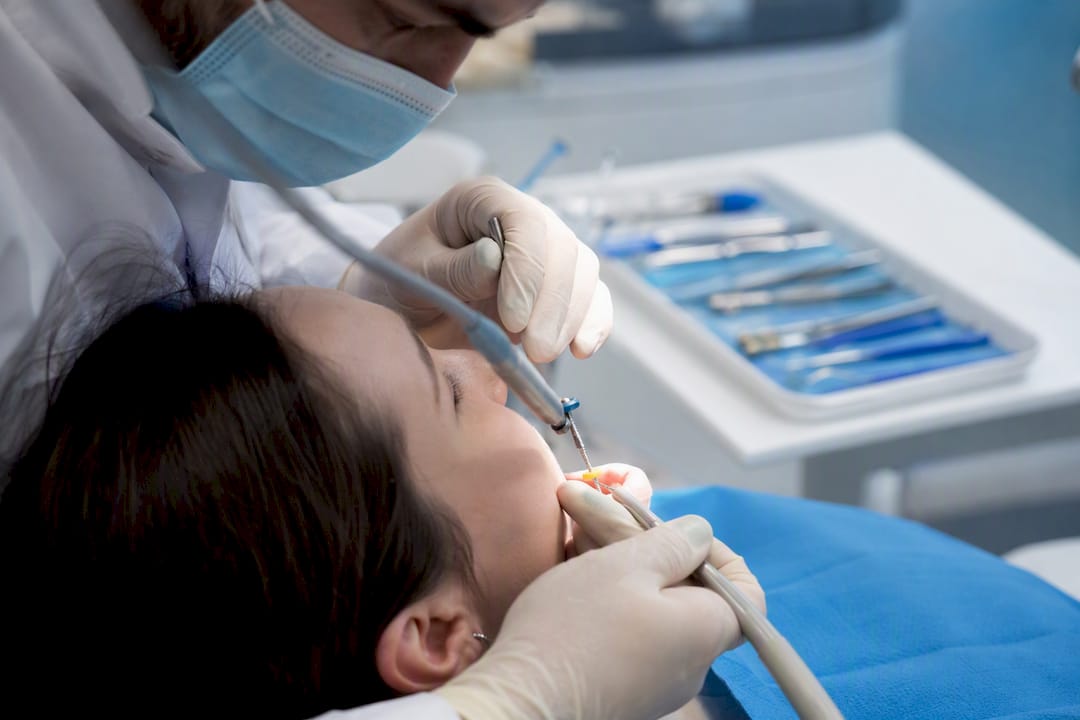
Root canal therapy treats the tooth from the inside. The dentist removes the infected or dead pulp tissue from inside the tooth, cleans and shapes the canal, then seals it. Root canals and extractions remain the standard ways to eliminate an infection’s source, and a root canal has the advantage of saving your natural tooth. Because the tooth becomes more brittle afterward, a crown is usually placed on top to protect it long term.
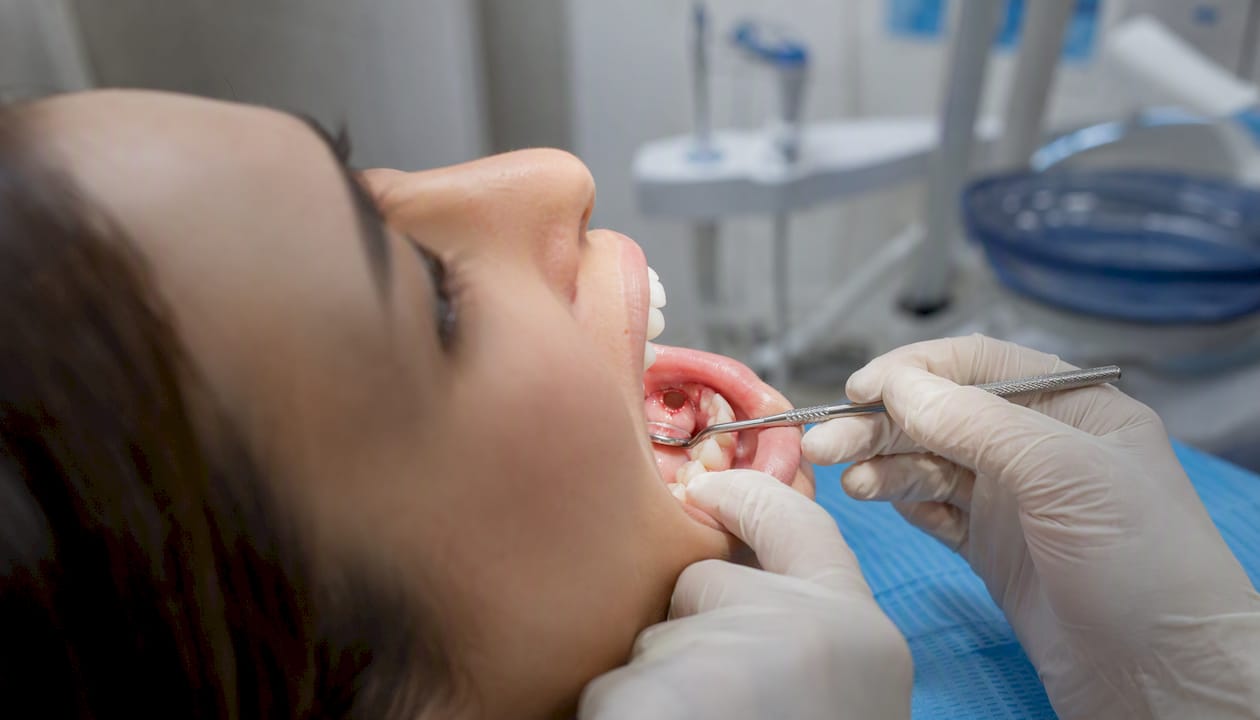
Extraction becomes the better option when a tooth is too damaged, cracked, or infected to save. After removal, the socket is cleaned and left to heal, and you’ll typically discuss replacement options like a bridge or implant once things settle.
Hospital-level care is rare but necessary when infection spreads rapidly, threatens the airway, or affects someone with a compromised immune system. This is one of the few dental situations where an emergency room, not a dental chair, is the right first stop.
Most patients feel meaningful pain relief within 24 to 48 hours of the actual procedure, whether that’s drainage, a root canal, or an extraction. Lingering soreness at the site is normal for a few days; worsening pain or new swelling after treatment is not.
Pro Tip: Ask your dentist about the full treatment plan up front, not just the emergency fix. A same-day drainage often needs a follow-up root canal or extraction within a week to finish resolving the infection.
Can Home Remedies Actually Help?
Home care has a real, limited job: keep you comfortable until you’re in a dental chair. It cannot touch the infection itself.
Saltwater rinses. Mix about half a teaspoon of salt into warm water and swish gently several times a day to soothe irritated tissue.
Cold compress. Apply ice to the outside of your cheek for 10 to 20 minutes at a time to calm swelling.
Soft foods and gentle brushing reduce irritation around the sore area while you wait for your appointment.
OTC pain relievers, taken at the labeled dose, help manage discomfort, but check with a pharmacist first if you take other medications regularly.
What you should never do: try to lance or drain the abscess yourself, or postpone your dental visit because the pain eased up. Pain that fades sometimes means the infection is quieting down, but it can also mean it’s tunneling deeper. If your bite has become sensitive in the meantime, these temporary relief strategies can help without masking a worsening problem.
When Do You Actually Need Antibiotics?
Antibiotics are not automatic. Dentists reserve them for infections that have spread beyond the tooth, patients showing systemic symptoms like fever, or people who are immunocompromised. A localized abscess with no spread often gets treated with drainage or a root canal alone.
Amoxicillin and metronidazole are commonly used examples, often together for broader coverage. If you’re allergic to penicillin, tell your dentist immediately so they can prescribe an alternative.
A growing share of dental practices now follow stricter antibiotic stewardship guidelines, prescribing antibiotics only when there’s clear evidence of spread or systemic risk, specifically to limit resistance and unnecessary side effects like nausea or diarrhea.
Antibiotics reduce bacteria but don’t remove the dead tissue or pus causing the problem.
Skipping the follow-up procedure after finishing antibiotics almost always means the infection returns.
Finish the full course exactly as prescribed, even if you feel better after a few days.
How Do You Prevent the Next Infection?
Most tooth infections trace back to a cavity or crack that went unaddressed for too long. Preventing the next one comes down to catching problems early and keeping up with care you’ve already started.
Brush twice daily, floss once daily, and treat small cavities before they reach the nerve.
Keep regular dental checkups so early decay gets caught on X-rays, not by pain.
After a root canal, follow through with your crown placement. After an extraction, attend your follow-up to confirm the socket is healing and watch for signs of reinfection like renewed swelling or fever.
If cost or access is a barrier, ask about direct insurance billing or public coverage programs, which can remove a lot of the hesitation around booking urgent care.
How Does Mersal Dental Treat Urgent Infections?
Mersal Dental treats tooth infections as same-day priorities, not next-week bookings. Patients coming in with abscess symptoms get triaged quickly, evaluated with X-rays, and started on pain control right away.
Same-day emergency appointments for active infections and swelling
Extractions and root canals performed in-office, with crowns and bridges available for restoration afterward
Direct insurance billing, plus CDCP participation, so treatment isn’t delayed by paperwork
A typical urgent visit moves from intake and diagnostics straight into whatever procedure the infection calls for, whether that’s drainage that day or a scheduled root canal within the week. Same-day emergency care means you’re not stuck waiting while an infection spreads.
Pro Tip: Call ahead before you arrive with a swollen face or fever. Describing your symptoms on the phone lets the front desk flag you for immediate triage instead of a standard wait.
What This Guide Gets Right (and What It Doesn’t)
The instinct to search for home remedies before calling a dentist is understandable. Dental visits feel like a last resort to a lot of people, something to try after everything else fails. That instinct is backward, and the evidence backs that up plainly: nothing sold in a pharmacy or recommended in a home-remedy forum removes bacteria trapped inside a tooth or in the tissue around it.
Where conventional advice falls short is in how it frames antibiotics. Too many patients treat a prescription as the finish line, stop worrying once the pills are gone, and skip the follow-up procedure. That’s precisely backward. Antibiotics buy time and calm systemic risk; they don’t touch the dead pulp or pocket of infection driving the pain.
If you take one thing from this guide, let it be sequencing. Manage pain with salt water and ice, yes, but book the dental appointment first, not last. The tooth won’t fix itself, and the infection doesn’t wait for a convenient weekend.
— Mersal
Get Same-Day Relief From a Tooth Infection
Mersal Dental treats tooth infections the way this guide describes: fast diagnosis, same-day drainage or extraction when needed, and root canals scheduled without unnecessary delay. Unlike waiting on a general walk-in clinic or riding out the pain with home remedies, you get direct access to a dentist who can actually remove the source of the infection, not just manage the symptoms.

We handle direct insurance billing and accept CDCP, so cost concerns don’t have to delay care you need right away. If you’re dealing with swelling, throbbing pain, or a fever, book an emergency appointment today and get seen the same day whenever possible.
Sources
This article is general information, not a substitute for advice from a qualified doctor. Consult a qualified healthcare professional about your own circumstances before acting on anything here.
Recommended
Comments