Where Can I Get Dental Implants in Ottawa?

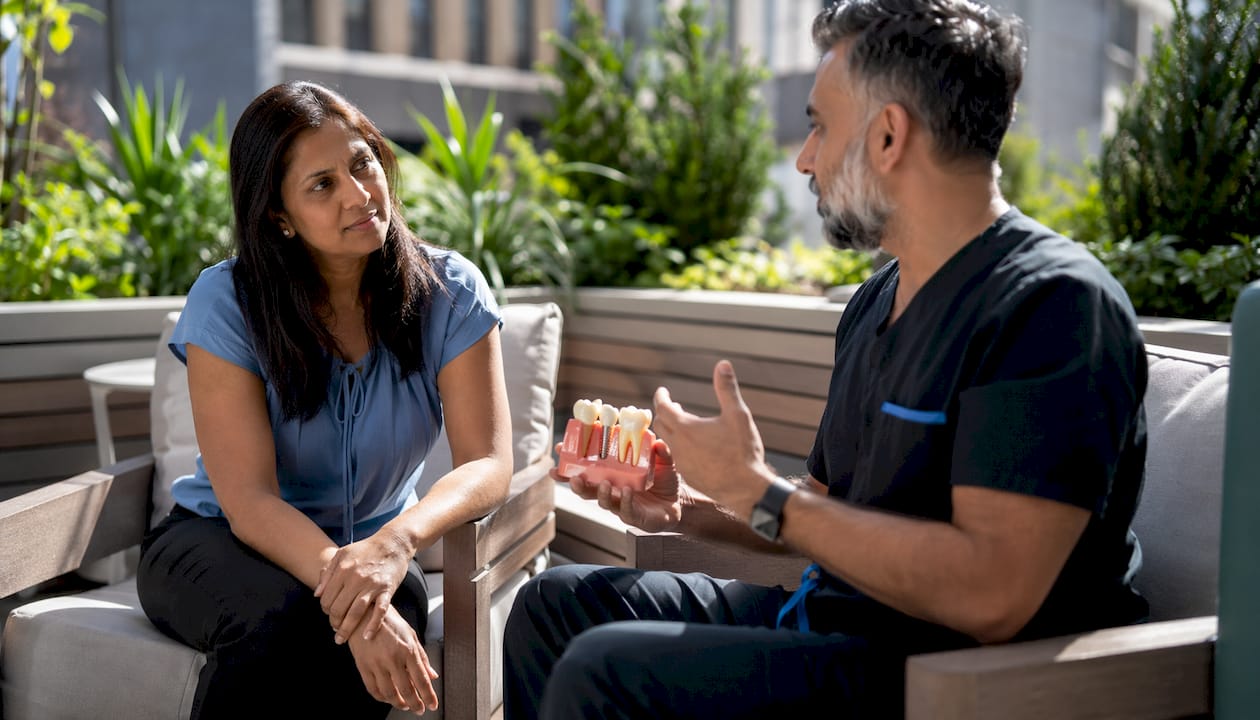
Dental implants are titanium posts surgically placed into the jawbone to replace missing tooth roots and restore full function and appearance. If you’re asking where can I get dental implants in Ottawa, the answer starts with finding a qualified clinic that offers a complete care plan, from initial diagnosis through final restoration. The American Dental Association recognizes osseointegrated implants as the clinical standard for permanent tooth replacement. Mersaldental, located in lower town Ottawa, accepts new patients and provides implant consultations with direct insurance billing and Canadian Dental Care Plan (CDCP) support.
Where can I get dental implants: understanding the full process
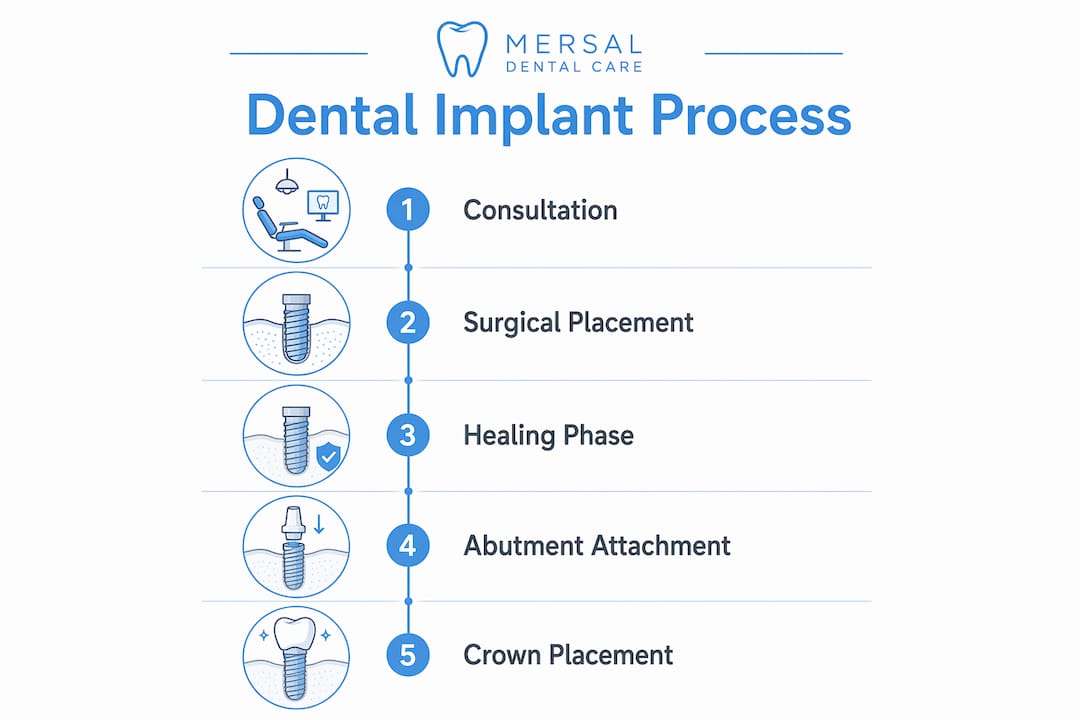
The dental implant process typically takes between 3 and 9 months from first consultation to final crown placement. That timeline can feel long, but most of it is passive. You are not sitting in a dental chair for months. Your body is doing the work.
Here is how the process unfolds, step by step:
Initial consultation and diagnostic imaging. Your dentist evaluates bone density, gum health, and overall oral condition. Dental X-rays and 3D scans are standard at this stage. This visit is diagnostic, not a sales pitch.
Preparatory procedures, if needed. Patients with bone loss may require a bone graft or sinus lift before implant placement. These steps add healing time but are necessary for a stable result.
Implant post placement. A titanium post is surgically inserted into the jawbone under local anesthesia. This is the core surgical step.
Osseointegration. The bone fuses around the post over 3–6 months. This biological process, called osseointegration, is what makes implants permanent. Most of the 3–9 month timeline is this passive healing period, not active dental visits.
Abutment placement. Once the post is stable, a small connector piece is attached to hold the crown.
Final restoration. A custom dental crown is placed to match your natural teeth in shape and color.
Pro Tip: Ask your provider for a written timeline at your first consultation. Knowing exactly when each phase begins helps you plan around work, travel, and insurance renewal dates.
Patient compliance during healing is the single biggest variable in implant success. Smoking, hard foods, and skipping follow-up visits all increase the risk of implant failure. Your dentist’s instructions during osseointegration are not optional guidelines. They are the difference between a successful result and a failed one.
How much do dental implants cost in Ottawa?
Cost is the question most Ottawa patients ask first, and the honest answer is that the number varies significantly based on what your mouth needs before the implant goes in.
A single dental implant in Ontario costs between $3,500 and $6,500 on average. That range reflects the post, abutment, and crown as a package. Full-arch systems like All-on-4 run between $22,000 and $35,000 per jaw. These are significant investments, and the final number depends on several factors.
What drives the total cost up:
Bone grafting or sinus lifts. These preparatory procedures add $2,000 to $2,500 or more per site and are common when a tooth has been missing for a while.
Tooth extractions. If the damaged tooth is still present, same-day extractions may be needed before implant placement.
Number of implants. Multiple missing teeth multiply costs proportionally.
Type of restoration. Porcelain crowns cost more than basic options but look and function better long term.
Cost Component | Estimated Range |
Single implant (post, abutment, crown) | $3,500–$6,500 |
Bone graft or sinus lift | $2,000–$2,500+ |
Full-arch All-on-4 (per jaw) | $22,000–$35,000 |
University dental clinic (supervised) | 30–50% below private rates |
Insurance reality check: Dental insurance plans typically carry annual maximums between $1,500 and $5,000. Most plans cover crowns and restorations but exclude the surgical implant post entirely. That gap surprises many patients. Knowing this upfront lets you plan rather than react.
One practical strategy: schedule the implant post and crown across two calendar years. Since osseointegration takes 3–6 months anyway, placing the post in the fall and the crown in january of the following year lets you claim two separate annual maximums. That approach can recover $1,500 to $3,000 in covered costs.
University dental clinics offer implant procedures at 30–50% below private office rates, supervised by licensed specialists. Wait times are longer, but the clinical quality is sound. For patients without insurance, this option is worth researching.
Pro Tip: Always request a written, all-inclusive treatment plan before agreeing to proceed. Advertised implant prices often exclude bone grafts, extractions, and final crowns. A full breakdown protects you from unexpected cost surprises later.
What factors determine implant success and how to evaluate a provider?
The implant itself is only one part of the outcome. The quality of your result depends on the provider’s skills, your bone health, and your behavior during recovery.
What to look for in a dental implant provider:
Verified credentials in oral surgery, periodontics, or implant dentistry
Access to 3D cone beam CT imaging for precise surgical planning
A clear process for coordinating between the surgeon and the restorative dentist
Transparent, written cost estimates that include all phases
Patient reviews that specifically mention implant cases, not just general dentistry
Coordinated care between the implant surgeon and the restorative dentist directly improves treatment predictability and aesthetics. When these two providers communicate closely, the crown fits better, the bite aligns correctly, and complications are caught earlier. Fragmented care, where one provider places the post and another handles the crown without communication, increases the risk of misalignment and revision.
Many patients treat the initial consultation as a formality. It is not. The consultation is a diagnostic appointment where your dentist evaluates bone quality, gum health, and systemic factors like diabetes or smoking history that affect healing. Skipping a thorough consultation to save time is the most common mistake implant patients make.
Pro Tip: Ask your provider directly: “Who places the implant and who makes the crown, and how do you two communicate?” If the answer is vague, that is a warning sign. Integrated care under one roof or a clearly defined referral relationship is what you want.
Patient behavior during the healing phase is equally critical. Avoiding smoking and following a soft-food diet during osseointegration are not suggestions. Smoking reduces blood flow to the graft site and is the leading behavioral cause of implant failure. Patients who comply fully with post-surgical instructions see significantly better long-term outcomes.
Where to get dental implants near me in Ottawa: choosing the right clinic
Ottawa patients can access dental implants through several types of providers: general dentists with implant training, oral surgeons, periodontists, and university clinics. Each has trade-offs in cost, wait time, and coordination.
Questions to ask before booking a consultation:
Does the clinic offer full-service implant care, from extraction through crown placement?
Do they accept CDCP or direct insurance billing?
Can they provide a written, all-inclusive cost estimate at the first visit?
Do they have before-and-after cases you can review?
What is their protocol if the implant fails or needs revision?
Mersaldental in lower town Ottawa offers implant consultations for new patients, with direct insurance billing and CDCP acceptance. The clinic provides crowns and bridges as part of its restorative services, meaning the surgical and restorative phases can be coordinated within the same practice. That integration matters for the reasons covered above.
Reading verified patient reviews is a reliable way to assess a clinic’s real-world performance. Look specifically for reviews that mention implant cases, healing support, and how the team handled complications. Generic five-star reviews about “friendly staff” tell you less than a detailed account of a patient’s full implant experience.
For patients weighing implants against other options, the bridge versus implant comparison is worth reviewing before your consultation. Understanding both options helps you ask better questions and make a more confident decision.
Key Takeaways
Dental implants in Ottawa require a qualified provider, realistic cost planning, and patient compliance during healing to achieve lasting results.
Point | Details |
Full process takes 3–9 months | Most of that time is passive osseointegration, not active dental visits. |
Single implant costs $3,500–$6,500 in Ontario | Bone grafts and extractions can add $2,000–$2,500 or more to the total. |
Insurance covers restorations, rarely surgery | Annual maximums of $1,500–$5,000 often exclude the implant post itself. |
Coordinated care improves outcomes | Clinics where surgeon and restorative dentist communicate closely produce better results. |
Patient behavior during healing is critical | Avoiding smoking and following a soft-food diet directly affects osseointegration success. |
What I’ve learned from years of implant consultations in Ottawa
Patients come in with two common fears: the cost and the pain. Both are understandable, and both are usually worse in imagination than in reality. What surprises me more is how often patients arrive without having asked their previous provider for a full cost breakdown. They received a number, assumed it was complete, and only discovered the gaps when the bill arrived.
The consultation is where trust is built or lost. A good provider walks you through every phase, explains what your bone density means for your timeline, and gives you a written plan before you commit to anything. If a clinic rushes you from consultation to treatment without answering your questions, that is a signal worth heeding.
The patients who do best are the ones who treat the healing phase seriously. They follow the diet, they skip the cigarettes, and they show up to every follow-up. Osseointegration is a biological process. You cannot rush it, but you can absolutely sabotage it. The patients who respect that reality end up with implants that last decades.
My honest advice: choose a clinic where you feel heard at the first appointment. The technical skill matters, but so does the relationship. You are going to be working with this team for the better part of a year.
— Mersal
Mersaldental is ready to help Ottawa patients take the next step
Mersaldental, located in lower town Ottawa, offers dental implant consultations for new patients with no referral required. We accept direct insurance billing and the Canadian Dental Care Plan, so your coverage works from day one.
Our team coordinates the full implant process, from preparatory extractions through crown and bridge restorations, under one roof. That means your surgeon and restorative dentist are in the same practice, communicating at every stage. We also offer same-day appointments and emergency services for patients who need care quickly. Visit Mersaldental to book your consultation and get a written, all-inclusive treatment plan at your first visit.
FAQ
How long does the dental implant process take?
The full implant timeline runs 3–9 months. Most of that time is the passive osseointegration period, not active dental appointments.
Does dental insurance cover implants in Canada?
Most plans cover the crown or restoration but exclude the surgical implant post. Annual insurance maximums typically range from $1,500 to $5,000, so out-of-pocket costs are common.
What is osseointegration and why does it matter?
Osseointegration is the process by which the jawbone fuses around the titanium implant post over 3–6 months. It is what makes the implant stable and permanent, and patient behavior during this phase directly affects whether it succeeds.
Can I get dental implants if I have bone loss?
Yes, but you may need a bone graft or sinus lift first. These preparatory procedures add cost and healing time, but they make implant placement possible even when significant bone loss exists.
Where is the best place to get dental implants near me in Ottawa?
The best dental implant clinics in Ottawa offer coordinated surgical and restorative care, transparent written cost estimates, CDCP or direct insurance billing, and verified patient reviews from implant cases specifically. Mersaldental in lower town Ottawa meets all of these criteria and accepts new patients.
Recommended
Comments