Why Your Back Gum Hurts When You Bite Down

Updated: Jul 27

Why does my back gum hurt when I bite down?
Back gum pain when biting down usually comes from one of a handful of well-understood causes. Most of them are mechanical or infectious, and nearly all of them respond well to the right treatment. Here is a quick look at what is most likely going on:
Pericoronitis: A partially erupted wisdom tooth leaves a flap of gum tissue that traps food and bacteria. When you bite down, the opposing tooth presses directly on that inflamed flap, producing sharp pain.
Cracked tooth syndrome: A hairline crack in a back molar creates uneven pressure on the periodontal ligament every time you chew, causing pain that often spikes on the release of bite pressure.
High or misaligned fillings: A restoration that sits even slightly too high forces one tooth to absorb more force than it should, irritating the gum and ligament around it.
Periodontal disease: Chronic gum inflammation around the molars makes the supporting tissue tender and sensitive to any chewing force.
Occlusal overload from bruxism: Grinding or clenching at night concentrates enormous pressure on the back teeth, leaving gums sore and sensitive throughout the day.
Food impaction: Food wedged between the last molars feeds bacteria and causes localized swelling that makes biting painful.
If the pain has lasted more than two or three days, or if you notice swelling, a bad taste, or fever, a professional evaluation is the right next step.
Table of Contents
What are the most common causes of back gum pain?
Understanding the specific cause behind your discomfort makes it much easier to get the right care. The causes below account for the vast majority of cases.
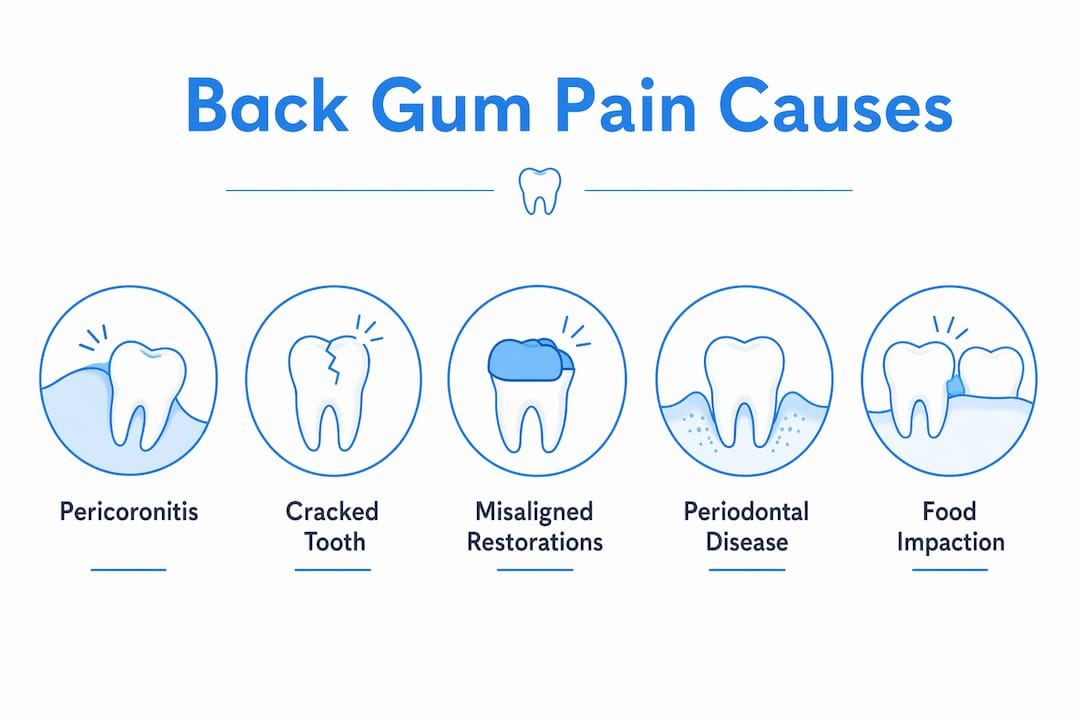
Pericoronitis
Pericoronitis is an infection of the gum tissue surrounding a partially erupted wisdom tooth. The gum flap, called the operculum, creates a pocket where bacteria and food debris accumulate. When you close your mouth, the upper tooth presses directly on that inflamed tissue. Symptoms include pain, swelling, a bad taste, and sometimes difficulty opening your mouth fully. Salt water rinses can ease mild cases, but moderate to severe pericoronitis usually needs antibiotics or professional cleaning of the area.
Cracked tooth syndrome
A cracked molar does not always show up on a standard X-ray, yet it produces a very recognizable pattern: pain when you bite down, followed by a sharper sting when you release the pressure. That pain on bite release is a classic clinical sign of structural compromise in the tooth. The crack stresses the periodontal ligament and, over time, can allow bacteria to reach the pulp. A crown is the most common fix; a root canal may be needed if the crack has reached the nerve.
High or misaligned dental restorations
A filling or crown that sits even a fraction of a millimeter too high redirects bite force onto a single tooth and its surrounding gum. The periodontal ligament absorbs that extra load, producing a dull ache that worsens with chewing. Your dentist can identify and correct this in a single short appointment by adjusting the restoration’s height. Proper dental restorations distribute bite force evenly and eliminate this kind of pressure pain quickly.
Periodontal disease
Periodontitis causes the gum tissue and bone supporting your back teeth to break down gradually. The resulting inflammation makes the gums tender, prone to bleeding, and sensitive to chewing pressure. Unlike the sharp, localized pain of a cracked tooth, periodontal pain tends to be duller and more diffuse, often accompanied by visible redness or swelling along the gumline.
Food impaction and local trauma
Food trapped behind molars can irritate gum tissue and feed bacteria, causing recurring swelling and pain that rarely resolves on its own. Aggressive brushing, accidental biting of the cheek, or even a hard piece of food can also bruise the gum tissue directly. Gentle cleaning and professional care are the most reliable way to prevent these flare-ups from becoming chronic.
When should you see a dentist for back gum pain?
Some gum discomfort after eating something hard is normal and passes within a day. These signs, however, mean you should not wait:
Pain or swelling that persists without improvement for several days should be evaluated by a dental professional
Pus, a persistent bad taste, or an unpleasant odor coming from the area
Fever, facial swelling, or swelling that seems to be spreading
Difficulty opening your mouth or swallowing
Recurrent pain that keeps coming back even after it temporarily settles
Dental pain with fever or facial swelling can signal a spreading infection and should be treated as a dental emergency. Delayed care risks the infection moving beyond the tooth and gum into the jaw or neck. If any of the signs above apply to you, same-day dental care is the appropriate response. You can read more about recognizing urgent situations in our guide to same-day dental emergencies.
How can you ease back gum pain at home before your appointment?
These measures will not fix the underlying problem, but they can make you more comfortable while you wait for professional care.
Warm salt water rinse: Dissolve half a teaspoon of salt in eight ounces of warm water and rinse gently for 30 seconds. This reduces bacterial load and calms mild swelling.
Over-the-counter pain relief: Ibuprofen (such as Advil) reduces both pain and inflammation. Acetaminophen (Tylenol) is a good alternative if you cannot take anti-inflammatories. Follow the label dosage.
Cold compress: Apply a cold pack to the outside of your cheek in 15-minute intervals to reduce swelling.
Avoid trigger foods: Very hot, very cold, or hard and crunchy foods will aggravate already-irritated tissue. Stick to soft, room-temperature foods until you are seen.
Gentle cleaning: Remove any trapped food from around the sore area using a soft-bristled toothbrush or gentle flossing. Avoid aggressive probing, which can worsen irritation.
These steps are temporary. They manage symptoms, not causes.
What professional treatments are available for back gum pain?
The right treatment depends entirely on what is causing the pain. A dentist will match the intervention to the diagnosis.
Antibiotic therapy: For pericoronitis or a gum abscess, a short course of antibiotics reduces the infection before any procedure. This is often the first step when swelling is significant.
Restoration adjustment or replacement: A high filling is corrected by selectively reducing the contact point. A damaged or poorly fitting crown may need full replacement.
Crown or root canal for cracked teeth: A crown protects a cracked tooth from further stress. If the crack has reached the pulp, a root canal removes the infected tissue before the crown is placed. Learn more about crowns and bridges as a restorative option.
Scaling and root planing: For periodontal disease, a deep cleaning procedure removes tartar and bacterial deposits from below the gumline, allowing the tissue to heal and reattach.
Wisdom tooth extraction: When pericoronitis is recurrent or the tooth is impacted, extraction is the definitive solution. The NHS notes that removal is often recommended when a wisdom tooth causes repeated infections.
How can you prevent back gum pain from coming back?
Prevention is straightforward, and the habits that protect your back gums are the same ones that protect your whole mouth.
Brush and floss thoroughly: Pay particular attention to the area behind your last molars, where food and plaque accumulate most easily. A soft-bristled brush and gentle technique protect gum tissue from mechanical trauma.
Schedule regular check-ups: Routine dental visits catch early signs of periodontal disease, cracked teeth, and impacted wisdom teeth before they become painful. Twice-yearly cleanings remove tartar that home brushing cannot reach.
Chew carefully: Avoid biting down hard on ice, popcorn kernels, or hard candy. These are among the most common causes of cracked molars.
Wear a night guard if you grind: Bruxism places far more force on back teeth than normal chewing. A custom night guard distributes that load and protects both teeth and gum tissue.
Address symptoms early: A mild ache that you ignore for weeks can become an abscess that requires emergency care. Prompt attention to early symptoms keeps treatment simpler and less costly.
How can you tell whether it is tooth pain or gum pain?
The distinction matters because the treatment paths are different. Here is how the two typically present:
Tooth pain characteristics:
Sharp, localized, and easy to point to
Worsens with bite pressure and may spike on release of that pressure (a strong sign of a cracked tooth)
Can be triggered by temperature, especially cold
May throb if the pulp is involved
Gum pain characteristics:
Duller, more diffuse, and harder to pin to a single spot
Associated with visible redness, swelling, or bleeding along the gumline
Worsens with pressure but does not typically spike on release
Often accompanied by a bad taste or odor if infection is present
Periodontal ligament inflammation produces a dull ache during chewing that tends to ease when you release jaw pressure, which can make it feel like gum pain even though the source is the ligament around the tooth root. That overlap is exactly why self-diagnosis has limits.
Pro Tip: If you are unsure whether your pain is coming from a tooth or the gum, try pressing gently on the gum tissue with a clean fingertip. Gum pain will respond to that direct pressure; tooth pain usually will not unless you tap the tooth itself. Share both observations with your dentist — it genuinely speeds up diagnosis.
Accurate diagnosis requires a clinical exam and, in most cases, dental X-rays. You can read more about the overlap between these pain types in our article on tooth pain when biting.
How do you tell a gum infection apart from a dental abscess?
These two conditions share several symptoms, which is why patients often confuse them. The differences are meaningful.
A gum infection (periodontal abscess) originates in the gum tissue or the pocket between the gum and tooth. The pain is typically localized to the gum itself, and you may see a visible swelling or a small pimple-like bump on the gum surface. The tooth involved usually tests vital (responds normally to temperature), because the infection has not reached the pulp.
A dental abscess (periapical abscess) starts inside the tooth, usually from an untreated cavity or a cracked tooth that allowed bacteria to reach the pulp. The pain tends to be more intense, throbbing, and constant. The tooth may feel elevated in its socket, and tapping it lightly often produces sharp pain. Swelling can extend beyond the gum into the jaw or face.
Both conditions can cause fever, a bad taste, and spreading swelling, and both require prompt professional care. The key clinical difference is the source: gum tissue versus tooth pulp. X-rays and a pulp vitality test are the tools dentists use to tell them apart with certainty. Waiting on either condition is not safe. As Harvard Health notes, dental pain that does not improve and comes with systemic signs should be treated as a potential emergency.
How do gum recession and periodontal disease make biting more painful?
Periodontal disease does not just cause gum bleeding and bad breath. As the disease progresses, it destroys the bone and connective tissue that hold teeth in place. That loss of support changes how bite forces travel through the tooth, making even normal chewing uncomfortable.
Gum recession exposes the root surface of the tooth, which lacks the protective enamel covering of the crown. Root surfaces are far more sensitive to pressure, temperature, and bacterial contact. When recession affects the back teeth, biting down can produce a sharp, localized sensitivity that feels similar to a cavity but responds differently to treatment.
Advanced periodontal disease also deepens the pockets between teeth and gums, creating spaces where bacteria thrive and where food impaction becomes chronic. The combination of active infection, bone loss, and exposed roots means that back gum sensitivity in a patient with periodontal disease is rarely a single-cause problem. Scaling and root planing, combined with improved home care, is the standard starting point for managing this kind of pain.
Systemic factors can complicate the picture further. Conditions such as vitamin D deficiency, uncontrolled blood sugar, or hormonal changes can make gum tissue more vulnerable to inflammation and slower to heal, sometimes causing persistent gum soreness that does not respond to normal hygiene improvements alone.
Why does a proper dental exam and X-ray matter so much?
Pain when biting is a symptom, not a diagnosis. The same sensation can come from a cracked tooth, a high filling, pericoronitis, a periodontal abscess, or a failing root canal. Without a clinical exam and imaging, it is genuinely not possible to know which one you are dealing with.
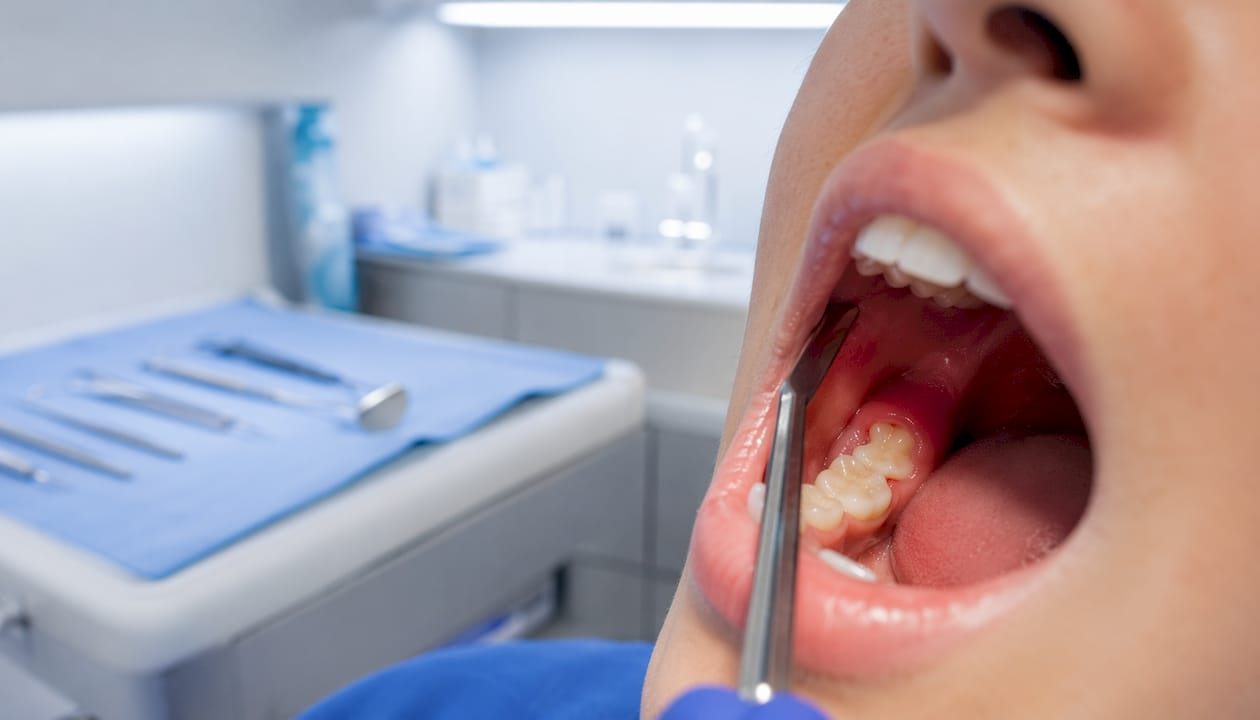
A dental examination lets your dentist assess the gum tissue visually, probe pocket depths, test bite pressure, and tap individual teeth to localize the source. X-rays reveal bone levels, the position of wisdom teeth, signs of infection at the root tip, and the integrity of existing restorations. For suspected cracks, a bite test using a small plastic stick can reproduce the pain and confirm the diagnosis even when the crack is invisible on film.
Careful clinical correlation of the pain pattern with both exam findings and radiographic evidence is what separates an accurate diagnosis from a guess. Treating the wrong cause wastes time, delays relief, and can allow a real problem to worsen. Getting the diagnosis right the first time is always the faster path to feeling better.
Mersaldental is ready to help you get relief today
Back gum pain that lingers, swells, or keeps coming back needs professional attention, not just home remedies. At Mersaldental in downtown Ottawa, we see patients with exactly this kind of discomfort every day, and we offer same-day appointments for urgent dental pain so you are not left waiting.

We accept new patients, provide direct insurance billing, and work with the Canadian Dental Care Plan (CDCP) and the Interim Federal Health Program (IFHP), so cost is rarely a barrier to getting care. Whether you need a dental emergency assessment, a crown for a cracked molar, or a full periodontal evaluation, our team handles it all under one roof. We also offer wisdom tooth extractions for patients dealing with recurrent pericoronitis.
If your back gum has been hurting when you bite down, the most comfortable next step is booking an appointment with us. Visit our booking form to schedule your visit, or call us directly for same-day care. We are here to help you feel better, safely and gently.
Key Takeaways
Back gum pain when biting down is almost always caused by pericoronitis, a cracked tooth, gum disease, or a misaligned restoration, and each cause requires a different treatment.
Point | Details |
Most common causes | Pericoronitis, cracked tooth syndrome, high fillings, periodontal disease, and food impaction are the leading causes of back gum pain when biting. |
Pain lasting over several days | Swelling or pain that does not improve warrants a professional dental evaluation. |
Gum vs. tooth pain | Gum pain is duller and diffuse with visible swelling; tooth pain is sharper, localized, and often spikes on release of bite pressure. |
Proper diagnosis is critical | A clinical exam and X-rays are needed to distinguish between a gum infection, a dental abscess, a crack, or periodontal disease. |
Mersaldental | Offers same-day emergency care, direct insurance billing, and CDCP acceptance for patients with back gum pain in Ottawa. |
Recommended
Comments