48–72 Hours After Extraction: Clinician's Wisdom Tooth Recovery Plan
- Mayde Mersal
- 4 days ago
- 7 min read


Most people feel back to their normal routine within a few days after wisdom tooth removal, though complete tissue healing takes several weeks. Expect the worst pain and swelling around day two or three. Your priorities during that stretch are simple: protect the blood clot, manage pain with NSAIDs like ibuprofen, and start gentle saltwater rinses once you pass the 24 hour mark.
TL;DR:
Protect the blood clot during the first 24 hours by avoiding disturbance, as dry socket risk is highest if it is dislodged.
Peak swelling and pain occur around days one and two, with ice therapy recommended during this period to manage discomfort.
Use ibuprofen as the primary painkiller, alternating with acetaminophen for continuous relief, and reserve opioids for severe breakthrough pain only.
Start gentle saltwater rinses after 24 hours, and avoid forceful swishing or alcohol-based mouthwash during the first week.
Seek immediate dental care if pain worsens after day three, if there is persistent bleeding, spreading swelling, or visible exposed bone indicating dry socket or infection.
Table of Contents
Wisdom Teeth Removal Recovery Timeline: Day by Day
Knowing what’s normal on each day takes the guesswork out of healing. Here’s how it typically unfolds, based on patterns confirmed by Cleveland Clinic.
Day 0 (surgery day): You’ll still feel the effects of anesthesia for a few hours, so plan for someone to drive you home. Bite down on gauze to control bleeding, and resist the urge to poke at the extraction site with your tongue. The clot that forms in the socket is doing the most important work of your entire recovery. Disturb it and you risk dry socket.
Days 1 and 2: This is when swelling and pain typically peak, usually around the 48 to 72 hour mark. Apply ice in 15 to 20 minute intervals during this window. Your jaw may feel tight, and mild bruising along the cheek or jawline is common and not a cause for alarm.
Days 3 to 5: Swelling starts to recede, and this is the point where switching from ice to warm compresses helps loosen stiff jaw muscles and encourages circulation to the area. Many people feel comfortable enough to return to light desk work within a few days. Pain should be trending downward, not up. That distinction matters when we talk about warning signs later.
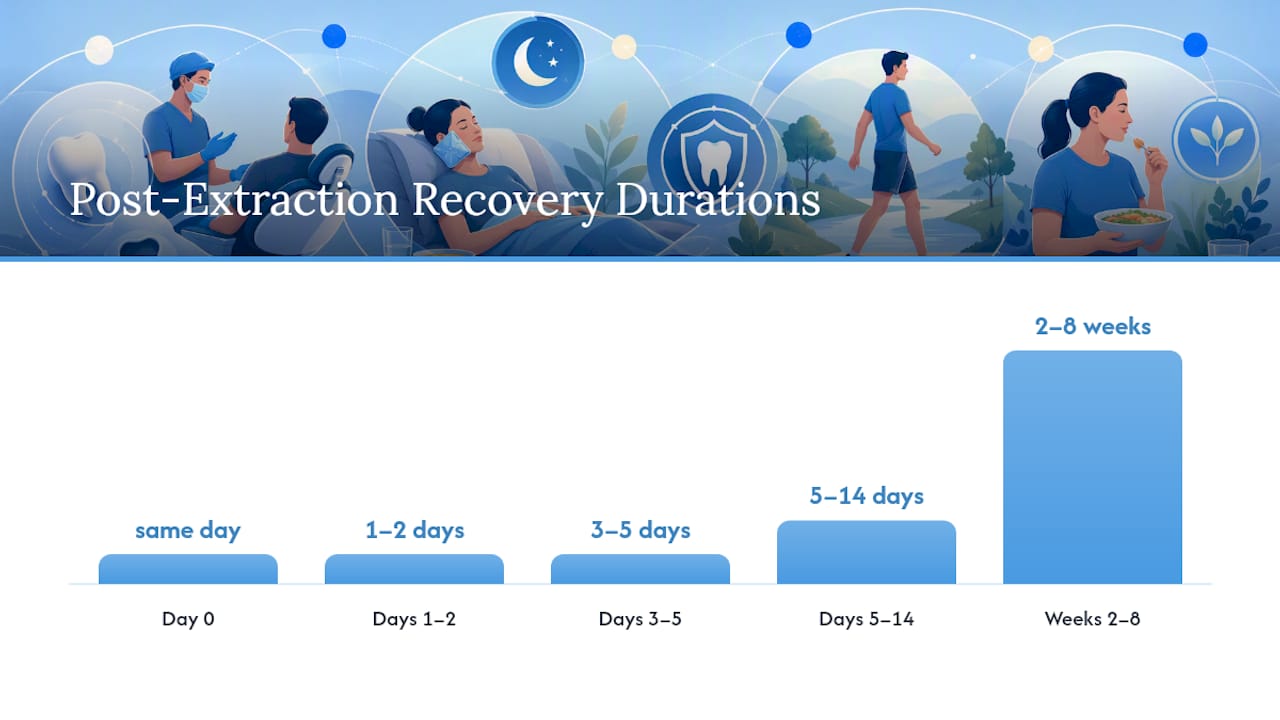
Days 5 to 14: Your diet can expand from soft foods back toward something closer to normal. Dissolvable stitches, if you have them, typically break down within 7 to 10 days. Most patients report near-normal comfort by the end of this window, according to Cleveland Clinic, which also notes that full recovery often takes about two weeks.
Weeks 2 through 8: The visible healing is done, but underneath the gum line, bone remodeling and deep tissue closure continue quietly for weeks. You won’t notice this stage happening, and that’s the point.
Day 0: rest, gauze, protect the clot
Days 1 to 2: peak swelling, ice therapy
Days 3 to 5: warm compresses, light activity resumes
Days 5 to 14: soft-to-normal diet, stitches dissolve
Weeks 2 to 8: internal bone and tissue remodeling
How Do You Manage Pain After Wisdom Tooth Removal?
Ibuprofen and similar NSAIDs are the first-line choice for post extraction pain, according to Mayo Clinic. NSAIDs target the inflammation directly, which is usually the actual source of the throbbing you feel, not just the nerve pain itself.
Acetaminophen works well as an adjunct alongside ibuprofen, and many oral surgeons recommend alternating the two on a staggered schedule for more consistent coverage than either drug alone. Always follow the specific dosing your dentist or oral surgeon provides, since it depends on your health history and the extent of the extraction.
Opioids are sometimes prescribed for a short window when bone removal was involved and pain runs higher than NSAIDs can manage alone. If you’re prescribed one, use it for the shortest duration that controls your symptoms and never combine it with alcohol.
Antibiotics are not a routine part of recovery. They’re reserved for cases with active infection or visible signs of spreading, not as a preventive measure.
Ibuprofen first, acetaminophen as backup
Alternate the two for round-the-clock coverage
Opioids only for short-term breakthrough pain
Antibiotics only when infection is present, not automatically
Pro Tip: Set a phone alarm for your first dose of ibuprofen before the numbness from the anesthesia fully wears off. Getting ahead of the pain is far easier than trying to catch up to it later.
When Should You Start Rinsing Your Mouth?
Wound care in the first week determines whether your recovery stays on track or veers into complications. Get the sequence right and the rest tends to follow.
Wait a full 24 hours before starting any rinsing. The NHS recommends gentle saltwater rinses after that point, done by tilting your head and letting the water fall out rather than swishing forcefully.
Brush your other teeth normally starting the next day, but go easy around the extraction site itself. Skip alcohol-based mouthwash for at least a week, since it can irritate healing tissue.
Dissolvable stitches usually break down on their own within 7 to 10 days. If you notice a stitch is still fully intact after two weeks, or the site looks unusually red or swollen, call your dental office.
Clear food debris carefully using a slow water rinse or a dentist-approved irrigation syringe rather than picking at the socket with anything sharp.
For more detail on rinse timing and technique, Stop Oral Care’s guide on post-extraction mouthwash walks through the mechanics step by step.
What Should You Eat After Wisdom Tooth Removal?
Your mouth needs fuel to heal, but the wrong foods can undo days of progress in seconds. On day zero, stick to lukewarm broths, yogurt, and applesauce. Nothing hot, since heat can encourage bleeding.
From days one through five, move into soft, protein-rich options: scrambled eggs, mashed potatoes, oatmeal, and smoothies (skip the seeds and skip the straw entirely, since suction can dislodge the clot). By week two, most people can reintroduce chewing on the extraction side gradually, starting with soft cooked proteins like fish or well-cooked pasta.
Avoid carbonated drinks, alcohol, and anything crunchy or seeded early on
Prioritize protein and calories through smoothies, eggs, and soft-cooked meats
Reintroduce chewing on the surgical side only once tenderness has faded
When Can You Return to Work or Exercise?
Most desk-based jobs can resume within a few days. Physically demanding work, especially anything involving heavy lifting or bending, often calls for a longer break.
No driving for at least 24 hours after anesthesia
Skip alcohol for 24 hours minimum
Light walking is fine right away; hold off on intense exercise for about a week
Ready to return if swelling is decreasing, pain is manageable without opioids, and you’re eating solid soft foods comfortably
What Are the Warning Signs of Wisdom Tooth Infection or Dry Socket?
Most recovery paths trend steadily better after day three. When symptoms move the other direction, that’s your cue to call, not wait it out.
Dry socket: Pain that intensifies a few days after surgery, often paired with a bad taste or odor and visible exposed bone in the socket. Your dentist can treat this quickly with a medicated dressing, so don’t delay the call.
Infection: Fever, swelling that keeps spreading rather than shrinking, or bleeding that won’t slow down are all signs to contact your dental office immediately, a pattern echoed in guidance from Healthline.
Nerve involvement: Numbness or tingling in the lip, chin, or tongue that persists beyond a day or two needs urgent evaluation.
When you call, describe exactly when the pain started worsening, what it feels like, and whether you notice any smell, taste, or visible changes in the socket.
How Mersal Dental Approaches Wisdom Tooth Recovery
We use moderate and local anesthesia tailored to each extraction, so patients stay comfortable during the procedure without unnecessary grogginess afterward. You can read more about how we approach comfortable extractions using anesthesia suited to your specific case.
Same-day appointments matter here. If something feels off in the days after your extraction, waiting for a routine slot can let a small problem become a bigger one. We’d rather see you the same day and rule things out early.
Every patient leaves our office with three specific instructions: protect the clot for the first 24 hours, follow the medication schedule exactly as written, and come back for a follow-up if anything feels worse instead of better.
Local and moderate anesthesia matched to procedure complexity
Same-day and emergency slots available for post-op concerns
Clear medication and clot-care instructions given before you leave
You can also review our extraction services page for a fuller picture of what to expect before your procedure.
A Clinician’s Note on What Actually Matters Most
If you remember one thing from this whole guide, make it this: protect the clot, take your medication on schedule, and call early if pain climbs instead of falls. Recovery speed varies person to person, and that’s normal. If anything feels off, reach out to your dental office right away rather than waiting to see if it passes.
— Mersal
Sources
Ready to schedule your wisdom tooth extraction or a post-op check? Visit Mersal Dental’s emergency and extraction page to book a same-day appointment, or explore our CDCP and IFHP coverage options if you’re wondering how your extraction might be covered.
This article is general information, not a substitute for advice from a qualified doctor. Consult a qualified healthcare professional about your own circumstances before acting on anything here.
Recommended
Comments