Can I Get Dental Implants with Bone Loss?

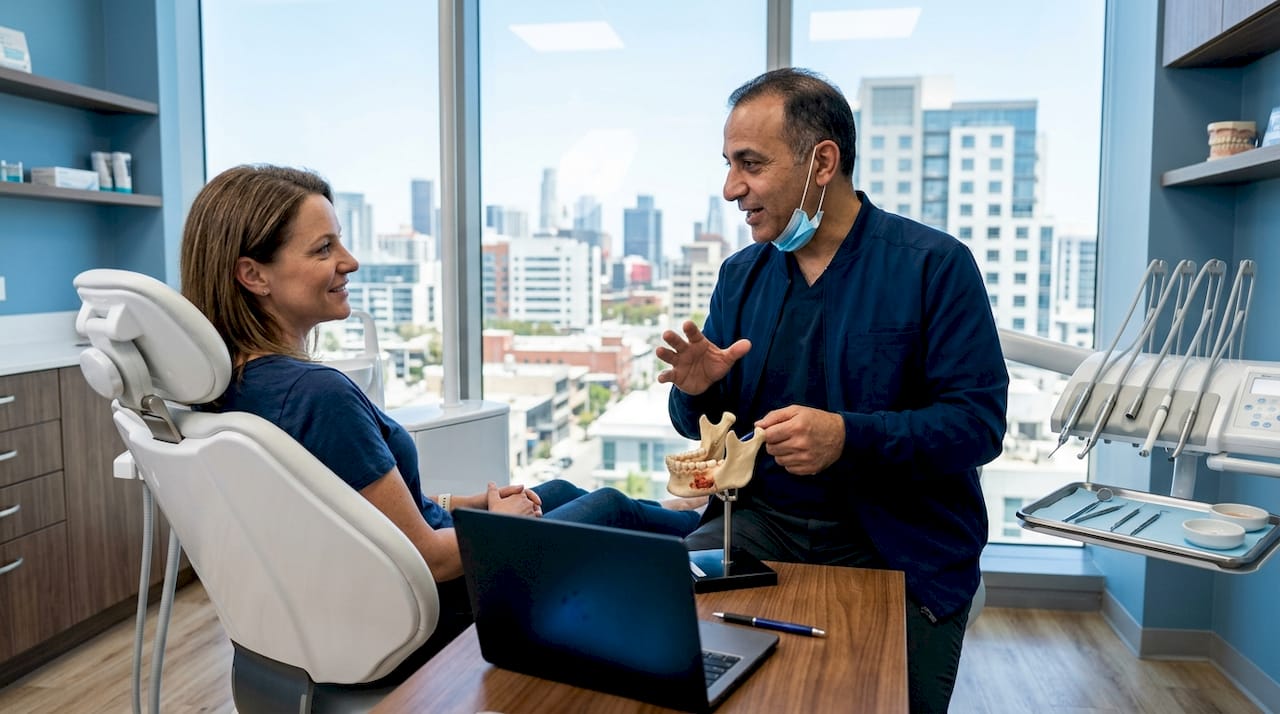
Bone loss does not automatically disqualify you from dental implants. Modern implant dentistry, guided by protocols from organizations like the American Academy of Implant Dentistry (AAID) and the American Association of Oral and Maxillofacial Surgeons (AAOMS), has produced techniques that work around insufficient bone volume. Whether your bone loss came from tooth extraction, gum disease, or years of wearing dentures, options exist. The question is not whether you can get implants with bone loss. The question is which approach fits your specific anatomy and timeline.
Can I get dental implants with bone loss?
Yes, you can get dental implants with bone loss in most cases. Standard implants require approximately 5–6 mm of bone width and 10–12 mm of bone height for conventional placement. When your jaw falls short of those dimensions, bone grafting, sinus lifts, angled implants, or short implants can restore or work around the deficit. The key is a thorough evaluation before any treatment decision is made.
Many patients told they “cannot” get implants are actually candidates once a specialist assesses their anatomy with modern imaging. That initial “no” is often a precautionary response from a general dentist who lacks the surgical tools to manage complex bone deficiency. A second opinion from an implant specialist frequently changes the outcome.
How bone loss occurs and why it matters for implants
Jawbone resorption begins within weeks of losing a tooth. The bone that once surrounded the tooth root no longer receives the mechanical stimulation it needs, so the body gradually breaks it down and redirects minerals elsewhere. This process is called alveolar resorption, and it is the primary reason dental implants and bone loss are so closely linked in treatment planning.
The upper jaw presents a specific challenge. The maxillary sinuses sit just above the upper back teeth, and when those teeth are lost, the sinuses can expand downward into the space left by resorption. This process, called sinus pneumatization, reduces the vertical bone height available for implants in the upper posterior region.
Bone density matters as much as volume. A jaw with adequate height and width but poor density, classified as Type IV bone in the Lekholm and Zarb scale, offers less resistance during drilling and weaker initial implant stability. Both dimensions must be assessed before a treatment plan is finalized.
Resorption rate: Bone loss accelerates in the first year after extraction, making early evaluation and socket preservation critical.
Width vs. height: Width typically decreases faster than height, which is why narrow ridges are one of the most common barriers to standard implant placement.
Upper jaw specifics: Sinus proximity limits vertical space and often requires a sinus lift before or during implant surgery.
Density classification: Low-density bone may require modified drilling protocols or staged placement to achieve stable osseointegration.
Systemic factors: Conditions like osteoporosis reduce bone density throughout the jaw, not just at the extraction site.
Pro Tip: If you have had a tooth extracted in the last six months and have not yet replaced it, ask your dentist about socket preservation grafting. It can prevent significant bone loss before it starts.
How is bone loss assessed before implant treatment?
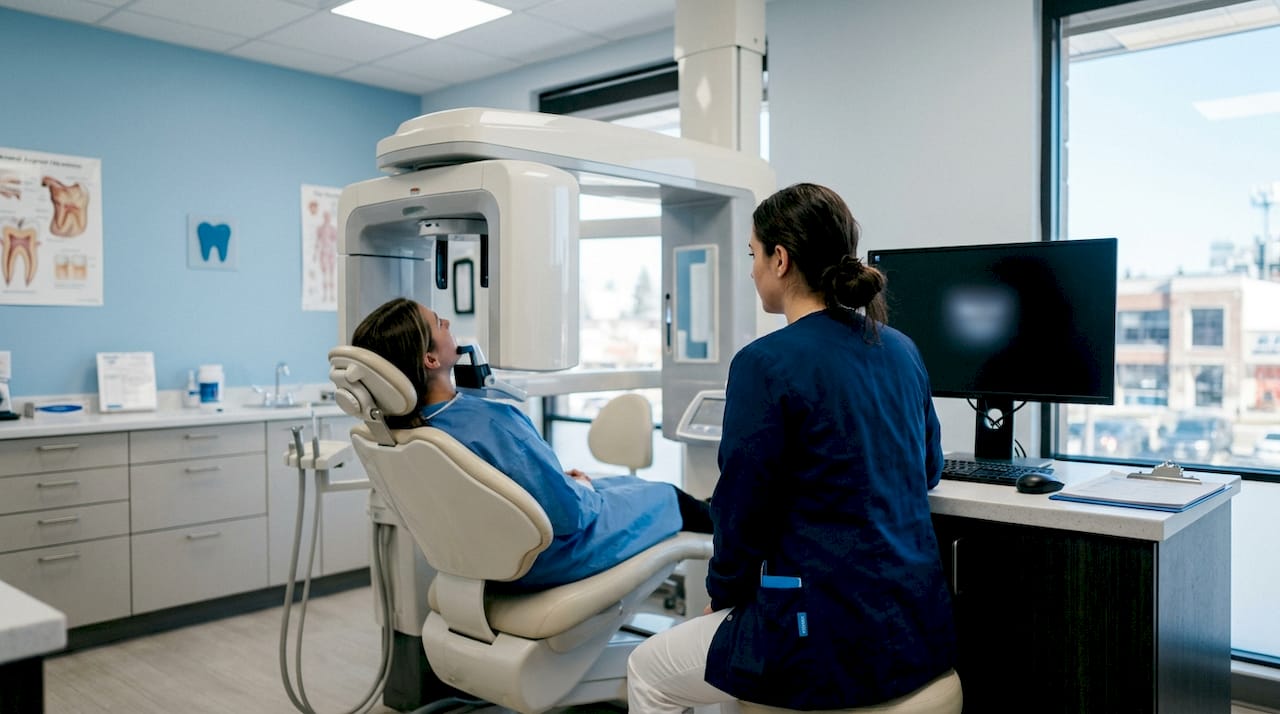
A standard 2D panoramic X-ray shows the general shape of your jaw but cannot reliably measure bone width or density. 3D cone-beam CT (CBCT) scans provide a definitive picture of bone volume, density, and the exact position of anatomical structures like the inferior alveolar nerve and the maxillary sinus floor. CBCT is the gold standard for implant candidacy evaluation, and no responsible treatment plan should proceed without it.
During your evaluation, the clinician measures several parameters from the CBCT scan:
Bone width: Whether the ridge is wide enough to house a standard or narrow-diameter implant.
Bone height: The vertical distance between the crest of the ridge and the sinus floor or nerve canal.
Bone density: The radiographic density of the trabecular bone, which predicts how well the implant will achieve primary stability.
Proximity to anatomical structures: Safe clearance from the inferior alveolar nerve and sinus floor is required before any drilling begins.
Defect morphology: Whether the bone loss is localized or generalized, which determines the type of grafting needed.
Patients can expect a CBCT scan to take under two minutes and deliver no more radiation than a full-mouth series of conventional X-rays. The scan data is then used to plan implant position digitally before a single incision is made. This level of planning reduces surgical risk and improves outcomes significantly.
Bone grafting and sinus lifts: solutions for insufficient bone
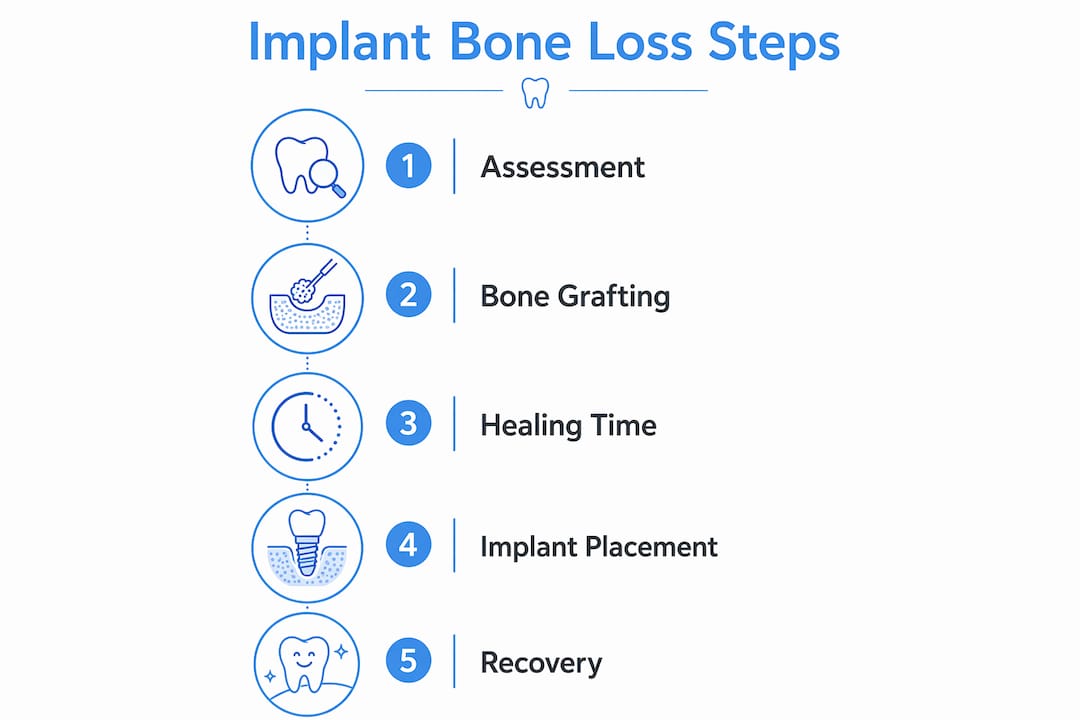
Bone grafting is a structural necessity, not a cosmetic add-on. Grafting provides the physical foundation that allows an implant to fuse with the jaw through osseointegration. Without adequate bone volume, the implant has no stable anchor, and failure becomes likely regardless of surgical skill.
Types of bone grafting procedures
Socket preservation: Performed at the time of tooth extraction, this technique fills the empty socket with graft material to prevent collapse of the surrounding bone walls. Socket preservation grafting does not extend total healing time compared to standard extraction healing, making it one of the most efficient dental bone loss solutions available.
Ridge augmentation: Used when the ridge has already collapsed, this procedure rebuilds width and height using bone graft material placed under the gum tissue. Healing takes longer than socket preservation because the graft must integrate with existing bone before implant placement.
Block grafts: For severe defects, a solid block of bone (often harvested from the patient’s own jaw or chin) is fixed to the deficient area with titanium screws. Block grafts are the most involved procedure but address the largest defects.
Sinus lift: When the sinus floor sits too low for upper jaw implants, a sinus lift elevates the membrane and packs graft material beneath it. This creates the vertical height needed for implant placement.
Healing timelines
Bone grafting maturation takes 4–9 months depending on the procedure type and the volume of graft material used. Minor grafts performed at the same time as implant placement heal alongside the implant. Larger grafts require a separate healing phase before implant surgery begins.
Procedure | Typical healing time | Implant placement timing |
Socket preservation | 3–4 months | After healing |
Ridge augmentation | 4–6 months | After healing |
Block graft | 6–9 months | After healing |
Sinus lift (lateral) | 6–9 months | Simultaneous or staged |
Sinus lift (crestal) | 4–6 months | Often simultaneous |
Staged bone grafting before implant placement is safer and more predictable than simultaneous placement, especially for significant bone loss in the upper jaw. Simultaneous approaches work well for minor defects but carry higher risk when the bone deficit is large.
Pro Tip: Ask your clinician whether a temporary prosthetic, such as a flipper or interim denture, can be fitted during the grafting healing phase. You do not have to go without teeth while you wait.
Advanced implant techniques for severe bone loss
When bone loss is too severe for grafting to be practical, angled and short implants offer a path forward. The All-on-4 technique places four implants at strategic angles to use whatever dense bone remains, typically in the front of the jaw where resorption is slowest. This approach avoids the need for sinus lifts in many upper jaw cases and can support a full arch of teeth on the day of surgery.
Short implants, typically 6 mm or less in length, are another option for patients with limited vertical bone height. They require less augmentation than standard implants and have shown reliable outcomes in the lower jaw, where bone density tends to be higher.
Treatment timelines vary considerably based on the approach chosen:
No grafting needed: Evaluation, implant placement, and final restoration can be completed in 3–6 months.
Minor grafting with simultaneous implant: Total treatment runs 5–8 months from first appointment to final crown.
Staged grafting before implant: Expect 12–18 months from start to finish, including the grafting healing phase.
All-on-4 with same-day teeth: The surgical phase is completed in one day, though the final prosthetic is typically delivered after 3–6 months of healing.
Patients who need grafting often worry that the timeline is too long. The reality is that the grafting phase is passive. You are healing at home, not sitting in a dental chair. The active treatment time is a small fraction of the total calendar duration.
Factors that affect implant success with bone loss
Patient health has a direct impact on implant outcomes. Uncontrolled diabetes slows healing and increases infection risk, which can compromise both graft integration and osseointegration. Smoking reduces blood flow to the gum tissue and bone, significantly lowering implant survival rates. Patients who have received high-dose radiotherapy to the head and neck face reduced bone vascularity, which makes grafting and implant placement more complex.
Long-term bone stability around implants depends more on implant location and inflammation control than on the type of prosthesis placed on top. This means that even after a successful implant, ongoing oral hygiene and regular professional monitoring are non-negotiable.
Peri-implant bone loss is the leading cause of late implant failure. Radiographic bone loss of around 50% around an implant often triggers the clinical decision to remove it. Catching early bone loss through annual X-rays allows intervention before the implant reaches that threshold.
“The implant is only as stable as the bone and tissue surrounding it. Patients who maintain consistent hygiene appointments and address inflammation early protect their investment for decades. Those who skip follow-up visits are the ones we see with preventable failures.”
Key health factors to discuss with your clinician before treatment:
Smoking status: Quitting before surgery and during healing improves outcomes measurably.
Blood sugar control: HbA1c levels should be within a safe range before elective implant surgery.
Medications: Bisphosphonates and some blood thinners affect bone metabolism and surgical planning.
Radiation history: Prior head and neck radiation requires specialized protocols and may limit candidacy.
Oral hygiene baseline: Active gum disease must be treated and stabilized before any implant work begins.
Key takeaways
Bone loss does not end your candidacy for dental implants. Modern techniques including bone grafting, sinus lifts, All-on-4, and short implants make treatment feasible for the vast majority of patients with insufficient bone volume.
Point | Details |
Bone loss rarely disqualifies | Most patients with bone loss are candidates once a specialist evaluates their anatomy. |
CBCT imaging is non-negotiable | 3D scans measure bone width, height, and density accurately where 2D X-rays fall short. |
Grafting is structural, not cosmetic | Bone grafting creates the physical foundation for osseointegration and long-term implant stability. |
Staged grafting is more predictable | Separating the grafting and implant phases improves success rates for significant bone deficits. |
Health and hygiene drive outcomes | Smoking, uncontrolled diabetes, and skipped follow-up visits are the primary causes of preventable implant failure. |
What I have learned from patients told “no” to implants
The most common misconception I encounter is that a single dentist’s “no” is the final word. It is not. A general dentist without surgical training will often decline to treat complex bone loss cases, not because treatment is impossible, but because it falls outside their scope. That is responsible practice on their part, but patients sometimes walk away believing implants are off the table permanently.
What a CBCT scan reveals almost always changes the conversation. I have seen patients referred to us after years of wearing ill-fitting dentures, convinced they had no bone left. The scan showed enough density in the anterior jaw for angled implants, and they left with a treatment plan the same day. The imaging does not lie, and it frequently tells a more hopeful story than a visual exam alone.
Bone grafting also gets misrepresented as a cosmetic procedure or an unnecessary upsell. It is neither. Grafting is a structural necessity that determines whether an implant survives five years or twenty. Patients who understand this invest in the process differently. They follow aftercare instructions, attend follow-up appointments, and protect the result they worked hard to achieve.
The timeline is the hardest part for most people. Twelve to eighteen months feels like a long time when you are missing teeth. My honest advice is to think about the alternative. A poorly supported implant that fails at year three costs more in time, money, and discomfort than a staged approach done right the first time. Patience is not just a virtue here. It is a clinical strategy.
If you have been told you are not a candidate, get a second opinion with a clinician who has access to CBCT imaging and experience with bone augmentation. You may be closer to a solution than you think.
— Mersal
Implant consultations at Mersaldental in Ottawa
Mersaldental serves patients in lower town Ottawa with comprehensive dental services that include implant evaluations, bone grafting consultations, and restorative treatment planning. We accept new patients, offer direct insurance billing, and participate in the CDCP program.

If you have been living with bone loss or missing teeth and want to know what your options actually are, we can help. Our team uses thorough clinical assessment to build a treatment plan that fits your anatomy, your timeline, and your budget. Whether you need a single implant or a full-arch solution, we offer same-day consultations and emergency services for patients who cannot wait. Visit Mersaldental to book your evaluation or call us directly. You deserve a clear answer, not a guess.
FAQ
Can I get implants after years of bone loss?
Yes. Specialized techniques like All-on-4, short implants, and bone grafting allow implant placement even after significant long-term bone loss. A CBCT scan determines exactly what is possible for your specific anatomy.
Is bone grafting always required for implants with bone loss?
Not always. Minor bone deficits can sometimes be managed with angled or short implants that avoid the deficient area. Grafting is required when the remaining bone volume falls below the threshold needed for stable implant placement.
How long does treatment take when bone grafting is needed?
Grafting maturation takes 4–9 months before implant placement can proceed in staged cases. Total treatment from first evaluation to final restoration typically runs 12–18 months when significant grafting is involved.
Does bone loss affect implant success rates?
Bone loss increases complexity but does not determine failure on its own. Long-term bone stability depends primarily on implant location, inflammation control, and consistent oral hygiene rather than the pre-treatment bone deficit alone.
What is the difference between a bridge and an implant for bone loss?
A dental bridge does not require bone volume for placement, but it does not stimulate the jaw and allows continued resorption beneath it. An implant halts bone loss by replacing the tooth root and providing the mechanical stimulation the bone needs to stay dense.
Recommended
Comments