Can You Get Dental Implants if You Have Dentures?


Dental implants are a viable tooth replacement option for people who currently wear dentures, including those who have worn them for many years. The American College of Prosthodontists recognizes implant-supported restorations as the standard of care for patients with full tooth loss, and clinical data shows success rates exceeding 95% over ten years for implant-supported overdentures. That figure holds even for long-term denture wearers. If you can you get dental implants if you have dentures is the question keeping you up at night, the short answer is yes. The longer answer involves bone health, implant type, and a clear treatment plan.
Can you get dental implants if you have dentures?
Yes. Wearing dentures does not disqualify you from getting dental implants. The key factor is the condition of your jawbone, not how long you have worn dentures.
Dentures sit on top of the gum and do not transfer chewing forces into the bone. Over time, that lack of stimulation causes the jawbone to shrink, a process called bone resorption. This is the main concern dentists evaluate when a denture wearer asks about implants. The good news is that bone grafting and All-on-4 techniques now allow most patients with significant bone loss to still qualify for implants. Even zygomatic implants, which anchor into the cheekbone rather than the jaw, exist for the most severe cases.
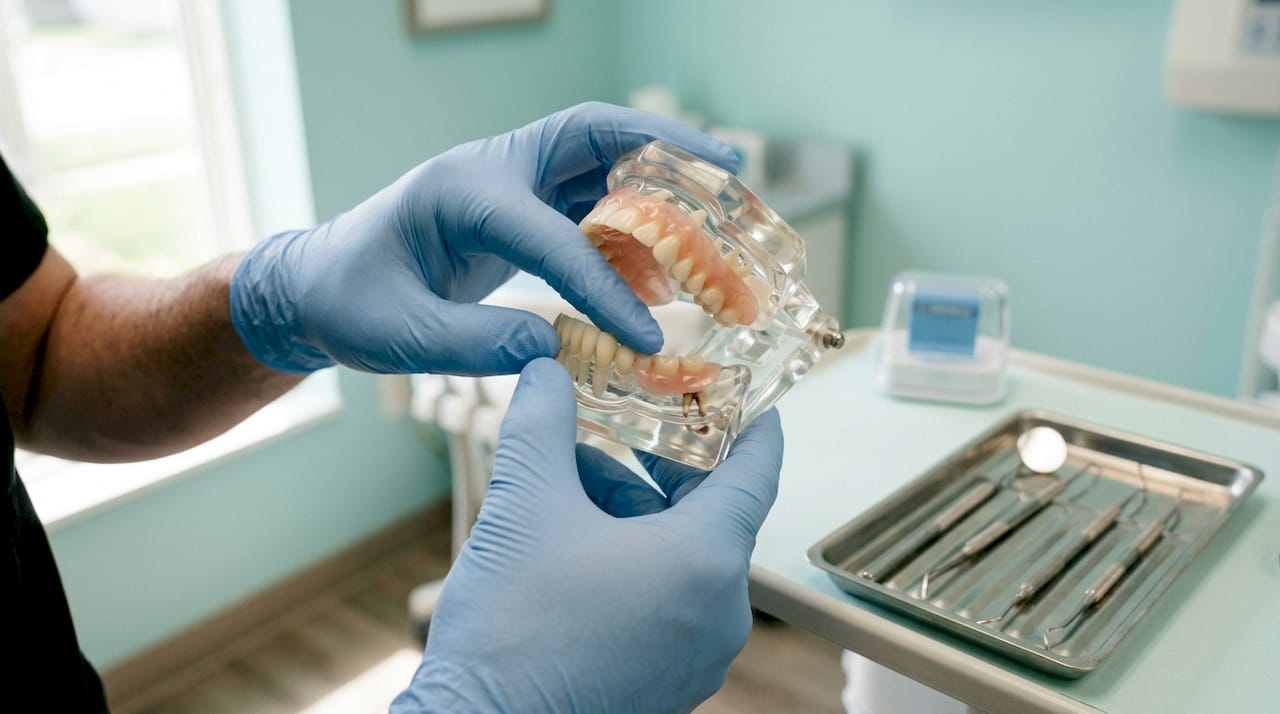
The term “implant-supported denture” covers two main categories: removable overdentures that snap onto implants, and fixed implant bridges that are permanently attached. Both replace conventional dentures and restore far more function. Understanding which type fits your situation is the first step.
What types of implant options are available for denture wearers?
Two main implant options exist for people transitioning from conventional dentures: snap-on overdentures and fixed implant bridges.
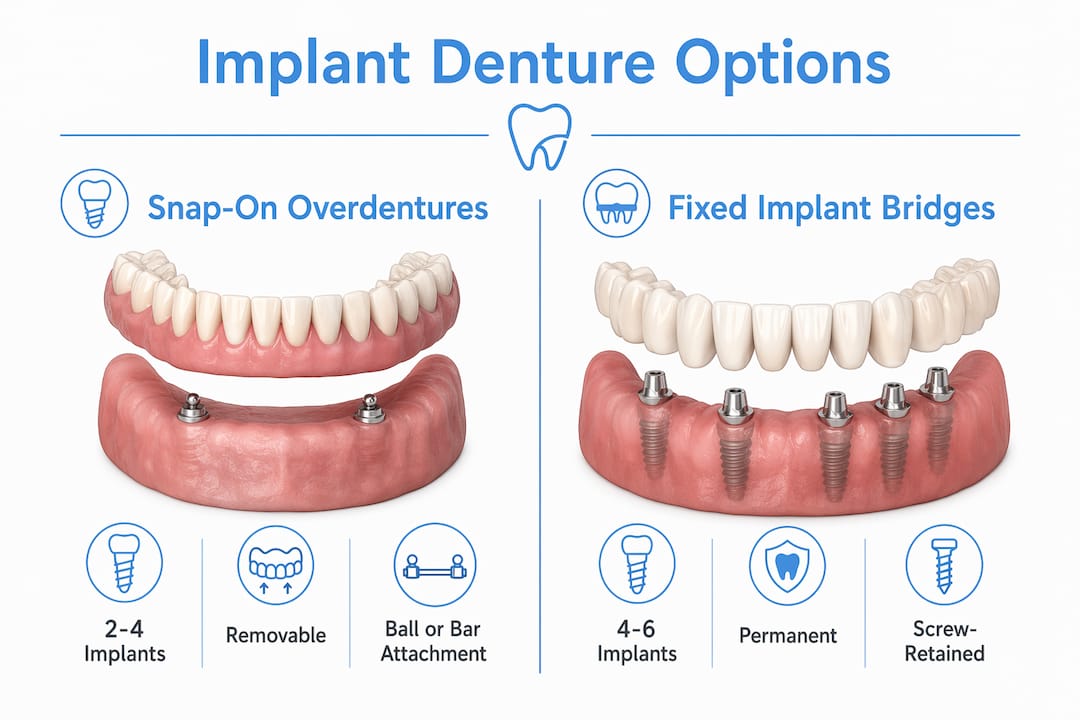
Snap-on overdentures attach to two or four implants using ball or bar attachments. You remove them nightly for cleaning, much like a conventional denture. They cost less and are easier to adjust over time. Fixed implant bridges, sometimes called hybrid bridges or All-on-4 restorations, are permanently screwed into four or more implants. They do not come out at home. They feel closer to natural teeth but require specialized hygiene tools like water flossers and interdental brushes, plus professional maintenance at regular intervals.
Feature | Snap-on overdenture | Fixed implant bridge |
Number of implants | 2–4 | 4–6 |
Removable at home | Yes | No |
Chewing efficiency | 70–85% of natural teeth | Close to natural teeth |
Estimated cost (full arch) | $6,000–$20,000 | $20,000–$35,000+ |
Cleaning method | Remove and soak nightly | Water flosser, interdental brush |
Chewing efficiency with either implant type far exceeds what conventional dentures provide. Conventional dentures deliver only 20–30% of natural chewing function. Implant-supported options bring that up to 70–85% or higher. That difference affects nutrition, comfort, and quality of life in measurable ways.
Pro Tip: If you are unsure which type fits your lifestyle, ask your dentist to walk you through a full day of eating and cleaning with each option before you decide. The maintenance difference alone changes the choice for many patients.
Who qualifies for implants after wearing dentures?
Most denture wearers qualify for at least one type of implant-supported restoration. The evaluation process determines which option is right for you.
A 3D CBCT scan is the standard first step. This imaging shows bone height, width, and density in three dimensions. It also maps nerves and sinus cavities so your dentist can plan implant placement with precision. Standard dental X-rays give a flat picture. A CBCT scan gives the full story. You can learn more about why imaging matters before any implant procedure.
Key candidacy factors include:
Bone volume: Adequate bone must exist to hold an implant. If it does not, bone grafting or a sinus lift can build it back up before placement.
Gum health: Active gum disease must be treated before implant surgery. Infected tissue around an implant leads to failure.
Systemic health: Uncontrolled diabetes, certain blood thinners, and heavy smoking reduce healing capacity and implant success rates. These are not automatic disqualifiers, but they require careful management.
Oral hygiene commitment: Implants require consistent cleaning. Patients who struggled with denture hygiene need a realistic plan before committing.
Age: Adults of any age can receive implants. Younger patients need fully developed jaws, which typically occurs by the late teens.
Pro Tip: Do not assume bone loss rules you out. Ask specifically about All-on-4 or zygomatic implants. Many patients who were told they had “too little bone” for standard implants are still candidates for these advanced techniques.
What does the implant process look like for denture wearers?
The process from consultation to final restoration typically takes several months. Here is what to expect at each stage.
Consultation and imaging. Your dentist reviews your medical history, takes a 3D CBCT scan, and discusses your goals. This visit determines which implant type suits you and whether bone grafting is needed.
Bone grafting (if required). If your jawbone has shrunk from years of denture use, a graft adds volume before implants can be placed. Healing after grafting takes three to six months before the next step.
Implant placement surgery. Titanium posts are placed into the jawbone under local anesthesia. The procedure is typically completed in one appointment. Many patients describe the discomfort as less than they expected.
Temporary teeth during healing. You rarely go without teeth during recovery. Existing dentures can be modified to fit over healing implants, or temporary teeth can be placed the same day. This prevents gaps and keeps you comfortable while osseointegration occurs.
Osseointegration. The bone fuses to the titanium post over three to six months. This is what makes implants stable. Rushing this phase risks failure.
Final restoration. Once the implants are fully integrated, your dentist attaches the permanent overdenture or fixed bridge. Adjustments are made for fit and bite.
The total timeline ranges from six months for straightforward cases to eighteen months when bone grafting is involved. Knowing this upfront helps you plan realistically.
What are the benefits and real costs of switching from dentures to implants?
Transitioning from conventional dentures to implants changes daily life in concrete ways. The benefits go beyond comfort.
Chewing and nutrition. Implant-supported restorations restore chewing efficiency to 70–85% of natural teeth. Patients report being able to eat foods they had avoided for years, including raw vegetables, nuts, and lean meats.
Bone preservation. Implants transfer chewing forces into the jawbone, which prevents the bone shrinkage that conventional dentures accelerate. This preserves facial structure and prevents the sunken appearance that long-term denture wearers often develop.
Stability and confidence. Implant-supported dentures do not slip or click. Patients report significant improvements in speech and social confidence.
Long-term cost. Conventional dentures need relining and replacement every five to eight years. Implants, when maintained properly, last decades. The higher upfront cost often balances out over time.
Cost ranges by implant type:
Implant type | Estimated cost per arch |
2-implant snap-on overdenture | $6,000–$12,000 |
4-implant snap-on overdenture | $10,000–$20,000 |
Fixed full-arch implant bridge | $20,000–$35,000+ |
These cost ranges reflect complexity and implant count. Geographic location and clinic fees also affect the final number. Some dental insurance plans cover a portion of implant costs, and programs like the Canadian Dental Care Plan (CDCP) may offset expenses for eligible patients.
Pro Tip: Ask your dental office about direct insurance billing and CDCP eligibility before your consultation. Knowing your coverage upfront changes the financial picture significantly.
Maintenance differs between types. Snap-in overdentures require nightly removal and cleaning, while fixed bridges stay in place and need water flossers, interdental brushes, and regular professional cleanings. Neither is difficult once it becomes routine. The right choice depends on your lifestyle, budget, and how much you want to think about your teeth each day.
Key Takeaways
Dental implants are a realistic, well-supported option for denture wearers, with success rates above 95% and multiple implant types available to match different bone conditions, budgets, and lifestyles.
Point | Details |
Implants work for denture wearers | Success rates exceed 95% over ten years, even for long-term denture wearers. |
Bone loss is not a dealbreaker | Bone grafting, All-on-4, and zygomatic implants accommodate patients with significant resorption. |
Two main implant types exist | Snap-on overdentures are removable and lower cost; fixed bridges are permanent and feel more natural. |
Chewing efficiency improves dramatically | Implants restore 70–85% of natural chewing function versus 20–30% with conventional dentures. |
Costs vary by complexity | Full-arch implant options range from $6,000 to $35,000+ depending on implant count and technique. |
What I’ve learned from seeing patients make this switch
I have seen patients come in convinced that years of denture wear had permanently closed the door on implants. That belief is almost always wrong, and it costs people years of unnecessary discomfort.
The technology available in 2026 is genuinely different from what existed a decade ago. 3D imaging, tilted implant techniques, and zygomatic implants have expanded who qualifies. The patients I worry about are not the ones with bone loss. They are the ones who wait so long that their bone loss becomes extreme, or who choose implants without understanding the maintenance commitment that comes with a fixed bridge.
My honest advice: get the CBCT scan before you assume anything. The scan tells the real story. I have seen patients with surprisingly good bone density after fifteen years in dentures, and I have seen others who needed grafting after five. You cannot know without the imaging.
The other thing I tell patients is to think about their daily routine honestly. A fixed bridge is not better than a snap-on overdenture for every person. If you travel frequently, dislike specialized hygiene tools, or have limited dexterity, a removable option may serve you better. The goal is a restoration you will actually maintain well for decades. Choosing the right type matters as much as choosing implants at all. If you are weighing your options, reading about bridge vs. implant decisions is a useful next step before your consultation.
— Mersal
Mersaldental is here to help you take the next step
Mersaldental, located in lower town Ottawa, offers dental implant consultations for patients currently wearing dentures. We accept new patients, provide direct insurance billing, and work with the Canadian Dental Care Plan (CDCP) to help make treatment accessible.
Our team creates individualized treatment plans based on your bone health, lifestyle, and goals. Whether you are exploring snap-on overdentures or a fixed full-arch restoration, we walk you through every option clearly and honestly. We also offer same-day appointments and emergency services for patients who need prompt care. Visit Mersaldental’s services page to learn what we offer, or book a consultation to get your 3D imaging and a personalized implant assessment.
FAQ
Can dentures be replaced with dental implants?
Yes. Conventional dentures can be replaced with implant-supported overdentures or fixed implant bridges. The right option depends on your bone density and overall health.
How long does the implant process take for denture wearers?
The process takes six to eighteen months depending on whether bone grafting is needed. Straightforward cases without grafting are typically completed in six to nine months.
Does bone loss from dentures prevent implant surgery?
Bone loss does not automatically disqualify you. Techniques like bone grafting, All-on-4 implants, and zygomatic implants are designed specifically for patients with reduced bone volume.
Are dental implants suitable for older denture wearers?
Age alone is not a disqualifying factor. Adults of any age can receive implants provided their overall health supports healing and their bone structure can accommodate the procedure.
What is the difference between snap-on and fixed implant dentures?
Snap-on overdentures attach to two or four implants and are removed nightly for cleaning. Fixed implant bridges are permanently attached and require specialized hygiene tools but feel closer to natural teeth.
Recommended
Comments