Why Your Tooth Hurts When You Bite Down

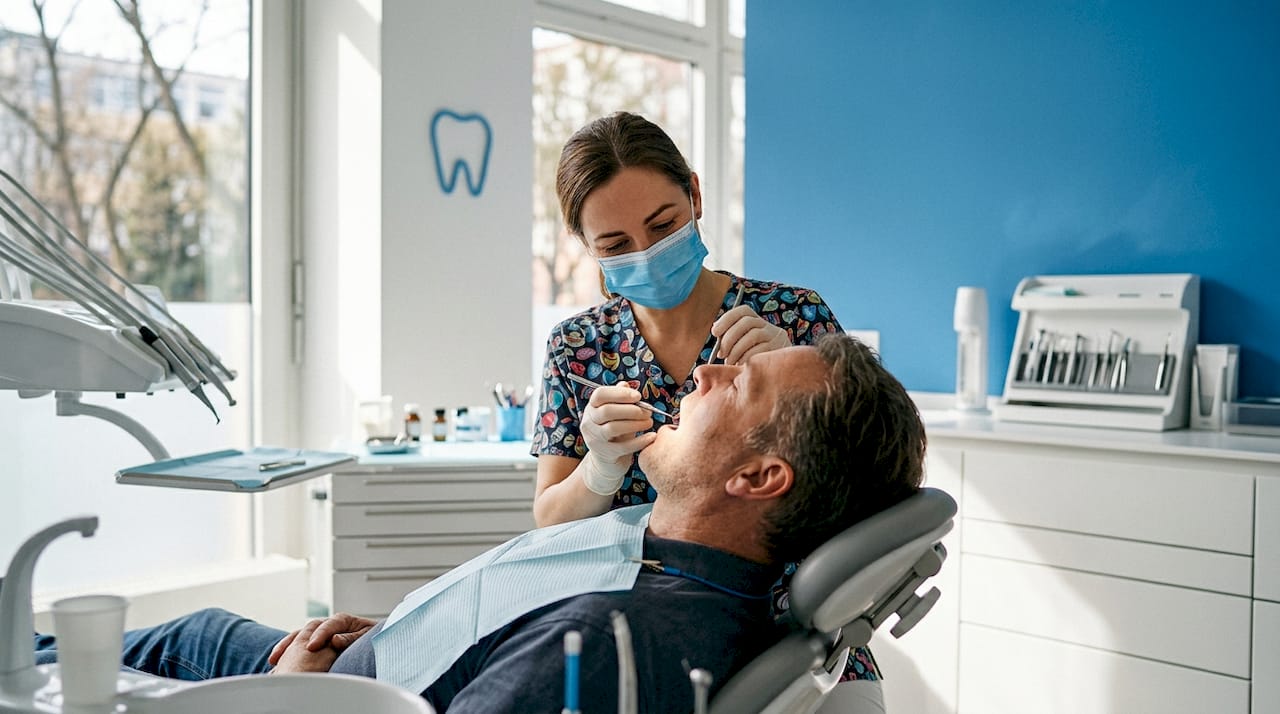
Tooth pain when biting down is a diagnostic signal that something is wrong with a tooth’s structure or the tissues surrounding it. The clinical term for this symptom is bite-sensitive toothache, and it covers a range of conditions from cracked tooth syndrome to periodontal ligament inflammation. The cause matters because each condition requires a different treatment. Knowing what your pain pattern tells you, and when to act on it, can be the difference between a simple filling and a root canal. This guide explains the most common causes, how dentists diagnose them, and what to do right now.
Why does a tooth hurt when I bite down?
Tooth pain on biting is caused by mechanical stress on a compromised tooth or inflamed surrounding tissue. When a tooth is healthy, biting forces distribute evenly. When something is wrong, those same forces trigger pain because they press directly on a damaged structure or irritated nerve.
Common causes of bite-related tooth pain include:
Cracked tooth syndrome. A crack in the enamel or dentin flexes under pressure. The sharp pain often appears on the release of bite pressure rather than during it. This rebound pain is a hallmark sign of a cracked tooth.
Deep tooth decay. Decay that reaches the pulp inflames the nerve inside the tooth. The confined space amplifies pressure, making every bite painful.
Damaged or worn fillings. A broken filling leaves the underlying dentin exposed. Biting forces hit unprotected tooth structure and trigger sharp, localized pain.
Early apical periodontitis. Inflammation at the root tip causes the periodontal ligament to swell. Pressure from biting compresses that swollen tissue, producing a dull, persistent ache.
Periodontal disease. Gum disease weakens the bone and ligament supporting the tooth. The tooth becomes mobile and sore under normal chewing forces.
Occlusal overload. A bite that is misaligned puts excess force on specific teeth. Over time, that repeated stress inflames the periodontal ligament even without decay or cracks.
Sinus pressure. A sinus infection can press down on the roots of upper back teeth. The result feels exactly like dental bite pain but has no dental cause.
Pro Tip: Pay attention to whether your pain hits during the bite or after you release pressure. That single detail tells your dentist more than the pain’s intensity ever could.
How do dentists diagnose the cause of bite pain?
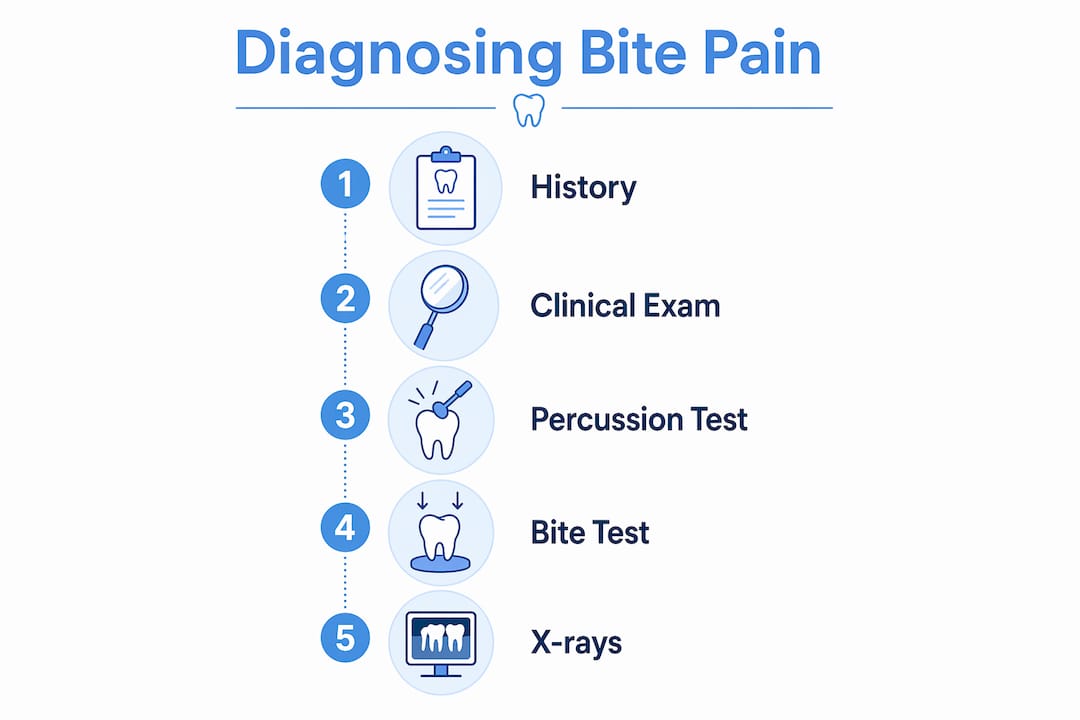
Dentists use a structured set of clinical tests to identify which condition is causing your pain. The process is more systematic than most patients expect.
Percussion and bite tests
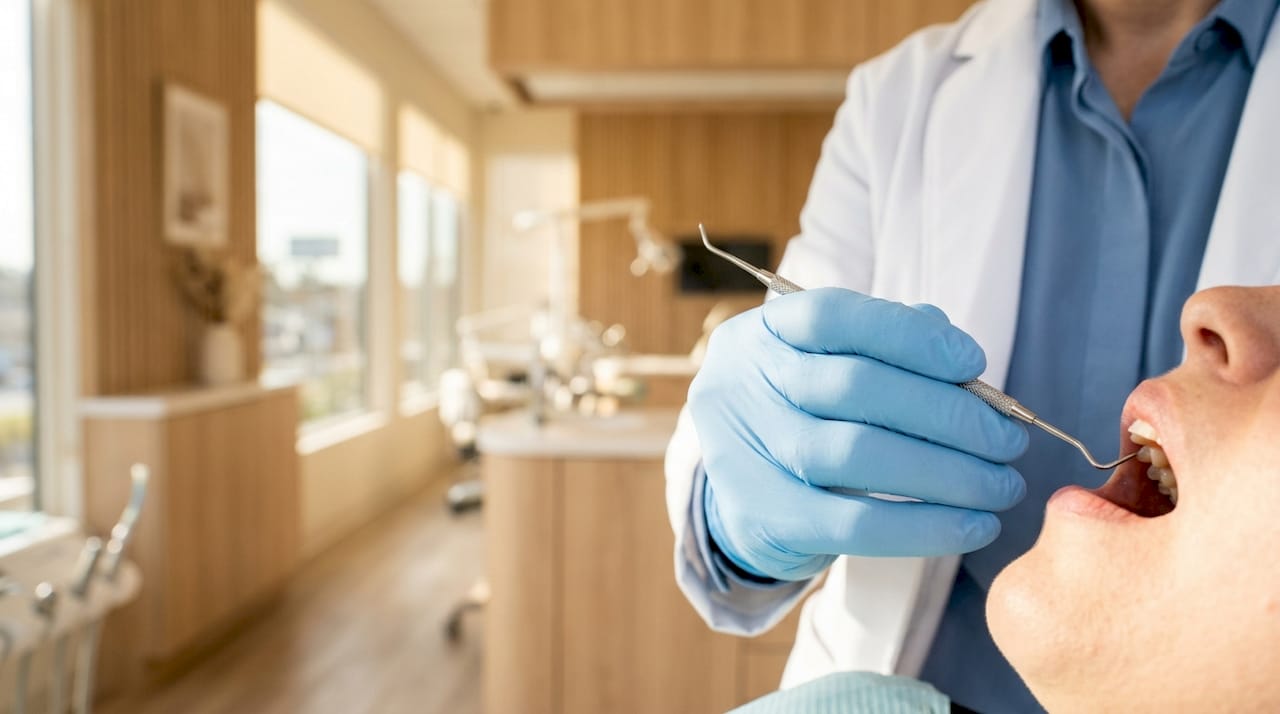
The dentist taps each tooth with a dental instrument, a technique called percussion testing. A tooth that reacts sharply to tapping is likely inflamed at the root tip. The dentist may also ask you to bite on a small stick or cotton roll, then release it. Pain on bite release points toward cracked tooth syndrome, while continuous pain during pressure points toward apical inflammation. These two patterns lead to very different treatments.
The role of X-rays
X-rays reveal decay, bone loss, and root infections. However, micro-cracks are often invisible on standard dental X-rays despite causing significant pain. A normal X-ray does not mean anything is wrong. Dentists understand this limitation and rely on clinical tests and your symptom description to fill the gap that imaging cannot.
Ruling out sinus pain
Upper back teeth sit close to the maxillary sinuses. When a sinus infection develops, the pressure it creates can feel identical to a toothache. Dentists differentiate sinus from dental pain by checking whether multiple adjacent teeth are equally sensitive, whether the pain increases when you bend forward, and whether percussion tests produce a consistent pattern. Dental pain typically isolates to one tooth; sinus pain spreads across several.
Why symptom timing matters most
Pain timing provides more diagnostic value than pain intensity. A dentist who knows exactly when your pain peaks, during pressure, on release, or lingering long after, can narrow the diagnosis before a single X-ray is taken. Describe your pain pattern as specifically as you can at your appointment.
Pro Tip: Before your dental visit, note whether the pain is sharp or dull, whether it lingers or stops immediately, and which specific foods or actions trigger it. That information speeds up diagnosis considerably.
What treatment options are available for bite-related tooth pain?
Treatment is tailored to the diagnosis and the severity of the condition. The range runs from a simple bite adjustment to root canal therapy, depending on what the exam reveals.
Conservative and restorative treatments
Minor issues respond well to conservative care. A worn or cracked filling gets replaced with a new restoration that seals the exposed dentin and restores even bite forces. A bite adjustment, called occlusal equilibration, reshapes the biting surface of a tooth to eliminate excess pressure points. These are quick, comfortable procedures that resolve pain in many cases.
When a tooth has a significant crack or structural weakness, a dental crown covers and protects the entire tooth. Crowns prevent the crack from spreading and restore full chewing function. They are the standard treatment for cracked tooth syndrome when the crack has not yet reached the pulp.
Root canal therapy
Root canal therapy becomes necessary when decay or a crack has reached the pulp, or when the pulp is infected. The procedure removes the inflamed or infected tissue inside the tooth, cleans the root canals, and seals them. Lingering pain after a stimulus is a reliable sign that the pulp is irreversibly damaged and root canal therapy is needed. After treatment, a crown typically protects the tooth.
Periodontal treatments
Gum disease causing bite discomfort requires periodontal care rather than restorative work. Scaling and root planing removes bacterial deposits from below the gumline. This reduces inflammation in the periodontal ligament and relieves the pressure sensitivity that makes chewing painful. Regular dental hygiene appointments prevent gum disease from reaching this stage.
Emergency care for abscess or infection
A dental abscess is a pocket of infection at the root tip or in the gum. It requires immediate treatment. Options include draining the abscess, root canal therapy, or extraction, depending on whether the tooth is salvageable. Delaying care for an abscess allows the infection to spread to surrounding bone and tissue.
Cause | Typical treatment |
Worn or broken filling | Filling replacement or bonding |
Cracked tooth (pulp intact) | Crown placement |
Pulp inflammation or infection | Root canal therapy, then crown |
Gum disease | Scaling, root planing, periodontal care |
Dental abscess | Drainage, root canal, or extraction |
Occlusal overload | Bite adjustment or night guard |
When should you see a dentist urgently?
Early diagnosis enables less invasive treatment and prevents complications like bone loss or the need for extraction. Waiting rarely helps and often makes the condition worse.
Seek same-day or next-day dental care if you notice any of these red flags:
Facial swelling, especially around the jaw or cheek
Fever or general feeling of illness alongside tooth pain
A pimple-like bump on the gum near the painful tooth
A bad taste in your mouth that does not go away
Pain that spreads to your ear, jaw, or neck
Difficulty opening your mouth or swallowing
If your pain is present but not yet severe, see a dentist within one to two days. Pain persisting beyond 1–2 days or worsening rapidly is a clear signal that the underlying condition is progressing.
Safe self-care before your appointment
These steps ease discomfort temporarily. They do not treat the cause.
Avoid chewing on the affected side entirely.
Rinse gently with warm salt water two to three times a day.
Take over-the-counter pain medication such as ibuprofen or acetaminophen as directed on the label.
Avoid very hot, very cold, or very sweet foods that may aggravate sensitivity.
Over-the-counter pain relief and salt water rinses are supportive measures only. They do not stop an infection from spreading or a crack from worsening.
Pro Tip: Ibuprofen reduces both pain and inflammation, making it more effective than acetaminophen alone for most dental pain. Take it with food and follow dosage instructions carefully.
Key Takeaways
Tooth pain when biting down always has a specific structural or inflammatory cause, and identifying that cause early leads to simpler, less invasive treatment.
Point | Details |
Pain timing is the key diagnostic clue | Whether pain hits during or after bite pressure tells dentists more than intensity alone. |
Normal X-rays do not rule out a problem | Micro-cracks and early inflammation often do not appear on standard dental X-rays. |
Early care means simpler treatment | Diagnosing bite pain early prevents the need for root canals or extractions in many cases. |
Red flags require same-day attention | Swelling, fever, gum pimples, or spreading pain signal infection and need immediate care. |
Self-care is temporary relief only | Salt water rinses and pain medication ease symptoms but do not address the underlying cause. |
What bite pain timing has taught me
One thing I have noticed over years of seeing patients with bite sensitivity is that the timing of their pain tells the real story, not the intensity. Patients often come in saying the pain is unbearable, but when I ask whether it hurts during the bite or after they release, they pause. That pause matters. The answer changes everything about how we approach treatment.
The frustration I hear most often is this: “My X-ray looked fine, so why does it still hurt?” Patients interpret a clean X-ray as proof that nothing is wrong. Dentists know that micro-cracks and early inflammation frequently do not show up radiographically. A normal X-ray is one piece of information, not the final answer.
The patients who do best are the ones who come in early, before the pain becomes constant, before swelling appears, and before a simple crown becomes a root canal. Waiting to see if it gets better on its own is the most common mistake I see. Bite pain does not resolve without treatment. It progresses.
— Mersal
Tooth pain when biting? Mersaldental is ready to help
Bite-related tooth pain deserves a proper evaluation, not guesswork and not delay. At Mersaldental, located in lower town Ottawa, we see patients with bite sensitivity and tooth pain the same day whenever possible.

Our team performs thorough clinical exams, including percussion testing and digital X-rays, to identify the exact cause of your discomfort. We offer crowns and bridges, root canal therapy, periodontal care, and emergency dental services, all under one roof. We accept new patients, provide direct insurance billing, and accept the CDCP program. If one tooth hurts when you bite down, do not wait for it to worsen. Book your appointment at Mersaldental today and get a clear answer and a clear path to relief.
FAQ
What does it mean when one tooth hurts only when biting?
Pain isolated to one tooth during biting typically signals a cracked tooth, damaged filling, or localized infection. A dentist can identify the cause through percussion testing and a clinical exam.
Can a tooth hurt when biting without any visible decay?
Yes. Cracked tooth syndrome and early periodontal ligament inflammation both cause significant bite pain without visible decay or abnormal X-ray findings. Clinical testing is needed to confirm the diagnosis.
How long can I wait before seeing a dentist for bite pain?
Seek care within one to two days if the pain is new or worsening. Seek same-day care if you have swelling, fever, or a bad taste in your mouth, as these indicate a possible infection.
Will a root canal fix pain when biting down?
Root canal therapy resolves bite pain caused by pulp inflammation or infection. If the cause is a crack or gum disease, different treatments apply, which is why accurate diagnosis comes first.
Can sinus problems cause tooth pain when chewing?
Yes. A sinus infection can create pressure on the roots of upper back teeth, mimicking dental bite pain. Dentists rule this out by checking whether multiple adjacent teeth are equally sensitive and whether bending forward worsens the discomfort.
Recommended
Comments