Can Dry Mouth Cause Gingivitis? What You Need to Know

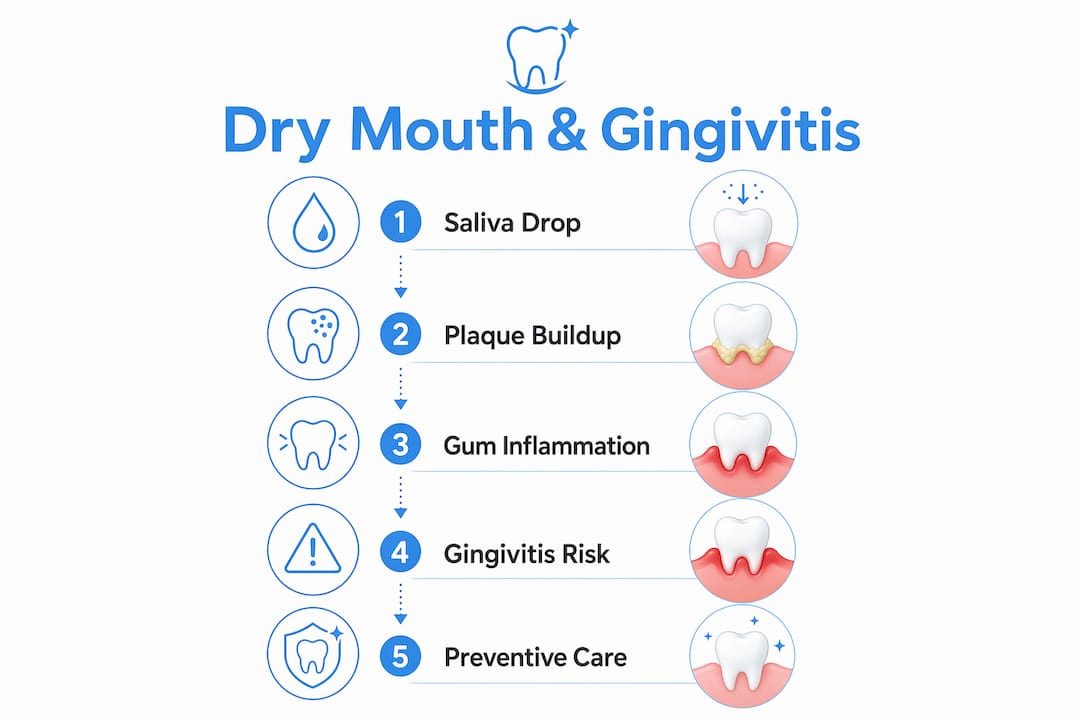
Dry mouth, medically known as xerostomia, is defined as a reduction in saliva flow that directly causes gingivitis by promoting bacterial growth and plaque buildup on the gums. Saliva is your mouth’s first line of defense against gum disease. Without enough of it, harmful bacteria multiply faster, plaque accumulates on the gum line, and the tissue becomes inflamed. If you are experiencing dry mouth and noticing tender or bleeding gums, the connection is real and well documented. Understanding it is the first step toward protecting your oral health.
Can dry mouth cause gingivitis?
Yes. Dry mouth causes gingivitis by removing the protective functions that saliva normally provides. Xerostomia affects roughly 20% of older adults and raises the risk of both gingivitis and periodontitis by increasing plaque and lowering oral pH. That statistic matters because it means one in five older adults is already at elevated risk for gum disease simply because of reduced saliva flow.
The clinical term for this condition is xerostomia, and it describes a measurable drop in salivary output rather than just occasional dryness. Gingivitis is the inflammation of the gum tissue caused by plaque buildup at the gum line. When saliva flow drops, plaque forms faster and the gums respond with redness, swelling, and bleeding. The relationship between dry mouth and gingivitis is direct, not coincidental.
How does saliva protect your gums?
Saliva does far more than keep your mouth comfortable. It performs four critical functions that protect your gums every hour of the day:
Lubrication: Saliva coats the oral tissues and prevents friction and irritation along the gum line.
Antimicrobial action: Proteins like lysozyme and lactoferrin in saliva actively kill harmful bacteria before they colonize the gums.
pH buffering: Saliva neutralizes acids produced by bacteria, preventing the acidic environment that accelerates plaque formation.
Food clearance: Saliva physically washes food particles away from the teeth and gums, reducing the fuel available for bacterial growth.
When salivary flow drops, plaque accumulation increases significantly, and gingival inflammation follows. The gums do not fail on their own. They fail because the environment around them becomes hostile without adequate saliva. Patients who breathe through their mouths at night experience this effect acutely, since nighttime dryness accelerates the bacterial load that builds while they sleep.
Pro Tip: Sip water consistently throughout the day in small amounts rather than drinking large quantities infrequently. Frequent small sips maintain moisture at the gum line far more effectively for managing dry mouth and preventing plaque buildup.

What causes dry mouth and raises gingivitis risk?
Dry mouth has many causes, and several of them also independently raise the risk of gum disease. Knowing which factors apply to you helps you address the problem at its source.
Medications: Antihistamines, decongestants, antidepressants, and blood pressure medications are among the most common causes of medication-induced xerostomia. Adjusting medication timing to daytime hours reduces the risk of overnight plaque buildup and gingival inflammation.
Systemic diseases: Sjögren’s syndrome directly attacks the salivary glands. Diabetes impairs salivary gland function and also raises gingivitis risk through elevated blood sugar, creating a compounding effect.
Mouth breathing: Breathing through the mouth, whether from nasal congestion or habit, dries the oral tissues and accelerates bacterial growth along the gum line.
Age: Older adults experience reduced salivary gland output as a natural part of aging, which is why xerostomia prevalence is highest in this group.
Smoking and poor oral hygiene: Both are independent gingivitis risk factors that become significantly more damaging when combined with dry mouth, since saliva can no longer compensate for the added bacterial load.
Each of these causes creates a different entry point into the same problem. A patient on antihistamines who also smokes faces a compounded risk that requires a targeted response, not a generic one.
What does the research say about dry mouth and gum disease?
The scientific evidence linking xerostomia to gingivitis and periodontitis is clear and growing. A 2026 study found that patients with hyposalivation have 2.63 times higher odds of recurrent periodontitis compared to those with normal saliva flow. That odds ratio is clinically significant. It means dry mouth is not a minor inconvenience for gum health. It is a major risk multiplier.
The same research measured unstimulated salivary flow rates and found that patients with periodontitis averaged 0.38 mL/min compared to 0.53 mL/min in healthy controls. Lower flow rates correlated directly with increased bleeding on probing, which is the standard clinical marker for active gum inflammation. The numbers confirm what dentists observe in practice every day.
Treating gum inflammation alone is insufficient. Effective management requires simultaneous treatment to restore salivary flow for stable periodontal health.
The relationship between gum disease and dry mouth is also bidirectional. Gum inflammation can reduce salivary gland function, which worsens dryness and accelerates plaque buildup further. This cycle means that patients who ignore either condition allow both to worsen together. Breaking the cycle requires addressing both simultaneously.
One important nuance: some patients report dry mouth symptoms despite having measurable saliva flow within normal ranges. This is called pseudo-xerostomia. These patients still need customized periodontal and mucosal care because their subjective dryness affects their oral hygiene behavior and tissue health, even without confirmed hyposalivation.
Salivary flow metric | Patients with periodontitis | Healthy controls |
Unstimulated flow rate | 0.38 mL/min | 0.53 mL/min |
Odds of recurrent periodontitis | 2.63x higher | Baseline |
Bleeding on probing | Increased | Lower |
How can you manage dry mouth to prevent gingivitis?
Managing dry mouth to protect your gums requires changes at home and in the dental chair. The following steps are grounded in clinical evidence and practical experience.
Brush more frequently. Patients with dry mouth benefit from brushing after every meal, not just twice a day. Reduced saliva clearance means food debris stays on the gum line longer.
Choose the right products. Oral hygiene products adapted for sensitive dry mucosa improve treatment outcomes. Look for alcohol-free rinses, gentle toothpastes without harsh abrasives, and mucosal lubricants designed for xerostomia.
Adjust medication timing. If a medication causes dry mouth, ask your prescribing physician about taking it during the day rather than at night. Nighttime dryness is when bacterial growth does the most damage to gums.
Use saliva stimulants. Sugar-free gum containing xylitol stimulates saliva production. Prescription saliva substitutes and mucosal lubricants provide relief when natural stimulation is insufficient.
Schedule more frequent hygiene appointments. Patients with dry mouth often need professional cleanings every three months rather than every six to successfully control gingivitis and prevent progression to periodontitis.
Stay consistently hydrated. Small sips of water throughout the day maintain moisture at the gum line. Avoid caffeine and alcohol, which both reduce saliva production.
Pro Tip: Some over-the-counter dry mouth remedies contain ingredients that actually suppress saliva further. Read labels carefully and ask your dentist before adding any new oral care product to your routine.
What is the impact of dry mouth on dental treatment outcomes?
Dry mouth does not just affect your gums in isolation. It affects how well dental treatments work and how quickly your mouth heals. Patients with xerostomia face a distinct set of challenges when undergoing restorative or periodontal care.
Restoration failure: Dry mouth accelerates failure of dental restorations and raises the risk of secondary cavities. Without saliva’s buffering and lubricating functions, crowns, fillings, and bridges are exposed to a more acidic and abrasive environment.
Delayed healing: Reduced salivary clearance slows healing after periodontal treatment. Mouth breathing in particular delays gingival improvements following scaling and root planing.
Higher caries risk: The same bacterial environment that drives gingivitis also attacks tooth enamel, meaning dry mouth patients often face both gum disease and decay simultaneously.
Need for tailored maintenance: Standard six-month recall intervals are not sufficient for most xerostomia patients. A three-month schedule allows the dental team to catch early signs of gingival inflammation before they progress.
The most effective approach combines periodontal care with active management of the dry mouth condition itself. Treating one without the other leaves the underlying cycle intact. Patients who receive dental hygiene care tailored to their xerostomia consistently achieve better gum health outcomes than those on standard protocols.
Key Takeaways
Dry mouth directly causes gingivitis by reducing saliva flow, which increases bacterial load, accelerates plaque buildup, and inflames the gum tissue in a cycle that worsens without targeted treatment.
Point | Details |
Dry mouth raises periodontitis risk | Patients with hyposalivation have 2.63 times higher odds of recurrent periodontitis. |
Saliva is active protection | Saliva buffers pH, kills bacteria, and clears food particles that fuel gum inflammation. |
The relationship is bidirectional | Gum inflammation reduces salivary gland function, worsening dryness and plaque buildup further. |
Medication timing matters | Taking dry-mouth-causing medications during the day reduces overnight bacterial damage to gums. |
More frequent care is required | Patients with dry mouth benefit from professional cleanings every three months, not every six. |
What I have seen treating patients with both conditions
Dry mouth is one of the most underestimated contributors to gum disease I encounter in practice. Patients come in with persistent gingivitis, they brush consistently, and they cannot understand why their gums keep bleeding. The conversation about dry mouth almost always reveals the missing piece.
The most common misunderstanding I see is that patients treat dryness as a comfort issue rather than a clinical one. They sip water occasionally and assume that is enough. What they do not realize is that saliva is not just moisture. It is an active antimicrobial system. Replacing it with water helps, but it does not replicate what saliva actually does at the gum line.
The patients who make the most progress are the ones who commit to three things at once: consistent hydration habits, a home care routine adapted for dry mucosa, and more frequent professional appointments. When all three happen together, the gum inflammation responds. When only one or two happen, the cycle continues.
Pseudo-xerostomia is also something I take seriously. If a patient tells me their mouth feels dry, I do not dismiss it because their flow rate tests normal. Subjective dryness changes how people care for their mouths, and that behavioral shift has real consequences for gum health.
— Mersal
Dry mouth and gingivitis care at Mersaldental
Mersaldental, located in lower town Ottawa, provides professional care for patients managing both dry mouth and gum disease. We accept new patients, offer direct insurance billing, and accept the CDCP program.

Our team creates personalized care plans that address xerostomia and gingivitis together, because treating one without the other rarely produces lasting results. We offer professional hygiene appointments on a schedule tailored to your needs, fluoride treatments, and product recommendations suited for sensitive dry oral tissue. For patients with more advanced concerns, we provide same-day treatments and emergency services. Visit Mersaldental to book a consultation and get a care plan built around your specific oral health needs.
FAQ
Can dry mouth cause gingivitis on its own?
Yes. Dry mouth reduces saliva flow, which increases bacterial growth and plaque accumulation directly on the gum line, causing gingivitis even in patients with otherwise good oral hygiene habits.
Does dehydration cause gingivitis?
Dehydration reduces saliva production, which creates the same conditions as xerostomia. Chronic dehydration raises gingivitis risk by lowering the mouth’s natural ability to clear bacteria and buffer acids.
What are the symptoms of gingivitis and dry mouth together?
Patients with both conditions typically experience bleeding or tender gums, persistent bad breath, a sticky or parched feeling in the mouth, and difficulty chewing or swallowing dry foods.
How often should I see a dentist if I have dry mouth?
Patients with dry mouth benefit from dental visits every three months rather than every six. More frequent professional cleanings prevent gingivitis from progressing to periodontitis.
Can treating dry mouth reverse gingivitis?
Restoring adequate saliva flow removes a key driver of gum inflammation, and many patients see significant improvement in gingival health when xerostomia is managed alongside professional periodontal care.
Recommended
Comments