Parents: Dental Sealants Cut Back Tooth Cavities by up to 80%

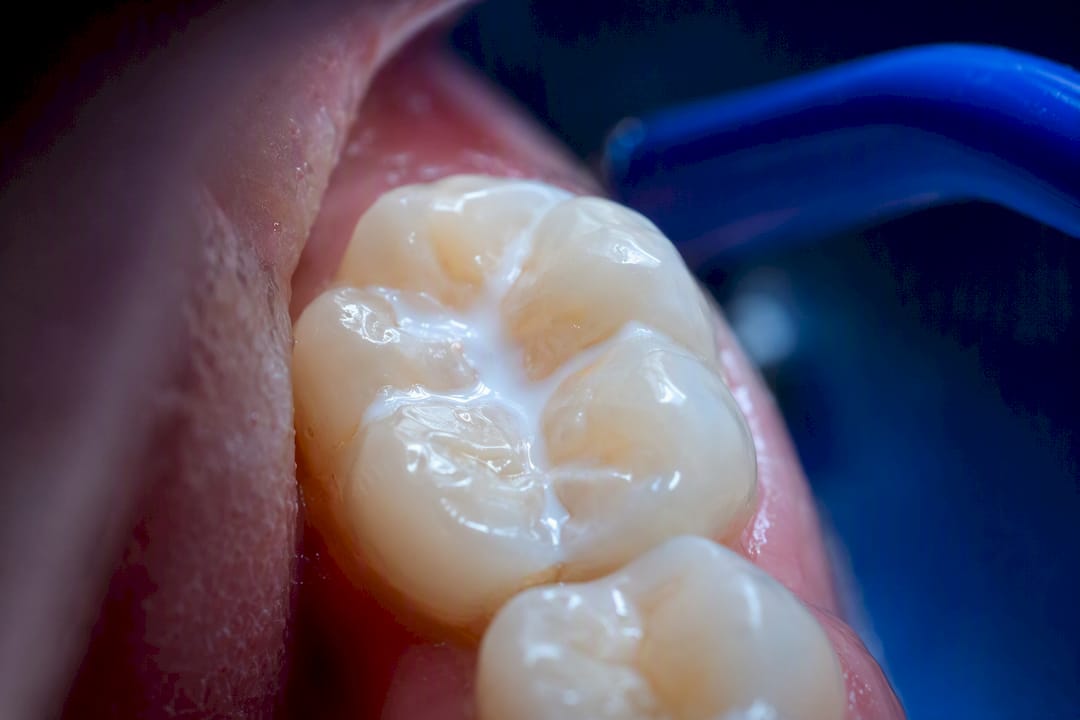
Yes, dental sealants are a smart, evidence-backed way to protect your child’s molars from cavities, and most dentists recommend them for kids at risk of decay. The coating takes minutes to apply, causes no pain, and works as a physical shield against the food and bacteria that cause most childhood cavities. Ask your dentist about sealants as soon as permanent molars come in, and bring it up at your child’s next checkup.
TL;DR:
Sealants are most effective when applied immediately after molars erupt, typically around ages 6 and 12, especially for children with deep grooves or previous cavities.
They prevent up to 80% of cavities in back teeth within the first two years and continue providing protection, reducing decay risk significantly.
Sealants are quick, painless, and do not require anesthesia, with the application process lasting only a few minutes per tooth.
Both resin and glass ionomer sealants are used depending on moisture control; durability and fluoride release are key factors in the choice.
Regular dental checkups are essential to monitor sealant retention and maintain overall oral health, alongside consistent brushing and flossing.
Table of Contents
What Are Dental Sealants and How Do They Work?
Dental sealants are a thin plastic coating painted onto the chewing surfaces of back teeth, where deep pits and grooves trap food and bacteria. Those grooves are nearly impossible to clean with a toothbrush alone, even with careful brushing habits. The sealant fills them in, creating a smooth, sealed surface that keeps cavity-causing bacteria out.
Think of it like grout in a tile floor. Without it, dirt works its way into every crack. Seal the cracks, and there’s nowhere for the mess to hide.
Sealants are typically placed on:
First and second permanent molars, where the deepest grooves sit
Premolars, when grooves are unusually deep
Occasionally, primary (baby) molars in kids with high cavity risk
The material is applied directly to clean, dry enamel and hardened with a curing light, forming a durable barrier that stays in place through years of chewing.
Who Needs Sealants, and When Should You Schedule Them?
Age matters less than risk. A child with a history of cavities, deep tooth grooves, or inconsistent brushing benefits more from sealants than a low-risk child of the same age. Dentists weigh each child’s individual situation rather than applying sealants automatically at a set birthday.
That said, timing lines up closely with when key molars erupt:
First permanent molars: usually around age 6, right when they break through the gumline
Second permanent molars: usually around age 12
Primary molars: sometimes sealed early if a child has deep grooves or limited access to regular dental care
Watch for these risk indicators, which often prompt an earlier conversation about sealants:
Previous cavities in baby teeth
Visibly deep pits or grooves on new molars
Snacking frequently on sugary or starchy foods
Limited fluoride exposure or infrequent dental visits
If any of these sound like your child, ask about sealants at the very next appointment rather than waiting for a scheduled recall visit.
Do Sealants Actually Prevent Cavities? Here’s the Evidence
The data on sealants is about as strong as preventive dentistry gets. The CDC reports that sealants can prevent up to 80% of cavities in the back teeth for two years after placement, with protection continuing at a reduced level for years beyond that window.
The ADA and American Academy of Pediatric Dentistry’s joint clinical guideline recommends sealants specifically to prevent occlusal (chewing-surface) cavities in kids and teens, citing substantial drops in decay compared to leaving molars unsealed. That guideline also notes sealants tend to outperform fluoride varnish specifically on those deep-grooved chewing surfaces, though fluoride still plays an important complementary role elsewhere in the mouth.
The public-health case is just as compelling. School-based sealant programs reach kids who might otherwise skip dental visits entirely, and the CDC points to these programs as a cost-effective way to cut cavity rates at scale, particularly in communities with limited access to private dental care.
How Sealants Are Applied: What Happens at the Appointment
Getting sealants placed is quick and painless. No drilling, no needles, no numbing required. Here’s what actually happens in the chair:
Cleaning and drying: The dentist or hygienist cleans the tooth surface and keeps it completely dry, since moisture interferes with how well the sealant bonds.
Etching: A mild acidic gel roughens the enamel slightly, which helps the sealant grip the tooth. It’s rinsed off after a few seconds.
Applying the sealant: The liquid resin is painted directly into the pits and grooves of the tooth.
Curing: A blue curing light hardens the material in seconds, locking it into place.
Bite check: The dentist checks that your child can bite down comfortably and adjusts if the sealant feels too high.
The whole process usually takes just a few minutes per tooth, and most kids tolerate it easily since there’s no discomfort involved.
Pro Tip: If your child gets anxious in the dental chair, ask the office about kid-friendly pacing, like counting steps out loud or letting your child hold a stuffed animal. Most pediatric-focused practices have simple tricks that turn a nervous appointment into a fast, easy one.
Bring your insurance card or benefits information to the visit. Sealants are billed under a specific procedure code, and having your coverage details ready speeds up the paperwork.
Resin vs. Glass Ionomer: Which Sealant Material Is Used?
Dentists choose between two main materials, and the decision usually comes down to how well they can keep the tooth dry during placement.
Resin-based sealants offer stronger retention and are the go-to choice when a dentist can keep the tooth well isolated from saliva.
Glass ionomer sealants release fluoride over time and work better in situations where moisture control is tricky, such as with a squirmy toddler or a partially erupted molar.
Clinical guidelines don’t strongly favor one material across every case. The dentist’s judgment about isolation and cooperation in the moment usually decides which one goes on your child’s tooth.
How Long Do Sealants Last, and What Maintenance Do They Need?
Sealants can hold up for several years, though how long they last for your child depends on the material used, how newly the tooth erupted, and everyday chewing forces. A sealant placed on a molar that’s still finishing its eruption may need a touch-up sooner than one placed on a fully settled tooth.
Retention tends to drop off faster on newly erupted molars, since the surrounding gum tissue is still shifting.
Heavy grinding or chewing can wear down edges over time, creating small gaps.
Routine dental checkups, ideally every six months, include a quick check of existing sealants so a dentist can catch and repair any chipping before decay sets in.
Sealants work alongside brushing, flossing, and fluoride, not instead of them. Skipping brushing because a molar is sealed defeats the purpose. The sealant protects one surface. Everything else on that tooth still needs regular care.
Are Dental Sealants Safe? Downsides and Limitations
Sealants have a strong safety record. The materials used are the same resin and glass ionomer compounds used in other routine dental work, and true allergic reactions are uncommon.
That said, sealants aren’t a fix-all. They won’t repair an existing cavity or replace a filling once decay has reached the deeper layers of a tooth. Dentists sometimes place sealants over very early, noncavitated lesions to halt progression, but that decision requires a proper clinical diagnosis first, not a guess. If a tooth already has a cavity that’s progressed past that early stage, a filling is the right call, not a sealant.
A dentist may also skip sealants on a tooth with an existing large restoration, since there’s often little healthy grooved surface left to protect. This is exactly why an exam matters more than a general rule of thumb.
Getting Sealants for Your Child: Coverage and Access Options
The easiest path is simply asking about sealants at your child’s next routine dental visit. Most dentists evaluate a child’s cavity risk at every checkup and will flag if a newly erupted molar is a good candidate.
Many dental insurance plans cover pediatric sealants under a specific benefit code, so it’s worth checking your plan details before the appointment.
Parents without private coverage may qualify for public programs. Reviewing CDCP eligibility for kids can clarify whether your family qualifies for reduced-cost preventive care, including sealants.
School-based sealant programs exist in many communities specifically to reach kids who don’t see a dentist regularly, and the CDC highlights these programs as an effective way to close that gap.
If you’re not sure where your child’s next visit fits into the calendar, a quick look at how often dental checkups should happen can help you plan ahead.
Getting Your Child Ready: Care Before and After the Appointment
There’s not much prep required before a sealant appointment, which is one reason it’s such a low-stress visit compared to other dental work. A regular breakfast or lunch beforehand is fine since no anesthesia is involved. If your child gets nervous about dental visits in general, a short conversation beforehand describing the process in simple terms (no needles, no drilling, just a “tooth paint” that hardens with a light) tends to ease worries more than surprising them in the chair.
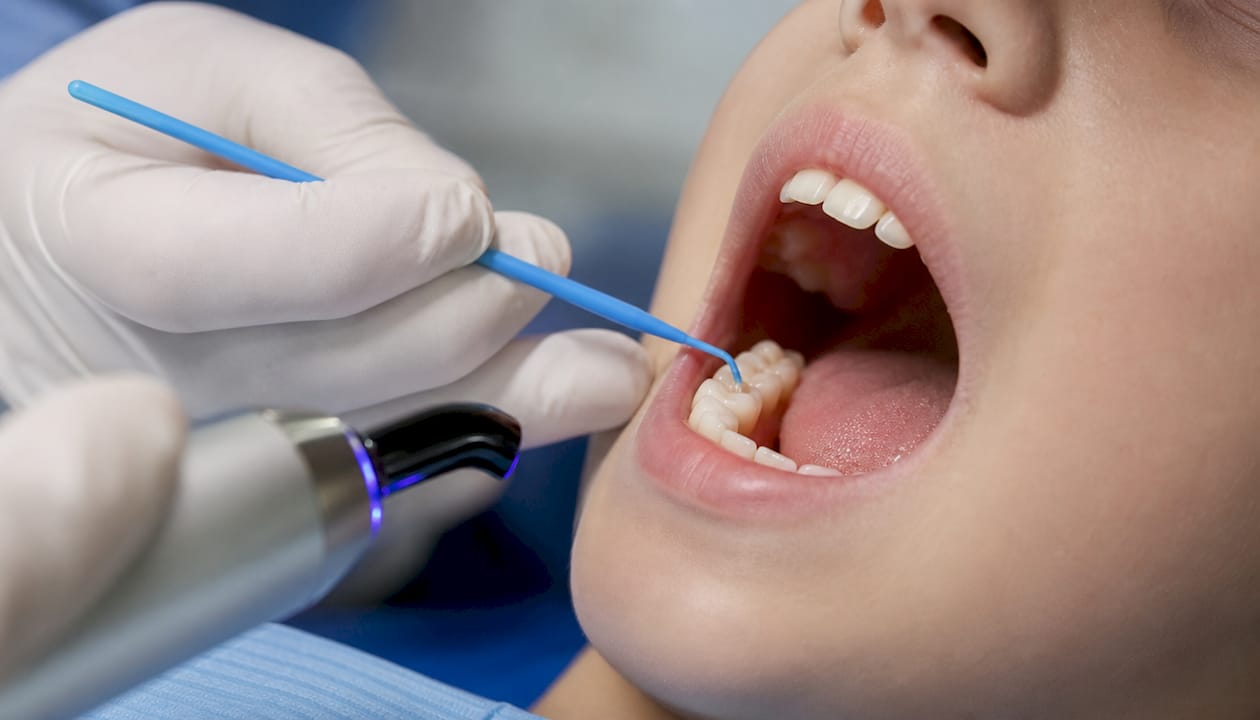
The dentist will want the tooth surface completely dry during etching and application, so your child will need to keep their mouth open and hold still for a few minutes per tooth. Older kids usually manage this without issue. Younger children sometimes need a short break between teeth, which most dental offices are happy to accommodate.
Afterward, there’s genuinely little to do. Sealants are hardened immediately with the curing light, so there’s no waiting period before your child can eat or drink normally. Skip anything very hard or sticky, like ice or taffy, for the rest of that day as a simple precaution, but otherwise normal eating resumes right away.
Keep up with regular brushing and flossing exactly as before. The sealant protects the grooved chewing surface, but the sides of the tooth and the gumline still need the same daily care. At your child’s next cleaning, the dentist will check that the sealant is intact and hasn’t chipped or worn thin, which is a routine part of any recall visit rather than something that requires scheduling separately.
Sealants vs. Fluoride: Why Kids Often Need Both
Parents often ask whether sealants and fluoride treatments do the same job. They don’t, and that’s exactly why most guidelines recommend both rather than choosing one over the other.
Fluoride works chemically. It strengthens enamel across the entire tooth surface, making it more resistant to the acid produced by bacteria, and it can even help repair very early enamel damage before a cavity fully forms. Fluoride treatment reaches every surface of every tooth, smooth or grooved, front or back.
Sealants work physically. They don’t strengthen enamel chemically at all. Instead, they block the deep pits and grooves on chewing surfaces where a toothbrush bristle can’t reach and where fluoride alone has less impact. That’s an important distinction: the ADA/AAPD guideline specifically notes that sealants tend to outperform fluoride varnish on those occlusal surfaces, precisely because it physically seals off the problem area rather than just hardening the surface around it.
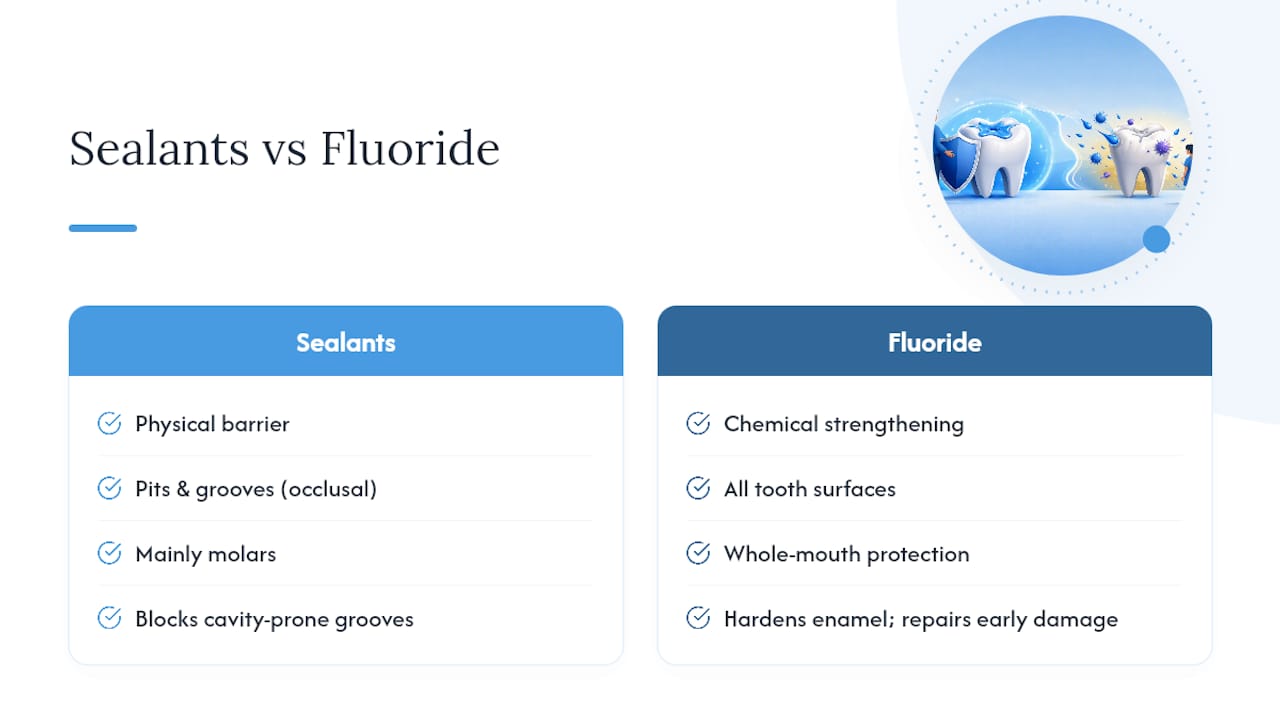
In practice, most dentists use both as complementary tools. Fluoride treatment (often applied as a varnish during a regular cleaning) protects the whole mouth. Sealants add a targeted layer of defense on the molars doing the most chewing work and collecting the most food debris. Skipping one in favor of the other leaves a gap in protection that the other tool was specifically designed to cover.
Common Myths About Dental Sealants, Debunked
A lot of hesitation around sealants comes from outdated or simply incorrect information. Here are the misconceptions that come up most often in conversations with parents.
Myth: Sealants are just a way for dentists to make extra money. Sealants are one of the most cost-effective preventive treatments in dentistry, and public-health programs fund them specifically because they save money by preventing far more expensive fillings and root canals down the line. The CDC promotes school sealant programs precisely because prevention costs less than treatment at scale.
Myth: Sealants hurt to apply. There’s no drilling and no anesthesia. The entire process involves cleaning, a mild etching gel, painting on the sealant, and curing it with a light. Most kids find it less eventful than a regular cleaning.
Myth: Once a tooth is sealed, it’s cavity-proof forever. Sealants dramatically reduce risk on the surfaces they cover, but they don’t make a tooth invincible, and they can wear down over time. Regular checkups still matter for catching wear and reapplying when needed.
Myth: Sealants replace the need for brushing and flossing. A sealed molar still needs daily brushing. The sealant protects one part of one tooth. Every other surface, and the gumline, still depends on your child’s regular oral hygiene habits.
Myth: Only kids with cavities need sealants. Waiting until a child already has a cavity misses the entire point. Sealants work best as prevention, placed before decay has a chance to start in those deep grooves.
A Clinic’s View on When to Act
We see the biggest wins when parents ask about sealants the moment a child’s first molars finish erupting, not months later. In our chairs, a short distraction (counting, a favorite song, a quick play-by-play of each step) keeps most kids relaxed enough to finish in minutes.
— Mersal
Book a Sealant Consultation for Your Child
A straightforward path to preventive care includes options like same-day appointments, direct insurance billing, and CDCP acceptance to help reduce barriers related to cost and scheduling for cavity-prevention treatments. If your child’s molars have come in or are on their way, a cleaning visit is the natural place to have a dentist evaluate whether sealants make sense right now.

Our team handles the paperwork on insurance and CDCP claims directly, so you’re not stuck deciphering benefit codes on your own. Beyond preventive care, we also offer restorations if a cavity has already progressed past the point sealants can help. Call our downtown Ottawa office or book online to get your child’s next checkup on the calendar, and ask specifically about sealants when you schedule.
This article is general information, not a substitute for advice from a qualified doctor. Consult a qualified healthcare professional about your own circumstances before acting on anything here.
Sources
This guide draws on the clinical guidance Mersal Dental uses every day: the ADA/AAPD sealant guideline, CDC prevention data, NIDCR’s procedural description of sealant placement, and the StatPearls clinical summary on pit-and-fissure sealants. Mersal Dental offers same-day preventive appointments, direct insurance billing, and CDCP acceptance for families in downtown Ottawa, backed by patient resources like our dental cleaning appointment guide.
FAQ
Are Sealants a Good Idea for Kids?
Yes, for most children, especially those with deep molar grooves or a history of cavities. The CDC notes sealants can prevent up to 80% of cavities in back teeth for two years, with continued protection afterward.
What Are the Downsides of Dental Sealants?
Sealants can’t fix existing cavities and may need repair or reapplication over time as they wear down. They also don’t replace brushing, flossing, or fluoride, which remain necessary for full protection.
Why Do Dentists Recommend Sealants So Often?
Dentists recommend sealants because the evidence supporting them is strong and the treatment is quick, painless, and inexpensive compared to treating a cavity later. The ADA/AAPD guideline backs sealants specifically because they meaningfully reduce occlusal cavities in children and teens.
Is It Appropriate to Get Sealants on My 6-Year-Old’s Molars?
Yes, age 6 is typically when first permanent molars erupt, which is exactly when dentists recommend evaluating a child for sealants. Timing depends more on when those molars come in than on the exact birthday, so ask your dentist as soon as you notice new molars.
How Much Do Dental Sealants Cost for Kids?
Costs vary by provider and location, and many dental insurance plans cover pediatric sealants under a specific benefit code. Direct insurance billing and CDCP acceptance are among the billing options available, and current pricing details are available by contacting the office directly.
Recommended
Comments