3 Treatment Goals That Guide Gum Recession Care at Mersal Dental
- Mayde Mersal
- 5 days ago
- 9 min read

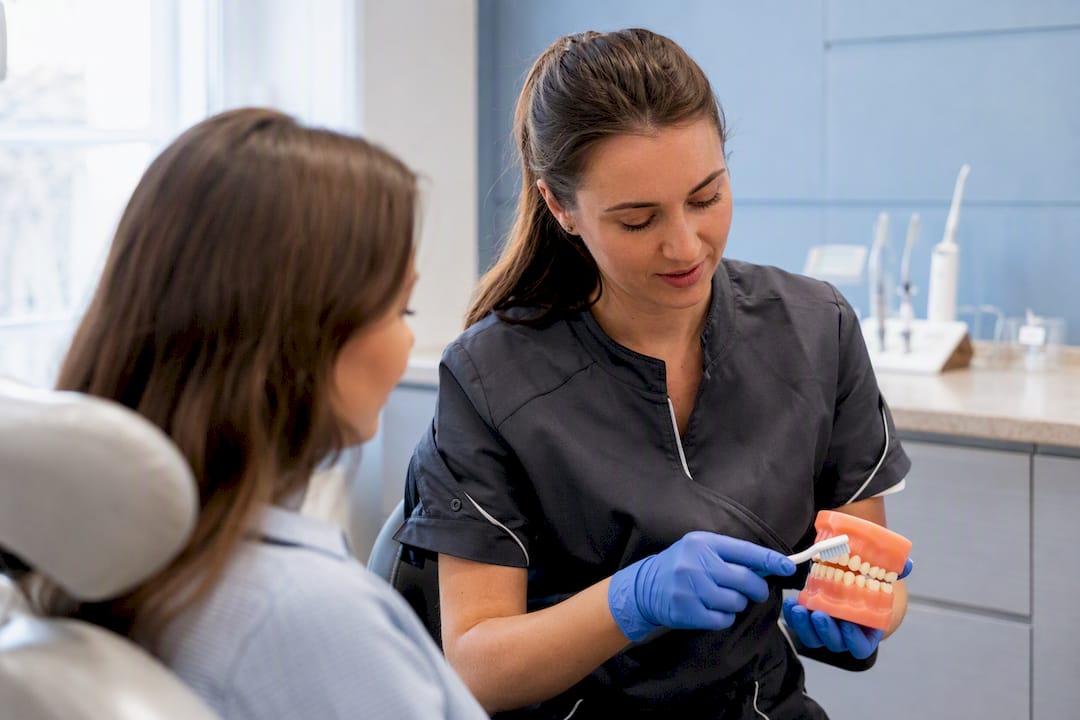
Gum recession does not heal on its own once tissue pulls back from the tooth root, so at home care alone will not reverse it. Treatment for gum loss focuses on three goals: stopping the recession from progressing, calming sensitivity, and rebuilding gum tissue surgically when coverage is needed for health or appearance. The right next step is a dental exam to find out whether your case needs non-surgical stabilization or a referral for grafting.
TL;DR:
Non-surgical treatment options like scaling and root planing can stabilize mild recession and control symptoms when active infection or instability is absent.
Graft procedures, especially connective tissue grafts, remain the most predictable options for root coverage but require careful case selection and may involve a second surgical site.
Addressing habits such as aggressive brushing, tobacco use, and bruxism through behavioral changes significantly helps prevent further recession.
When recession accompanies deep tooth wear or non-carious cervical lesions, combining restorative work with surgical coverage improves outcomes.
A comprehensive dental exam, including attachment measurement and disease assessment, is essential for tailoring effective and realistic treatment strategies.
Table of Contents
What Is Gum Recession and Why Does It Matter?
Gum recession happens when the gum margin migrates downward, or “apical,” exposing the root surface that enamel was designed to protect. Root surfaces have no enamel coating, so once they’re exposed, they’re vulnerable in ways the crown of the tooth never was.
The consequences build over time rather than appearing overnight. You’ll typically notice:
Sharp sensitivity to cold drinks, ice cream, or cold air
A higher risk of root caries, since root surfaces decay faster than enamel
A tooth that looks longer than its neighbors
Ongoing attachment loss if periodontal disease is still active underneath
Adults over 40 see this most often, but it’s not exclusively an aging issue. People with a thin gum biotype, smokers, and anyone with a history of aggressive brushing or inconsistent plaque control tend to show recession earlier and more severely than their peers.
What Are the Symptoms and Causes of Gum Recession?
The earliest sign is usually a jolt of cold sensitivity that seems to come from nowhere. Look for a visible dip in the gumline, a tooth that appears elongated, or a small notch where the gum used to sit higher on the tooth.
The causes split into a few clear categories:
Periodontal disease: bacterial infection breaks down the bone and soft tissue that hold gums in place
Aggressive brushing: scrubbing with a hard-bristled brush or heavy pressure wears the gum margin away over years
Tobacco use: reduces blood flow to gum tissue and slows healing
Bruxism: nighttime grinding puts abnormal force on the gumline
Malocclusion or orthodontic movement: teeth pushed outside the bone envelope thin the gum covering them
Overhanging restorations: old fillings or crowns with poor margins trap plaque against the gum
Less obvious contributors include oral piercings that rub against gum tissue, prior dental work that altered the gum architecture, and some whitening or abrasive toothpaste formulas used daily for years.
Pro Tip: If you notice sensitivity only on one or two teeth rather than across your whole mouth, mention that pattern to your dentist specifically. Localized recession often points to a mechanical cause, like a hard-bristled brush habit, rather than generalized periodontal disease.
How Do Dentists Diagnose Gum Recession?
A proper exam goes beyond a visual check. Your dentist or periodontist measures several things:
Pocket depth, using a periodontal probe to check for space between gum and tooth that signals active disease
Clinical attachment level, which tracks how much support tissue has actually been lost
Keratinized tissue height, since a thin band of tough gum tissue affects how well grafting will hold
Gum biotype and tooth mobility, both of which shape whether surgery is realistic and how it should be planned
Some situations need attention sooner rather than later. Rapid recession over a few months, gum pain, swelling or pus, loose teeth, new decay at the root surface, or sensitivity bad enough to change how you eat are all reasons to get seen promptly rather than waiting for a routine cleaning. A referral to a periodontist typically follows when multiple teeth are affected, active periodontal disease is present, or surgical planning is on the table.
Non-Surgical Gum Recession Treatment: When Is It Enough?
Not every case of gum recession needs a scalpel. When recession is mild, stable, and not tied to active infection, non-surgical management often controls symptoms and stops the problem from getting worse.
Scaling and root planing removes the bacterial biofilm and hardened plaque sitting below the gumline, which reduces inflammation and can stabilize a site that’s still losing attachment. This is frequently the first step regardless of what happens later, because grafting onto inflamed tissue rarely succeeds.
Beyond the dental chair, changing daily habits matters more than most patients expect:
Switch to a soft-bristled brush and a gentler technique, such as a modified Bass method, instead of scrubbing
Quit tobacco, which improves blood flow and healing capacity in gum tissue
Address nighttime grinding with a night guard if bruxism is contributing
For sensitivity, in-office fluoride varnish and desensitizing agents like potassium nitrate or stannous fluoride toothpaste reduce nerve response in exposed dentin when used consistently. Tooth-colored bonding over the exposed root can also cover sensitive areas and improve appearance without surgery, which works well for cosmetic concerns or mild cases where grafting isn’t warranted. When crowding or tooth position is driving the recession, orthodontic correction can move the tooth back within its bone envelope, giving the gum tissue a better chance to hold.
It’s worth being honest about limits here: at-home measures like gentle brushing and quitting tobacco cannot regrow tissue that’s already lost, even though they’re genuinely effective at preventing further recession. A hygiene visit is the place to start sorting out which category your case falls into.
Surgical Options for Gum Recession: Grafting, Flaps, and Alternatives
When recession has progressed, root coverage is desired for comfort or appearance, or non-surgical care hasn’t stabilized the site, surgery becomes the realistic path forward. Several techniques exist, and they’re not interchangeable.
Connective tissue graft (CTG) with coronally advanced flap (CAF) remains the most extensively studied and predictable approach for covering exposed roots. A small piece of tissue, usually taken from the palate, is placed over the recession site and the gum flap is repositioned coronally, or upward, to cover it. This combination doesn’t just cover the root. It also thickens the gum tissue, which tends to make future recession less likely at that site.
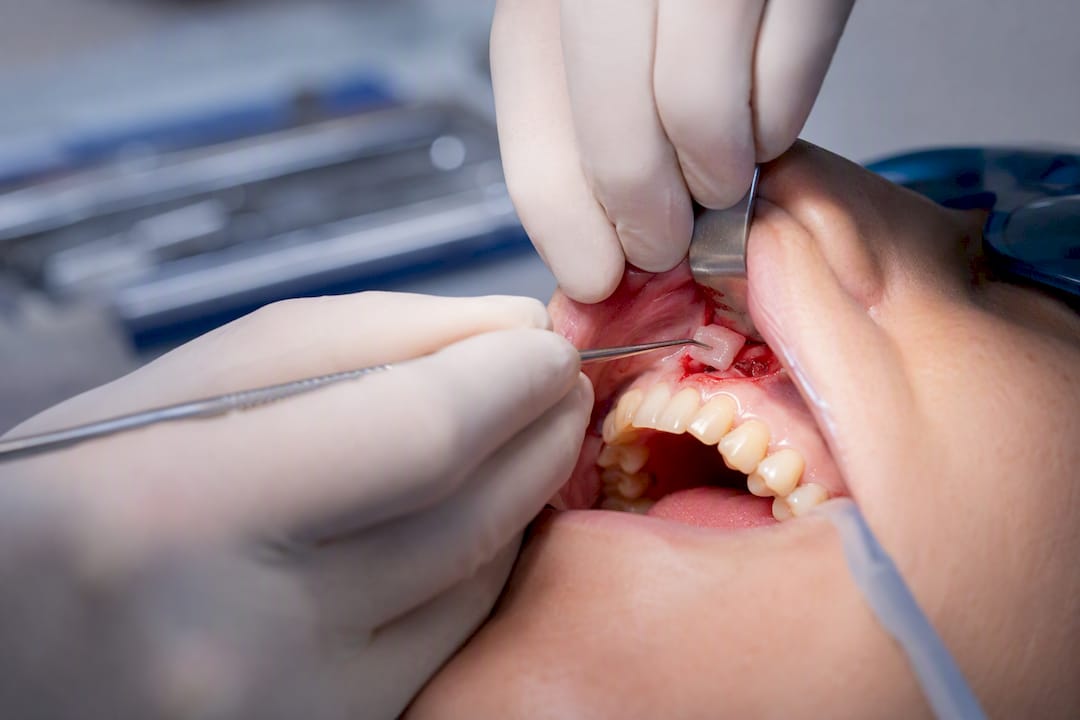
Tunneling and the modified coronally advanced tunnel (MCAT) work through small tunneled incisions rather than a full flap, which can mean less visible scarring and a gentler recovery. Outcomes are generally comparable to CAF for certain defect types, though case selection matters more than with a standard flap.
Pinhole surgical technique (PST) offers a minimally invasive route through tiny access points, with instruments used to reposition existing gum tissue coronally instead of adding a graft. It appeals to patients wary of a donor-site incision, but independent long-term outcome data remain smaller than what exists for CTG, and because no tissue is added, it won’t thicken a thin biotype the way a graft can.
Biomaterials, including acellular dermal matrix and collagen matrix, replace the need for palatal donor tissue entirely. They spare patients a second surgical site and often shorten recovery, but they can trade some long-term predictability for that convenience, particularly in more advanced defects.
Technique | Tissue source | Key advantage | Key limitation |
CTG + CAF | Patient’s own palate | Most predictable, thickens tissue | Second surgical site, more discomfort |
Tunneling / MCAT | Patient’s own palate | Less visible scarring | Requires precise case selection |
Pinhole (PST) | None added | Minimally invasive | No added tissue volume, less long-term data |
Acellular dermal matrix / collagen matrix | Donor-derived | No palatal donor site needed | Slightly less predictable long-term |
Recovery from most grafting procedures runs one to two weeks for initial healing, with full tissue maturation taking a few months. Sensitivity relief often shows up within weeks, while full root coverage percentages vary by technique and defect severity, which is exactly why a personalized evaluation matters more than a generic number.
Pro Tip: Ask your periodontist what percentage of the root they expect to cover, not just whether the procedure will “work.” Complete coverage and partial coverage are both legitimate outcomes depending on the defect, and knowing the realistic target ahead of time prevents disappointment later.
Managing Combined Defects: Gum Recession Plus Tooth Wear
Gum recession frequently shows up alongside a specific type of tooth damage called a non-carious cervical lesion, or NCCL. This is a wedge-shaped notch at the gumline, usually from a mix of brushing force and stress on the tooth, rather than decay. Roughly half of all recession cases involve one of these lesions at the same site, and about a quarter of those cases are severe enough to need both restorative work and surgical root coverage for a good outcome, according to evidence-based recommendations on treating combined defects.
Clinicians work through a decision sequence rather than treating every combined defect the same way:
Restore first when the NCCL is deep but the recession is shallow and stable, since fixing the notch alone often resolves sensitivity
Combine restorative and surgical treatment when both the lesion and the recession are advanced enough that neither fix alone will hold or look right
Root coverage alone when the recession is the dominant problem and the tooth-wear notch is minimal
Getting this sequence right affects more than aesthetics. A graft placed over an unaddressed deep notch can fail to seat properly, while a restoration alone won’t stop attachment loss that’s still active underneath.
How to Prevent Gum Recession From Getting Worse
Preventing further recession comes down to a handful of habits that are simple but easy to get wrong. Brushing technique tops the list: a soft-bristled brush, light pressure, and a gentle circular or modified Bass motion protect the gumline far better than scrubbing side to side.
Daily interproximal cleaning, whether floss or a water flosser, removes plaque a toothbrush can’t reach between teeth. Skip heavily abrasive toothpaste and whitening products used every day, since they contribute to the same wear pattern as hard brushing.
On the professional side:
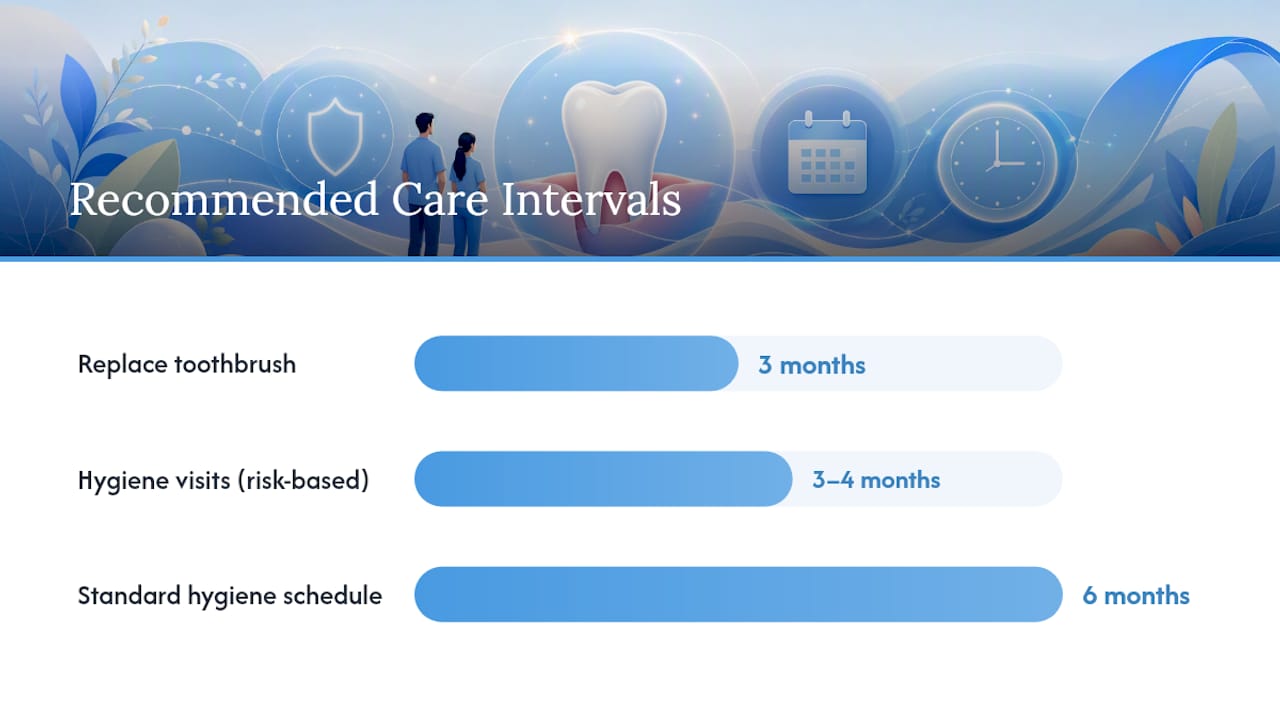
Book hygiene visits at the frequency your dentist recommends based on your personal risk, which may mean every three to four months rather than the standard six for anyone with active recession
Address bruxism with a night guard if grinding is a factor
Have overhanging or poorly fitted restorations corrected, since they trap plaque against the gum margin
Desensitizing toothpaste with potassium nitrate or stannous fluoride, along with a fluoride mouthrinse, supports comfort during this whole process. A sensitive teeth toothpaste chosen for daily use makes a real difference for patients managing exposed root surfaces long term.
Pro Tip: Replace your toothbrush the moment the bristles start splaying outward, usually around three months. Worn bristles lose their flexibility and effectively turn into a harder brush than the one you bought.
How Mersal Dental Approaches Gum Recession Treatment
Our approach starts with diagnosis, not assumptions. We measure attachment loss, check for active periodontal disease, and stabilize any inflammation before discussing whether grafting or another surgical option makes sense.
At an assessment, ask about your specific measurements, the treatment options that fit your case, realistic recovery time, and what your insurance covers. We recommend keeping documentation from every visit for insurance purposes. Mersaldental accepts CDCP and provides direct billing, which simplifies that part of the process considerably.
— Mersal
Book a Gum Recession Assessment With Mersaldental
Recession that’s already progressed needs more than a toothpaste swap, and figuring out which path fits your case starts with a proper exam, not a guess based on symptoms alone.

Mersaldental handles the full range of care a recession diagnosis might call for, from hygiene appointments and deep cleanings that stabilize early cases, to tooth-colored bonding and restorative work for combined defects, to coordinating surgical referrals when grafting is the right call. We offer same-day assessments, direct insurance billing, and accept CDCP, so cost questions get answered early rather than after a treatment plan is already set. Review our full range of services to see what’s included before you come in, and check your CDCP or IFHP eligibility ahead of your visit. Bring a list of your symptoms, any prior dental records you have, and your insurance information, and book your assessment to get a clear answer on where your gums stand and what treatment actually makes sense.
Sources
For deeper clinical detail, the PMC review on gingival recession treatment covers technique comparisons in full. Readers checking payment options should review the Government of Canada’s dental care plan page, and general dentistry practices comparing service scope can reference Complete Dental Care’s periodontal services overview. Our dental blog covers related topics in more depth.
This article is general information, not a substitute for advice from a qualified doctor. Consult a qualified healthcare professional about your own circumstances before acting on anything here.
Recommended
Comments