0–7 Day Tooth Extraction Aftercare: Mersal Clinician Checklist

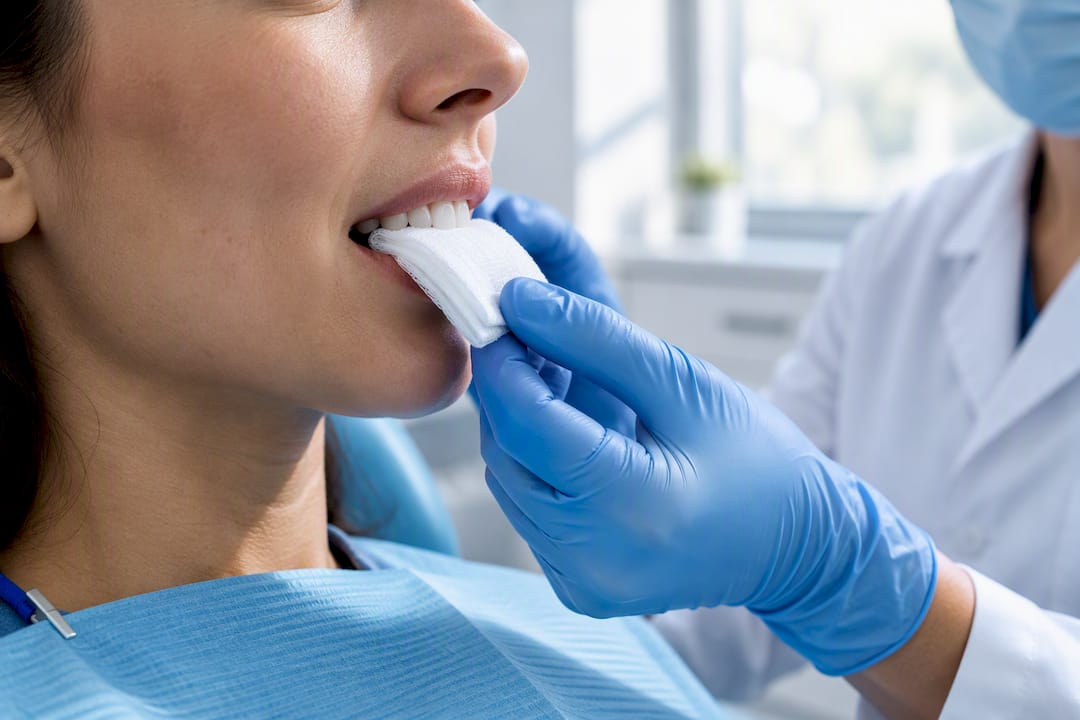
Bite firmly on the gauze your dentist gives you for 30 to 45 minutes to protect the blood clot forming in the socket. Skip rinsing, spitting, straws, and smoking for the first 24 hours, since any of these can dislodge that clot and slow healing. Rest with your head propped up on a pillow, and take your first dose of pain medicine before the numbness fully wears off so you stay ahead of the discomfort.
TL;DR:
Most swelling and discomfort peak around the second to third day, especially with surgical extractions, and should gradually improve afterward.
Protecting the blood clot by avoiding rinsing, spitting, straws, smoking, or alcohol during the first 24 hours is critical to prevent dry socket.
Gentle warm salt water rinses can be started after the first day, and soft foods should be maintained for at least three days to avoid disturbing healing.
Worsening swelling after day four or sudden pain on day three signals a need to contact the dentist promptly for evaluation.
Emergency symptoms such as uncontrolled bleeding, spreading swelling affecting breathing, or high fever require immediate medical attention.
Table of Contents
What to Expect in the First 24 to 72 Hours
Pain usually peaks on day one or two after a simple extraction, then eases steadily from there. Surgical extractions, including wisdom teeth, tend to hurt longer and swell more, so give yourself extra grace on the timeline. Swelling itself peaks around the 48 to 72 hour mark, often alongside some bruising along the jawline and mild stiffness when you try to open your mouth wide.
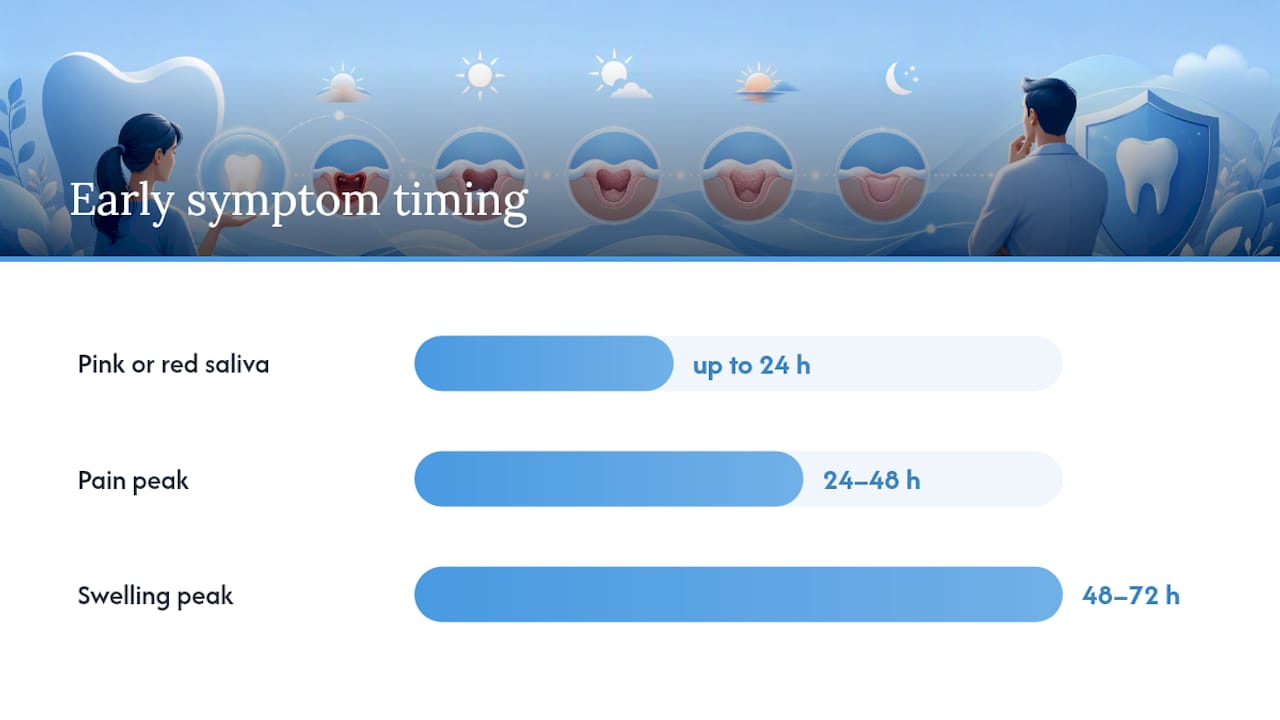
Light oozing and blood-tinged saliva are normal for the first day. Bright red, heavy bleeding that soaks through gauze repeatedly is not.
Here’s what falls within the range of normal healing:
Pink or slightly red saliva for up to 24 hours
Swelling that builds through day two or three, then starts to recede
Mild jaw stiffness or soreness when chewing or yawning
A dull ache that responds to over-the-counter pain relievers
Slight bruising near the extraction site, especially with surgical removals
If swelling is still getting worse on day four instead of improving, that’s your cue to call the clinic rather than wait it out.
Step-by-Step Aftercare Checklist (Hour 0 to Day 7)
Recovery follows a predictable rhythm once you know what to do at each stage. Here’s the routine dentists actually recommend, broken down by time frame.
First 30 to 60 minutes: Bite down firmly on the gauze pad for 30 to 45 minutes without checking on the socket every few minutes. Peeking disturbs the clot before it has a chance to set. If bleeding continues past that window, replace the gauze with a fresh piece or a damp tea bag and bite down for another 30 minutes.
First 24 hours: Rest, keep your head elevated, and avoid anything strenuous. Avoid rinsing, vigorous spitting, straws, smoking, and alcohol during the initial healing period. Protecting that clot is the single biggest factor in avoiding dry socket during this window.
24 to 72 hours: Start gentle warm salt water rinses after the initial day, as advised by your dentist. Stick to soft foods and expect swelling to reach its high point around hour 48 to 72. Switch from cold packs to moist heat once you’re past the 48 hour mark.
Days 4 to 7: Gradually reintroduce firmer foods, keep brushing carefully around the site, and watch for any new throbbing pain, foul taste, or swelling that won’t quit.
Pro Tip: Set a phone alarm for your first pain medication dose right when you get home, before the local anesthetic fades. Chasing pain after it starts is much harder than staying ahead of it.
Managing Pain and Swelling Safely
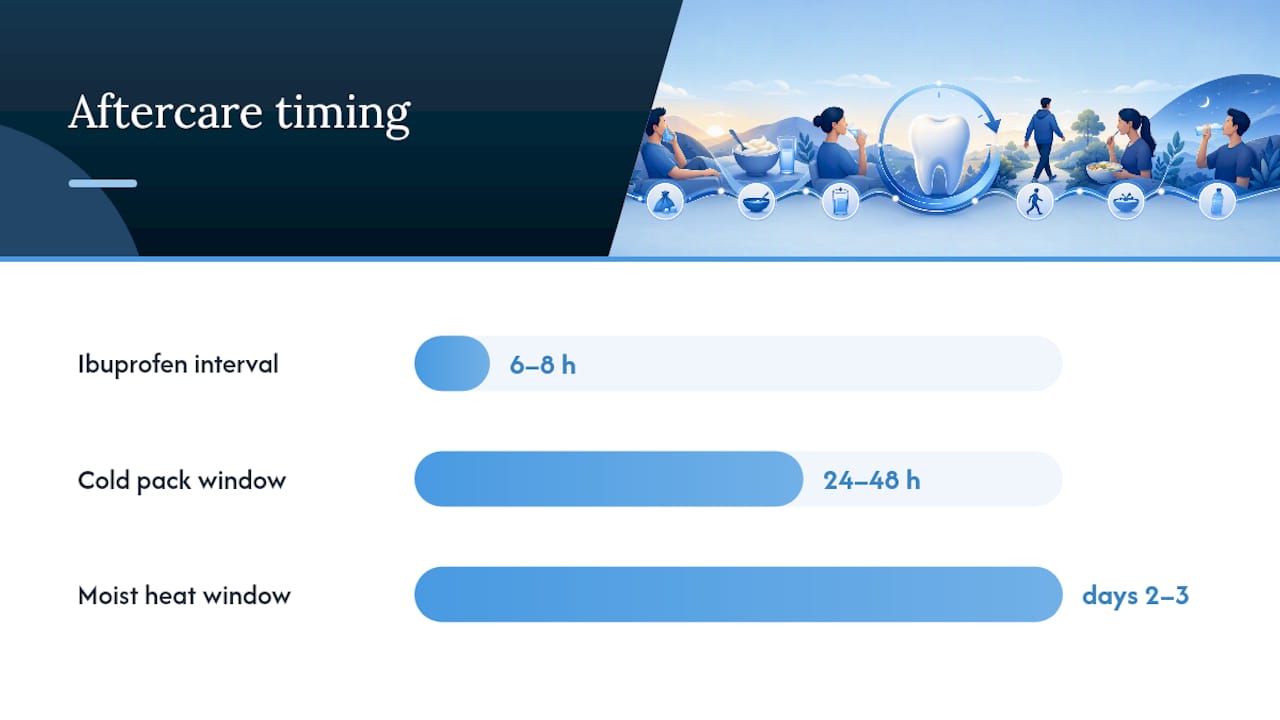
Nonopioid pain relief handles most extraction pain effectively. Alternating ibuprofen and acetaminophen on a staggered schedule often controls pain as well as opioid medication does for typical dental procedures, which is worth knowing if you’re hoping to avoid stronger prescriptions altogether.
A practical schedule looks something like this:
Ibuprofen every 6 to 8 hours, staying within the label’s daily maximum
Acetaminophen staggered between ibuprofen doses if pain persists
Checking with your dentist first if you have kidney issues, stomach ulcers, or take blood thinners
Using any prescribed opioid only if pain is severe, and never combining it with alcohol or sedatives
Cold and heat matter for timing, too. Apply a cold pack for 20 minutes on, then 20 minutes off, for the first 24 to 48 hours. After that window, moist heat on days two and three can ease jaw stiffness and support healing as swelling starts to go down.
What to Eat and How to Keep Your Mouth Clean
Soft, cool-to-lukewarm foods are your friend for the first three days. Yogurt, applesauce, mashed potatoes, scrambled eggs, and lukewarm broths all work well without putting pressure on the socket. Skip straws entirely, and avoid chewing anywhere near the extraction site until it feels sturdy.
Oral hygiene doesn’t stop during recovery, but it does change shape:
Use warm salt water prepared as advised for gentle rinsing.
Wait about one day after the extraction before starting rinsing., then rinse 3 to 5 times a day, especially after meals and before bed
Let the rinse fall out of your mouth gently rather than spitting forcefully
Brush your other teeth normally, but glide softly around the extraction site
Hold off on alcohol-based mouthwash until your dentist clears you for it, since the alcohol can irritate healing tissue
How to Spot Dry Socket and Infection Early
Dry socket announces itself with a specific pattern: intense, throbbing pain that shows up two to four days after extraction, often paired with a bad taste or smell and visible bone in the socket. Regular healing pain trends downward; dry socket pain does the opposite, getting sharper instead of fading.
A few factors raise your risk noticeably:
Smoking or vaping, which should be avoided for at least 72 hours and ideally longer
Extractions of lower molars, which tend to develop dry socket more often than upper teeth
Disturbing the clot early through rinsing, sucking on straws, or poking at the site with your tongue
Hormonal contraceptives, which some research links to slightly higher dry socket rates
If you do develop dry socket, treatment is straightforward. Your dentist cleans the socket and packs it with a medicated dressing to ease pain and encourage new clot formation. Antibiotics only enter the picture if there’s a true infection alongside it, not for dry socket on its own.
Pro Tip: If your pain suddenly worsens on day three after steadily improving, don’t assume it will pass on its own. That reversal is the clearest sign something needs a dentist’s attention.
When to Call Your Dentist or Seek Emergency Care
A few symptoms mean it’s time to pick up the phone, not wait and see:
Bleeding that won’t slow down even after 30 minutes of firm gauze pressure
Swelling that keeps spreading and starts affecting your breathing or swallowing
A fever, which can point to infection
Pain that gets worse days after it should be improving
Before you call, note how many hours or days it’s been since the extraction, list any medications you’ve taken, and snap a photo of the site if you can manage it. While you’re arranging care, keep biting on firm gauze and stay upright rather than lying flat.
Clinician Tips From Mersal on Follow-Up Care
Wisdom tooth removal deserves its own mental calendar. Swelling and discomfort from surgical extractions typically peak in the 48 to 72 hour window, so we tell patients to plan their downtime around that stretch rather than the day of surgery itself.
A few things we’ve learned matter more than patients expect:
Follow-up visits often include a quick stitch check and, if needed, a dressing change for surgical sites.
Bring your current medication list to any follow-up, including anything new you’ve started since the extraction.
If a post-op problem comes up outside office hours, we handle same-day emergency visits rather than sending you to wait it out.
Direct billing to insurance, along with CDCP and IFHP coverage, is something we sort out before your visit whenever possible so cost isn’t a surprise on top of recovery.
Why Careful Aftercare Matters
Most extraction recoveries go exactly the way they’re supposed to when patients follow the basics: protect the clot, manage pain early, and watch for the handful of warning signs that actually matter. The instructions can feel repetitive, but they exist because they work. If something feels off, don’t sit on it. Call your dentist. That’s what we’re here for.
— Mersal
Getting Extraction Care and Follow-Up Support From Mersaldental
Same-day extractions and emergency visits are available, which matters most on exactly the days this guide covers: the ones where pain spikes unexpectedly or bleeding won’t settle down.

Rather than booking weeks out or navigating a walk-in clinic that doesn’t know your history, you get a dental team already set up for direct insurance billing, including CDCP and IFHP coverage, so cost questions don’t add stress to an already uncomfortable week. If you’re mid-recovery and something doesn’t feel right, or you need an extraction scheduled in the first place, same-day appointments are available for exactly these situations. Contact the clinic to book your extraction or ask about an urgent post-op concern. We’ll walk you through what’s normal and what needs a closer look.
Sources
Guidance above draws on Cleveland Clinic, the Oral Health Foundation, and URMC’s post-op protocols. For advice specific to your case, contact your dentist directly.
This article is general information, not a substitute for advice from a qualified doctor. Consult a qualified healthcare professional about your own circumstances before acting on anything here.
FAQ
What are the do’s and don’ts after a tooth extraction?
Do bite firmly on gauze, rest with your head elevated, and eat soft foods for the first few days. Don’t rinse, use straws, smoke, or disturb the socket with your tongue for at least 24 hours, since these actions raise the risk of dislodging the clot.
What helps a tooth extraction heal faster?
Protecting the blood clot matters most: avoid smoking, straws, and vigorous rinsing early on, and start gentle salt water rinses after 24 hours to keep the socket clean. Staying on a scheduled pain medication routine also helps, since uncontrolled pain and inflammation can slow the pace of recovery.
How long do you need to rest after getting a tooth pulled?
Plan for a quiet first 24 hours with no strenuous activity, and expect simple extractions to feel noticeably better by day four. Surgical extractions, including wisdom teeth, often need five to seven days before you’re back to normal activity levels.
What are the worst days after a tooth extraction?
Pain typically peaks on day one or two, while swelling reaches its highest point around 48 to 72 hours. If pain suddenly worsens after day three instead of easing up, that’s a signal to call your dentist rather than assume it’s normal.
How much does a tooth extraction cost at Mersaldental?
Pricing for extractions isn’t published online since it depends on the tooth’s position and complexity. Current pricing details are available directly through the extractions page or by contacting the clinic.
Recommended
Comments