Toothache and Barometric Pressure: What's Really Happening
- Mayde Mersal
- 1 day ago
- 7 min read


What is barodontalgia, and why does barometric pressure cause toothache?
Barodontalgia is tooth pain triggered directly by changes in atmospheric pressure. It is not a disease on its own. Rather, it is a symptom pointing to an underlying dental problem that pressure fluctuations bring to the surface.
The core mechanism is straightforward. When ambient pressure drops or rises, gas trapped inside a compromised tooth or dental restoration cannot equalize fast enough. That trapped gas expands or contracts, pressing against the dental pulp and its nerve fibers, producing sharp, sudden pain. A related sinus condition, barosinusitis, can cause referred pain to the upper teeth when sinus cavities experience the same pressure imbalance.
People most commonly affected include:
Scuba divers descending or ascending through water pressure gradients
Aviators and air travelers exposed to cabin pressure changes at altitude
People on the ground during rapid weather shifts, especially before storms
Anyone with compromised restorations, untreated cavities, cracked teeth, or root canal history
Barodontalgia is your tooth’s way of flagging a structural problem. Healthy, intact teeth rarely respond to pressure changes this way.
Table of Contents
How barometric pressure changes physically affect your teeth
The physics behind pressure-related tooth pain follows Boyle’s Law: as ambient pressure decreases, a fixed volume of trapped gas expands. Inside a tooth with a leaky filling, a micro-fracture, or a pulpal void, that expanding gas has nowhere to go except into the surrounding nerve tissue.

Dental barotrauma research distinguishes two categories of pain:
Pain Type | Source | Common Trigger |
Direct barodontalgia | Gas trapped inside diseased tooth or faulty restoration | Diving descent/ascent, altitude change |
Non-direct barodontalgia | Barosinusitis referring pain to upper teeth | Weather fronts, sinus congestion, altitude |
Direct pain originates when trapped air in microvoids within dental restorations or pulpal chambers exerts mechanical pressure on nerve tissues as ambient pressure fluctuates. The result is a sharp, localized sensation that patients often describe as a sudden squeeze.
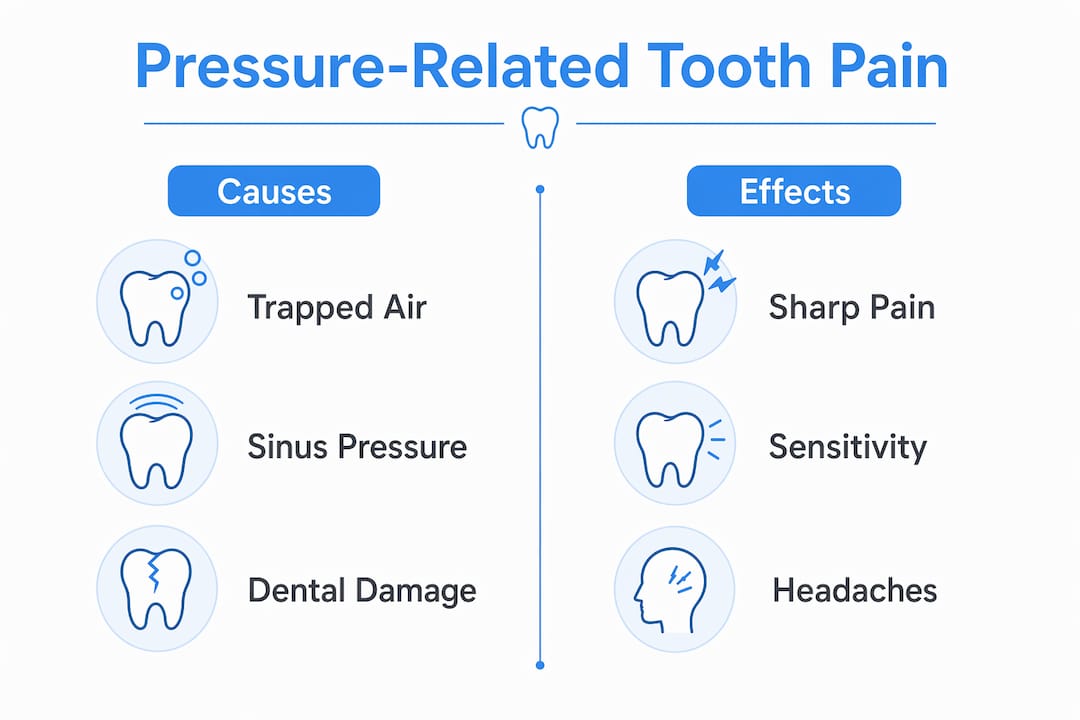
Non-direct pain comes from the maxillary sinuses, which sit directly above the roots of the upper back teeth. When barometric pressure drops, fluid shifts inside those sinus cavities, and the resulting inflammation radiates downward into the teeth. This is barosinusitis, and it can feel identical to a genuine toothache.
Common symptoms of both types include:
Sharp or throbbing pain in one or more teeth during pressure change
Pain that eases once pressure stabilizes
Sensitivity concentrated in upper molars or premolars (often sinus-related)
Occasional jaw ache or facial pressure accompanying the tooth pain
Pro Tip: If your tooth pain starts during a weather change and fades within an hour of being indoors, sinus-related pressure is a likely contributor. If the pain lingers, a compromised restoration or cavity is the more probable cause.
Real-world scenarios where pressure-related tooth pain occurs
Barodontalgia shows up in predictable situations, and knowing them helps you recognize what you are experiencing.
Scuba diving
Divers experience some of the most dramatic pressure changes of any activity. During descent, ambient pressure increases rapidly. During ascent, it drops. A tooth with a leaking restoration or secondary decay can trap air that compresses on the way down and then expands painfully on the way back up. This is sometimes called “tooth squeeze,” and it can be severe enough to abort a dive.

Aviation and air travel
Aircraft cabins are pressurized, but not to sea-level pressure. At cruising altitude, cabin pressure typically equals a pressure similar to that found at moderate altitude. For passengers with faulty fillings or untreated cavities, that pressure drop can trigger sharp tooth pain mid-flight. Military aviators, who sometimes fly unpressurized or at extreme altitudes, face an even higher risk.
Stormy weather on the ground
You do not need to be underwater or airborne to feel this. A fast-moving storm front can drop barometric pressure noticeably within hours. For people with compromised dental restorations, that shift is enough to trigger pain. If your teeth ache before a storm and feel fine afterward, barodontalgia is a reasonable explanation.
Pro Tip: Keep a simple log of when tooth pain occurs alongside local weather data. If pain consistently precedes low-pressure weather events, bring that pattern to your dentist. It is far more useful diagnostic information than describing pain alone.
Dental vulnerabilities most likely to cause problems in these scenarios:
Fillings with micro-gaps or air bubbles beneath the surface
Teeth with untreated cavities, even small ones
Cracked teeth with internal voids
Teeth with prior root canals that have developed secondary decay
Teeth with crowns that have lost their marginal seal
If you are planning to dive or fly frequently, having a dental emergency plan in place before you travel is worth considering.
How to diagnose, prevent, and manage pressure-related tooth pain
Recognizing the pattern
Diagnosis relies heavily on patient history. Reproducing barodontalgia in a dental office is not feasible, so the timing of your pain is the most important clue. Pain that begins during a pressure change and resolves once pressure normalizes strongly suggests barodontalgia. Pain that persists after pressure stabilizes points to active dental disease requiring immediate attention.
Your dentist will focus on:
Identifying faulty or aging restorations with potential microleakage
Checking for secondary decay beneath existing fillings
Radiographic evaluation for micro-fractures or pulpal changes
Sinus assessment if upper teeth are involved and pain is diffuse
Prevention
The most reliable prevention is maintaining dental restorations in good condition. Faulty restorations with air bubbles or micro-fractures are the primary culprits. Addressing cavities promptly, replacing aging fillings, and protecting cracked teeth with crowns removes the structural vulnerabilities that pressure exploits.
Practical prevention steps:
Schedule regular dental checkups, especially before planned diving or flying trips
Replace fillings that show signs of wear or deterioration
Protect cracked or heavily restored teeth with dental crowns
Treat sinus congestion before flying or diving to reduce barosinusitis risk
Management when pain strikes
For sinus-related tooth pain, managing sinus pressure with over-the-counter decongestants, staying well hydrated, and reducing stress can provide relief. The Valsalva maneuver, gently exhaling against a closed mouth and nose to equalize ear and sinus pressure, can help during altitude changes, though it should be used carefully and is not appropriate for all situations.
For direct barodontalgia from a compromised tooth, pain relief is temporary until the underlying dental problem is repaired. Over-the-counter analgesics like ibuprofen can reduce discomfort, but they do not fix the structural issue.
Pro Tip: Do not wait for pressure-related tooth pain to become severe before seeing a dentist. Barodontalgia that is early dental pathology is far easier and less costly to treat than an infection or fractured tooth discovered after repeated pressure exposure.
What recent research tells us about weather and dental pain
The clinical evidence connecting barometric pressure to tooth pain is solid. A 2011 retrospective study of 1,090 dental emergency patients found a statistically significant correlation between days with greater deviation from average atmospheric pressure and increased reports of acute dental pain (p=4.2×10⁻¹⁴). That is not a borderline finding. It confirms that pressure fluctuations have a measurable, real-world effect on dental pain rates.
Experts also note that barodontalgia often acts as an early warning of compromised dental health, flagging leaky restorations invisible on X-rays but detectable through the pain they produce under pressure. A tooth that only hurts during a storm may look fine on a standard radiograph, yet still harbor microleakage that will eventually cause serious damage.
Not every weather-related dental pain is barodontalgia. Temperature fluctuations cause thermal allodynia, a diffuse, dull, throbbing pain that develops when moving from cold outdoor air into a warm room. That condition involves sensitized nerve fibers responding to temperature gradients, not pressure changes, and it feels distinctly different from the sharp, localized squeeze of barodontalgia. Knowing the difference helps you describe your symptoms accurately to your dentist, which speeds up diagnosis.
Pro Tip: Tell your dentist whether your tooth pain is sharp and sudden (more likely pressure-related) or dull and throbbing after coming in from the cold (more likely thermal allodynia). That single distinction can redirect the entire diagnostic conversation.
Tooth pain from pressure changes? Mersaldental can help
If barometric pressure is triggering tooth pain, the underlying dental issue needs attention before the next storm or flight makes it worse.

Mersaldental, located in lower town Ottawa, offers same-day appointments for patients dealing with sudden or recurring tooth pain. Whether the cause is a failing restoration, a crack, or an infection that pressure changes have brought to light, our team provides gentle, efficient care to address it directly. We accept new patients, offer direct insurance billing, and work with CDCP and IFHP programs to keep care accessible. For teeth that need structural protection against future pressure events, our crowns and bridges service can seal and strengthen compromised teeth before they become emergencies. If your pain is urgent, our dental emergency care is available for same-day treatment. Book your appointment at Mersaldental today.
Key Takeaways
Barodontalgia is a real, well-documented condition where compromised teeth or sinus pressure changes cause tooth pain during barometric pressure fluctuations, and the most effective response is repairing the underlying dental problem before pressure exposure makes it worse.
Point | Details |
Barodontalgia defined | Tooth pain caused by trapped gas expanding or contracting inside compromised teeth during pressure changes. |
Two pain pathways | Direct pain originates inside the tooth; non-direct pain comes from barosinusitis referring through maxillary sinuses to upper teeth. |
Research-backed link | A study of 1,090 emergency patients found a statistically significant correlation between pressure deviation and acute dental pain (p=4.2×10⁻¹⁴). |
Key prevention step | Maintaining intact restorations and treating cavities promptly removes the structural vulnerabilities that pressure exploits. |
Mersaldental | Offers same-day care, crowns, and emergency dental treatment in Ottawa for patients experiencing pressure-related tooth pain. |
Recommended
Comments